Browse Articles

A study of Syrian students' migration motivations, destinations, and return intentions in a time of crisis

Merjaneh et al. | Apr 16, 2026

A study of Syrian students' migration motivations, destinations, and return intentions in a time of crisis
Image credit: Aaron Burden, 2017

This study investigates the migration intentions of Syrian high school and university students amid ongoing conflict and economic instability. Drawing on survey data, the research examines how academic stage influences migration motivations, preferred destinations, and return intentions. The findings reveal a widespread desire to emigrate, driven by educational, economic, and security concerns, highlighting significant implications for Syria’s future workforce and post-conflict recovery.

Read More...
Down-regulation of CD44 inhibits Wnt/β-catenin mediated cancer cell migration and invasion in gastric cancer

Baek et al. | May 10, 2021

Down-regulation of CD44 inhibits Wnt/β-catenin mediated cancer cell migration and invasion  in gastric cancer

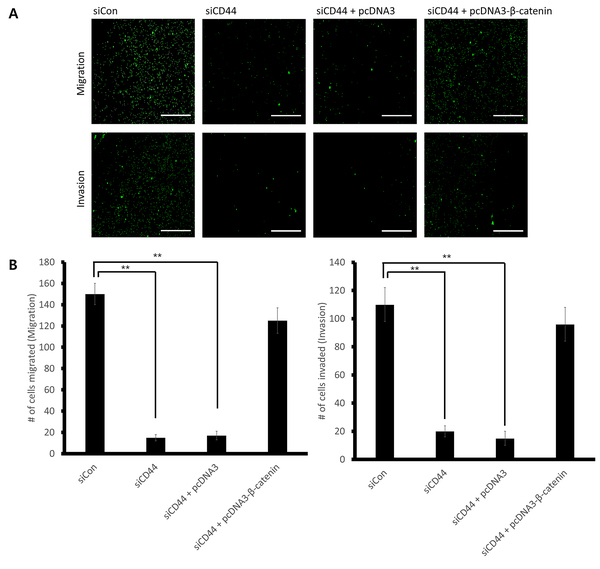
In this study, we aimed to characterize CD44-mediated regulation of the Wnt/β-catenin signaling pathway, which promotes cancer invasion and metastasis. We hypothesized that CD44 down-regulation will inhibit gastric cancer cell migration and invasion by leading to down-regulation of Wnt/β-catenin signaling. We found that CD44 up-regulation was significantly related to poor prognosis in gastric cancer patients. We demonstrated the CD44 down-regulation decreased β-catenin protein expression level. Our results suggest that CD44 down-regulation inhibits cell migration and invasion by down-regulating β-catenin expression level.

Read More...

Testing the Effects of Resveratrol, Apigenin, and Glucosamine to Effectively Reduce Prostate Cancer Cell Proliferation, Migration Levels, and Increase Apoptosis

Yang et al. | Apr 16, 2020

Testing the Effects of Resveratrol, Apigenin, and Glucosamine to Effectively Reduce Prostate Cancer Cell Proliferation, Migration Levels, and Increase Apoptosis

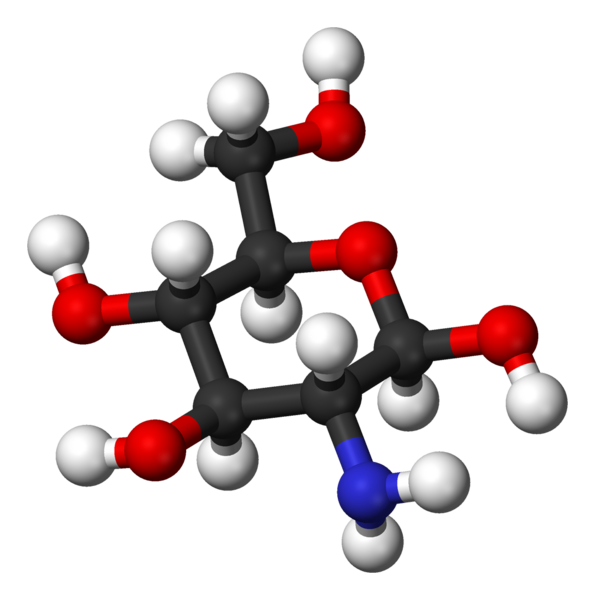
The current five-year survival rate of metastasized prostate cancer is only 30% and occurs in every one in nine men. Researchers have shown that people with a type of dwarfism called Laron’s Syndrome are immune to cancer due to their low levels of insulin-like growth factor-1 (IGF-1). For this reason, experimentally modifying the level of IGF-1 could provide better insight into whether lowering the levels of IGF-1 in prostate cancer cell lines (e.g. PC-3) could be an effective treatment to reduce their rates of proliferation and migration and increase apoptosis. We selected three compounds, which researchers have shown decrease IGF-1 levels, to test and combine to determine which is the most promising.

Read More...

The Bioactive Ingredients in Niuli Lactucis Agrestibus Possess Anticancer Effects

Zhu et al. | Sep 17, 2019

The Bioactive Ingredients in Niuli Lactucis Agrestibus Possess Anticancer Effects

In​ the​ field​ of​ medicine,​ natural​ treatments​ are​ becoming ​increasingly ​vital ​towards ​the ​cure ​of ​cancer. Zhu et al. wanted to investigate the effects of lettuce extract on cancer cell survival and proliferation. They used an adenocarcinoma cell line, COLO320DM, to determine whether crude extract from a lettuce species called Niuli​ Lactucis Agrestibus​ would affect cancer cell survival, migration, and proliferation. They found that Niuli extract inhibited cancer cell survival, increased expression of cell cycle inhibitors p21 and p27, and inhibited migration. However, Niuli extract did not have these effects on healthy cells. This work reveals important findings about a potential new source of anti-colorectal cancer compounds.

Read More...

Toxicity of aminomethylphosphonic acid via the Wnt signaling pathway as a novel mechanism

Zhuang et al. | Mar 08, 2023

Toxicity of aminomethylphosphonic acid via the Wnt signaling pathway as a novel mechanism
Image credit: Image credit: Dapur Melodi

The Wnt signaling pathway, known to coordinate important aspects of cellular homeostasis ranging from differentiation, proliferation, migration, and much more, is dysregulated in many human diseases. This study demonstrates that aminomethylphosphonic acid, which is the main metabolite found in the common herbicide Glyphosate, is toxic to planaria and capable of binding to canonical Wnt proteins.

Read More...

How does light affect the distribution of Euglena sp. and Tetrahymena pyriformis

Singh et al. | Mar 03, 2022

How does light affect the distribution of <em>Euglena sp.</em> and <em>Tetrahymena pyriformis</em>

In this article, the authors explored the locomotory movement of Euglena sp. and Tetrahymena pyriformis in response to light. Such research bears relevance to the migration and distribution patterns of both T. pyriformis and Euglena as they differ in their method of finding sustenance in their native environments. With little previous research done on the exploration of a potential response to photostimulation enacted by T. pyriformis, the authors found that T. pyriformis do not bias in distribution towards areas of light - unlike Euglena, which displayed an increased prevalence in areas of light.

Read More...

RNAi-based Gene Therapy Targeting ZGPAT Promotes EGF-dependent Wound Healing

Lee et al. | Nov 15, 2021

RNAi-based Gene Therapy Targeting ZGPAT Promotes EGF-dependent Wound Healing

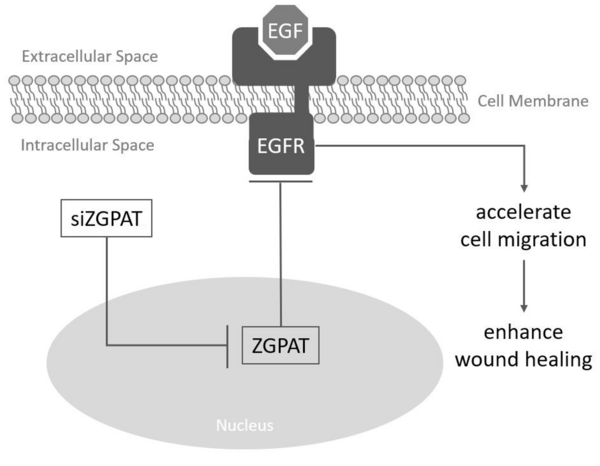
Wound-healing involves a sequence of events, such as inflammation, proliferation, and migration of different cell types like fibroblasts. Zinc Finger CCCH-type with G-Patch Domain Containing Protein (ZGPAT), encodes a protein that has its main role as a transcription repressor by binding to a specific DNA sequence. The aim of the study was to find out whether inhibiting ZGPAT will expedite the wound healing process by accelerating cell migration. This treatment strategy can provide a key to the development of wound healing strategies in medicine and cellular biology.

Read More...

Unveiling the wound healing potential of umbilical cord derived conditioned medium: an in vitro study

Vasal et al. | Jun 17, 2024

Unveiling the wound healing potential of umbilical cord derived conditioned medium: an <em>in vitro</em> study

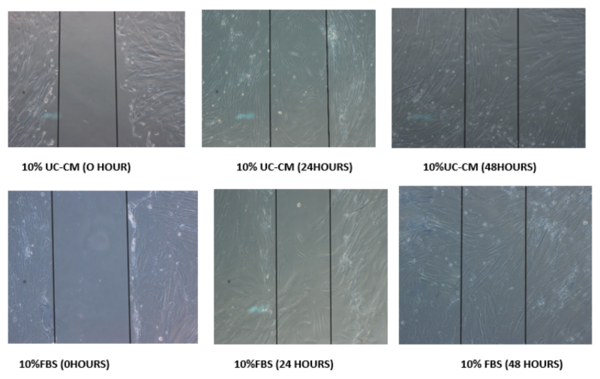
Chronic wounds pose a serious threat to an individual’s health and quality of life. However, due to the severity and morbidity of such wounds, many pre-existing treatments are inefficient or costly. While the use of skin grafts and other such biological constructs in chronic wound healing has already been characterized, the use of umbilical cord tissue has only recently garnered interest, despite the cytokine-rich composition of Wharton’s jelly (cord component). Our current study aimed to characterize the use of an umbilical cord derived conditioned medium (UC-CM) to treat chronic wounds.

Read More...