Browse Articles

Contribution of environmental factors to genetic variation in the Pacific white-sided dolphin

Talwar et al. | Jan 23, 2024

Contribution of environmental factors to genetic variation in the Pacific white-sided dolphin
Image credit: Flavio

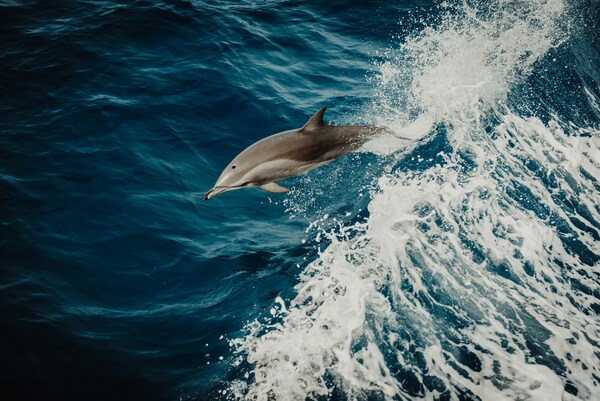
Here the authors sought to understand the effects of different variables that may be tied to pollution and climate change on genetic variation of Pacific white-sided dolphins, a species that is currently threatened by water pollution. Based on environmental data collected alongside a genetic distance matrix, they found that ocean currents had the most significant impact on the genetic diversity of Pacific white-sided dolphins along the Japanese coast.

Read More...
A novel deep learning model for visibility correction of environmental factors in autonomous vehicles

Dey et al. | Oct 31, 2022

A novel deep learning model for visibility correction of environmental factors in autonomous vehicles

Intelligent vehicles utilize a combination of video-enabled object detection and radar data to traverse safely through surrounding environments. However, since the most momentary missteps in these systems can cause devastating collisions, the margin of error in the software for these systems is small. In this paper, we hypothesized that a novel object detection system that improves detection accuracy and speed of detection during adverse weather conditions would outperform industry alternatives in an average comparison.

Read More...

Risk factors contributing to Pennsylvania childhood asthma

Li et al. | Oct 30, 2024

Risk factors contributing to Pennsylvania childhood asthma
Image credit: The authors

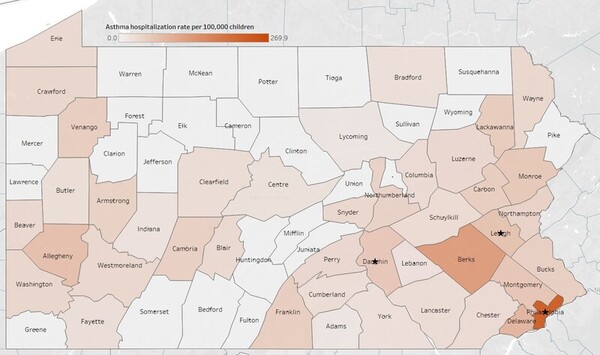
Asthma is one of the most prevalent chronic conditions in the United States. But not all people experience asthma equally, with factors like healthcare access and environmental pollution impacting whether children are likely to be hospitalized for asthma's effects. Li, Li, and Ruffolo investigate what demographic and environmental factors are predictive of childhood asthma hospitalization rates across Pennsylvania.

Read More...

Role of Environmental Conditions on Drying of Paint

Aggarwal et al. | Feb 20, 2021

Role of Environmental Conditions on Drying of Paint

Reducing paint drying time is an important step in improving production efficiency and reducing costs. The authors hypothesized that decreased humidity would lead to faster drying, ultraviolet (UV) light exposure would not affect the paint colors differently, white light exposure would allow for longer wavelength colors to dry at a faster rate than shorter wavelength colors, and substrates with higher roughness would dry slower. Experiments showed that trials under high humidity dried slightly faster than trials under low humidity, contrary to the hypothesis. Overall, the paint drying process is very much dependent on its surrounding environment, and optimizing the drying process requires a thorough understanding of the environmental factors and their interactive effects with the paint constituents.

Read More...

Flight paths over greenspace in major United States airports

Lee et al. | Sep 26, 2023

Flight paths over greenspace in major United States airports
Image credit: Mostafijur Rahman Nasim

Greenspaces (urban and wetland areas that contain vegetation) are beneficial to reducing pollution, while airplanes are a highly-polluting method of transportation. The authors examine the intersection of these two environmental factors by processing satellite images to reveal what percentage of flight paths go over greenspaces at major US airports.

Read More...

Harvesting Atmospheric Water

Greenwald et al. | Jul 10, 2020

Harvesting Atmospheric Water

The objective of this project was to test various materials to determine which ones collect the most atmospheric water when exposed to the same environmental factors. The experiment observed the effect of weather conditions, a material’s surface area and hydrophilicity on atmospheric water collection. The initial hypothesis was that hydrophobic materials with the greatest surface area would collect the most water. The materials were placed in the same outside location each night for twelve trials. The following day, the materials were weighed to see how much water each had collected. On average, ribbed plastic collected 10.8 mL of water per trial, which was over 20% more than any other material. This result partially supported the hypothesis because although hydrophobic materials collected more water, surface area did not have a significant effect on water collection.

Read More...

The Analysis of the Effects of Smoke and Water Vapor on Insect Pheromone Communication and Physical Condition: An Investigation of the Causes of Colony Collapse Disorder

Delatorre et al. | May 20, 2015

The Analysis of the Effects of Smoke and Water Vapor on Insect Pheromone Communication and Physical Condition: An Investigation of the Causes of Colony Collapse Disorder

The cause of insect colony collapse disorder (CCD) is still a mystery. In this study, the authors aimed to test the effects of two environmental factors, water vapor and smoke levels, on the social behavior and physical condition of insects. Their findings could help shed light on how changing environmental factors can contribute to CCD.

Read More...