Browse Articles

Associations between fentanyl usage and social media use among U.S. teens

Sul et al. | Jun 10, 2025

Associations between fentanyl usage and social media use among U.S. teens
Image credit: freestocks

Here the authors aimed to understand factors influencing adolescent fentanyl exposure, hypothesizing a positive association between social media usage, socioeconomic factors, and fentanyl abuse among U.S. teens. Their analysis of the Monitoring the Future dataset revealed that a history of suspension and use of marijuana or alcohol were linked to higher fentanyl use, and while not statistically significant, a notable positive correlation between social media use and fentanyl frequency was observed.

Read More...
Testing Various Synthetic and Natural Fiber Materials for Soundproofing

Karuppiah et al. | Jun 15, 2017

Testing Various Synthetic and Natural Fiber Materials for Soundproofing

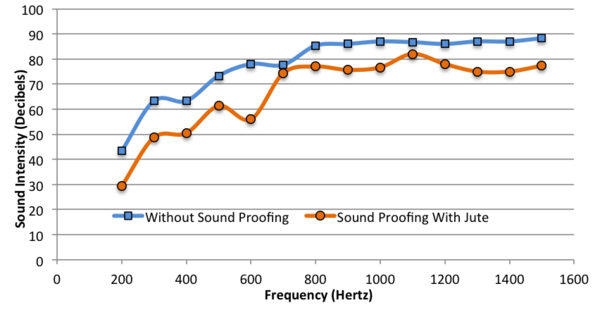
Noise pollution negatively impacts the health and behavioral routines of humans and other animals, but the production of synthetic sound-absorbing materials contributes to harmful gas emissions into the atmosphere. The authors of this paper investigated the effectiveness of environmentally-friendly, cheap natural-fiber materials, such as jute, as replacements for synthetic materials, such as gypsum and foam, in soundproofing.

Read More...

Using broad health-related survey questions to predict the presence of coronary heart disease

Chavda et al. | Aug 23, 2024

Using broad health-related survey questions to predict the presence of coronary heart disease

Coronary heart disease (CHD) is the leading cause of death in the U.S., responsible for nearly 700,000 deaths in 2021, and is marked by artery clogging that can lead to heart attacks. Traditional prediction methods require expensive clinical tests, but a new study explores using machine learning on demographic, clinical, and behavioral survey data to predict CHD.

Read More...

Behavioral Longevity: The Impact of Smoking, Alcohol Consumption, and Obesity on Life Expectancy

Han et al. | Oct 03, 2019

Behavioral Longevity: The Impact of Smoking, Alcohol Consumption, and Obesity on Life Expectancy

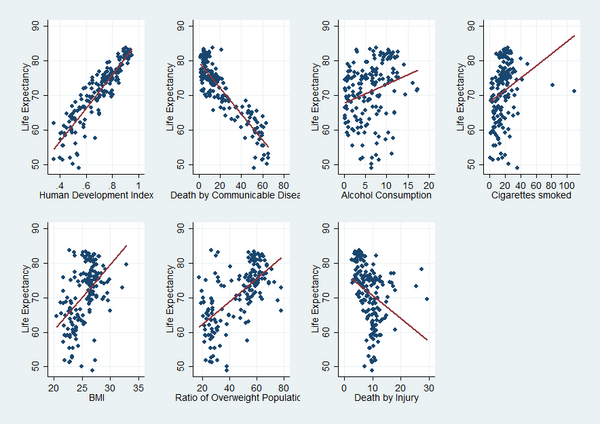
In this article, the authors look into what is already known about the factor affecting longevity and determine the importance of behavioral factors including alcohol consumption, smoking, and obesity on longevity. The authors quantify data from over 150 countries and, interestingly, find that the impact each factor has on longevity is at least in part dependent on the country's economic development status. Overall, they conclude that an average person’s life expectancy can increase by more than 3 years if smoking and alcohol consumption is reduced by a half and weight is decreased by 10%.

Read More...

Examining effects of E. muscae on olfactory function in D. melanogaster

Friedman et al. | Jul 08, 2021

Examining effects of <em>E. muscae</em> on olfactory function in <em>D. melanogaster</em>

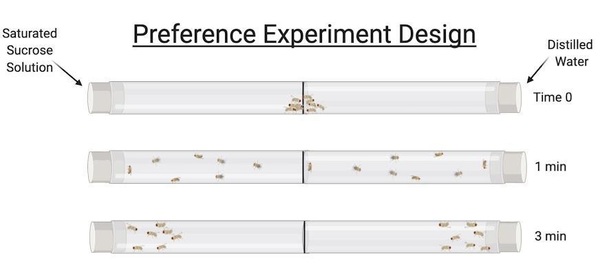
In this article, the authors investigate the effects of fungus E. muscae on fruit fly behavior. More specifically, they investigate whether this fungus affects olfaction. Their findings contribute to a broader set of studies seeking to understand how host's central nervous systems can be affected by infections.

Read More...

Therapy dogs effectively reduce stress in college preparatory students

Ikeda et al. | Nov 27, 2023

Therapy dogs effectively reduce stress in college preparatory students
Image credit: Ryan Stone

In this article the authors looked at the effect of spending time with a therapy dog before and after stressful events. They found that interacting with a therapy before a stressful event showed more significant reduction in signs of stress compared to interacting with a therapy dog after stressful events have already occurred.

Read More...

The Long-Term Effect of CBD Crystals and CBD Oil on Depressive-Associated Rat Behaviors

Yang et al. | Dec 18, 2020

The Long-Term Effect of CBD Crystals and CBD Oil on Depressive-Associated Rat Behaviors

Cannabidiol (CBD) is a chemical extracted from cannabis and shown by some studies to alleviate the symptoms of many mental disorders, especially major depressive disorder. The authors hypothesized that chronic treatments with purified CBD through oral administration would relieve depression-associated behaviors in normal healthy rats under adverse conditions. A statistical analysis of the experimental data suggested that long-term consumption of CBD could elicit depression associated symptoms in normal rats without depression. The results imply that people should consume CBD-containing products with extreme caution and highlight the need to carefully monitor the use of CBD in health care products.

Read More...