Browse Articles

The Effect of Cobalt Biomineralization on Power Density in a Microbial Fuel Cell

Bandyopadhyay et al. | Sep 07, 2015

The Effect of Cobalt Biomineralization on Power Density in a Microbial Fuel Cell

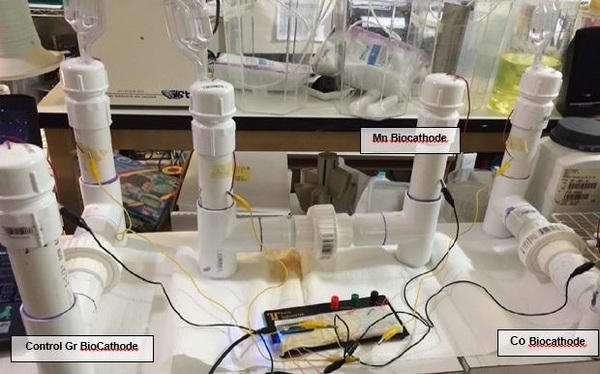
A microbial fuel cell is a system to produce electric current using biochemical products from bacteria. In this project authors operated a microbial fuel cell in which glucose was oxidized by Shewanella oneidensis in the anodic compartment. We compared the power output from biomineralized manganese or cobalt oxides, reduced by Leptothrix cholodnii in the cathodic compartment.

Read More...
Fundamental understanding on the dynamic reactions of liquid gallium with aluminum

Li et al. | Sep 11, 2026

Fundamental understanding on the dynamic reactions of liquid gallium with aluminum
Image credit: David Hofmann

This study investigates the dynamic reaction between liquid gallium and aluminum, which poses a challenge when using high-performance gallium-rich thermal interface materials for electronic cooling. Through the usage of in-situ microscopy, we show that while aluminum oxide coatings slow gallium-induced damage, nanometer-thick iridium coatings effectively prevent reaction and surface degradation at device-operating temperatures. These findings highlight a promising thermal-cooling architecture for extending the lifespan and reliability of high-power electronic heat dissipation systems.

Read More...

A 3D printed triboelectric nanogenerator for bridge vibration energy harvesting and sensing

Walavalkar et al. | Jul 19, 2026

A 3D printed triboelectric nanogenerator for bridge vibration energy harvesting and sensing
Image credit: Jakub Żerdzicki

This study strongly illustrates that optimizing 3D printing parameters would enhance a triboelectric nanogenerator's performance. The design improvements substantiate the potential of optimized, 3D-printed TENGs for developing scalable, cost-effective solutions for powering low-energy electronics, particularly in applications such as structural health monitoring.

Read More...

Investigating the functionality of an Eco-Cooler made of plastic bottles

Tong et al. | Jul 22, 2026

Investigating the functionality of an Eco-Cooler made of plastic bottles
Image credit: Tong, Tong, and Migenes

In the study, the authors looked at an environmentally friendly alternative to A/C systems/cooling. They wanted to test the effectiveness of this cooling system called the Eco-Cooler as well as see if they could improve it. They found that the Eco-Cooler had minimal cooling, while their altered Eco-Cooler system had some cooling. This results shows the use of water helps cool the environment a lot more.

Read More...

Testing Various Synthetic and Natural Fiber Materials for Soundproofing

Karuppiah et al. | Jun 15, 2017

Testing Various Synthetic and Natural Fiber Materials for Soundproofing

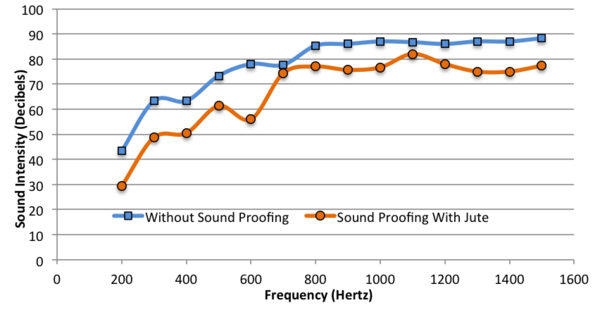
Noise pollution negatively impacts the health and behavioral routines of humans and other animals, but the production of synthetic sound-absorbing materials contributes to harmful gas emissions into the atmosphere. The authors of this paper investigated the effectiveness of environmentally-friendly, cheap natural-fiber materials, such as jute, as replacements for synthetic materials, such as gypsum and foam, in soundproofing.

Read More...

Linearity of piezoelectric response of electrospun polymer-based (PVDF) fibers with barium titanate nanoparticles

Nichitiu et al. | Feb 13, 2023

Linearity of piezoelectric response of electrospun polymer-based (PVDF) fibers with barium titanate nanoparticles

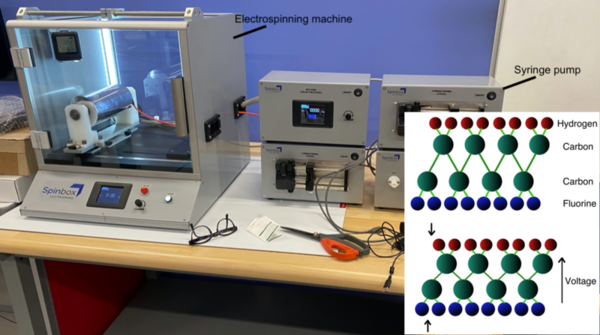
Here, seeking to develop an understanding of the properties that determine the viability of piezoelectric flexible materials for applications in electro-mechanical sensors, the authors investigated the effects of the inclusion BaTiO3 nanoparticles in electrospun Polyvinyledene Fluoride. They found the voltage generated had a piecewise linear dependence on the applied force at a few temperatures.

Read More...

Scientific project in physics "Carbonated liquids and carbonation level"

Irina et al. | Jan 21, 2024

Scientific project in physics "Carbonated liquids and carbonation level"

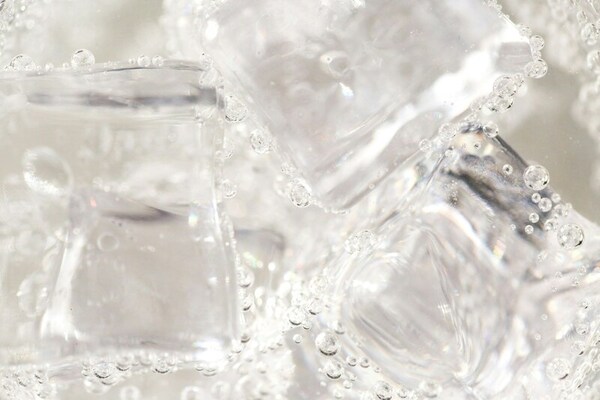
In our work we followed the formation of gas bubbles on the surface of the vessel walls in different carbonated liquids, over different time intervals, at different temperatures and in vessels made of different materials. Our results made it possible to identify patterns affecting the process of formation and disappearance of carbon dioxide bubbles.

Read More...