Browse Articles

Enhanced brain arteries and aneurysms analysis using a CAE-CFD approach

Saravanan et al. | Mar 02, 2025

Enhanced brain arteries and aneurysms analysis using a CAE-CFD approach
Image credit: Vineet Saravanan

Here, recognizing that brain aneurysms pose a severe threat, often misdiagnosed and leading to high mortality, particularly in younger individuals, the authors explored a novel computer-aided engineering approach. They used magnetic resonance angiography images and computational fluid dynamics, to improve aneurysm detection and risk assessment, aiming for more personalized treatment.

Read More...

Obscurity of eyebrows influences recognition of human emotion and impacts older adolescents

Zhang et al. | Jan 20, 2025

Obscurity of eyebrows influences recognition of human emotion and impacts older adolescents
Image credit: Ernesto Norman

Here, seeking to better understand how facial features provide important visual cues to help convey emotions, the authors evaluated the accuracy and reaction time of participants in regards to experimental photographs where a person's eyebrows were obscured and ones where they were not. Their findings revealed that removing eyebrows resulted in a significant decrease in a participant's ability to recognize anger, with adolescents most likely to misidentify emotions.

Read More...

Unit-price anchoring affects consumer purchasing behavior

James et al. | Jan 15, 2025

Unit-price anchoring affects consumer purchasing behavior

This study examines how anchoring—providing numerical suggestions like "2 for $4"—can influence consumer purchasing decisions and increase revenue. The researchers tested three types of price anchors on 29 high school students shopping in a mock store.

Read More...

Machine learning predictions of additively manufactured alloy crack susceptibilities

Gowda et al. | Nov 12, 2024

Machine learning predictions of additively manufactured alloy crack susceptibilities

Additive manufacturing (AM) is transforming the production of complex metal parts, but challenges like internal cracking can arise, particularly in critical sectors such as aerospace and automotive. Traditional methods to assess cracking susceptibility are costly and time-consuming, prompting the use of machine learning (ML) for more efficient predictions. This study developed a multi-model ML pipeline that predicts solidification cracking susceptibility (SCS) more accurately by considering secondary alloy properties alongside composition, with Random Forest models showing the best performance, highlighting a promising direction for future research into SCS quantification.

Read More...

The use of computer vision to differentiate valley fever from lung cancer via CT scans of nodules

El Kereamy et al. | Nov 12, 2024

The use of computer vision to differentiate valley fever from lung cancer via CT scans of nodules

Pulmonary diseases like lung cancer and valley fever pose serious health challenges, making accurate and rapid diagnostics essential. This study developed a MATLAB-based software tool that uses computer vision techniques to differentiate between these diseases by analyzing features of lung nodules in CT scans, achieving higher precision than traditional methods.

Read More...

pH-dependent drug interactions with acid reducing agents

Lin et al. | Nov 12, 2024

pH-dependent drug interactions with acid reducing agents
Image credit: The authors

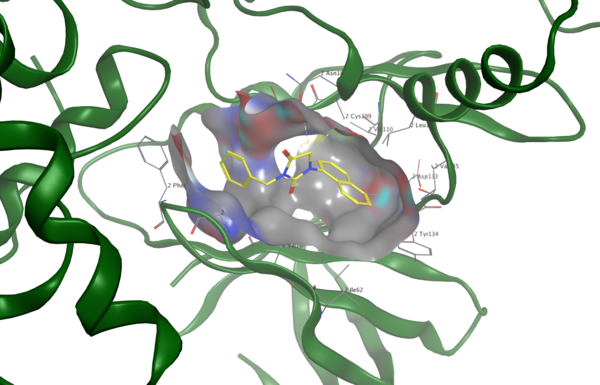
Some cancer treatments lose efficacy when combined with treatments for excessive stomach acid, due to the changes in the stomach environment caused by the stomach acid treatments. Lin and Lin investigate information on oral cancer drugs to see what information is available on interactions of these drugs.

Read More...

A meta-analysis on NIST post-quantum cryptographic primitive finalists

Benny et al. | Sep 21, 2024

A meta-analysis on NIST post-quantum cryptographic primitive finalists
Image credit: Benny et al. 2024

The advent of quantum computing will pose a substantial threat to the security of classical cryptographic methods, which could become vulnerable to quantum-based attacks. In response to this impending challenge, the field of post-quantum cryptography has emerged, aiming to develop algorithms that can withstand the computational power of quantum computers. This study addressed the pressing concern of classical cryptographic methods becoming vulnerable to quantum-based attacks due to the rise of quantum computing. The emergence of post-quantum cryptography has led to the development of new resistant algorithms. Our research focused on four quantum-resistant algorithms endorsed by America’s National Institute of Standards and Technology (NIST) in 2022: CRYSTALS-Kyber, CRYSTALS-Dilithium, FALCON, and SPHINCS+. This study evaluated the security, performance, and comparative attributes of the four algorithms, considering factors such as key size, encryption/decryption speed, and complexity. Comparative analyses against each other and existing quantum-resistant algorithms provided insights into the strengths and weaknesses of each program. This research explored potential applications and future directions in the realm of quantum-resistant cryptography. Our findings concluded that the NIST algorithms were substantially more effective and efficient compared to classical cryptographic algorithms. Ultimately, this work underscored the need to adapt cryptographic techniques in the face of advancing quantum computing capabilities, offering valuable insights for researchers and practitioners in the field. Implementing NIST-endorsed quantum-resistant algorithms substantially reduced the vulnerability of cryptographic systems to quantum-based attacks compared to classical cryptographic methods.

Read More...