Browse Articles

Increasing Average Yearly Temperature in Two U.S. Cities Shows Evidence for Climate Change

Savage et al. | Sep 20, 2018

Increasing Average Yearly Temperature in Two U.S. Cities Shows Evidence for Climate Change

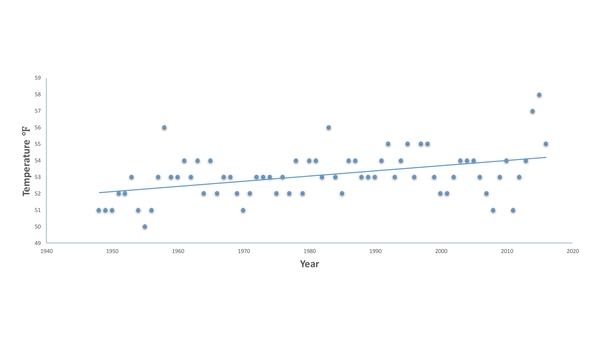
The authors were interested in whether they could observe the effects of climate change by analyzing historical temperature data of two U.S. cities. They predicted that they should observe a warming trend in both cities. Their results showed that despite yearly variations, warming trends can be observed both in Rochester, NY and Seattle, WA which fit the predictions of climate change forecasts.

Read More...

Associations between fentanyl usage and social media use among U.S. teens

Sul et al. | Jun 10, 2025

Associations between fentanyl usage and social media use among U.S. teens
Image credit: freestocks

Here the authors aimed to understand factors influencing adolescent fentanyl exposure, hypothesizing a positive association between social media usage, socioeconomic factors, and fentanyl abuse among U.S. teens. Their analysis of the Monitoring the Future dataset revealed that a history of suspension and use of marijuana or alcohol were linked to higher fentanyl use, and while not statistically significant, a notable positive correlation between social media use and fentanyl frequency was observed.

Read More...

The gender gap in STEM at top U.S. Universities: change over time and relationship with ranking

Kruus et al. | Jun 25, 2024

The gender gap in STEM at top U.S. Universities: change over time and relationship with ranking

Authors address the gender disparity in STEM fields, examining changes in gender diversity across male-dominated undergraduate programs over 19 years at 24 top universities. Analyzing data from NCES IPEDS, it identifies STEM as persistently male-dominated but notes increasing gender diversity in many disciplines, particularly in recent years. Results indicate that higher-ranked universities in disciplines like computer science and mechanical engineering show a weak correlation with improved gender diversity, suggesting effective initiatives can mitigate the gender gap in STEM, despite ongoing challenges.

Read More...