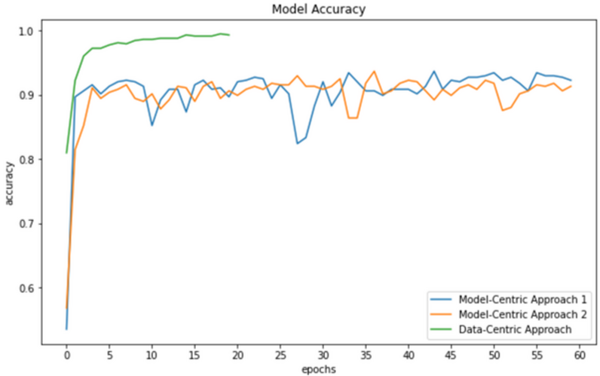
In this study, three models are used to test the hypothesis that data-centric artificial intelligence (AI) will improve the performance of machine learning.
Read More...Comparing model-centric and data-centric approaches to determine the efficiency of data-centric AI
In this study, three models are used to test the hypothesis that data-centric artificial intelligence (AI) will improve the performance of machine learning.
Read More...Hybrid Quantum-Classical Generative Adversarial Network for synthesizing chemically feasible molecules
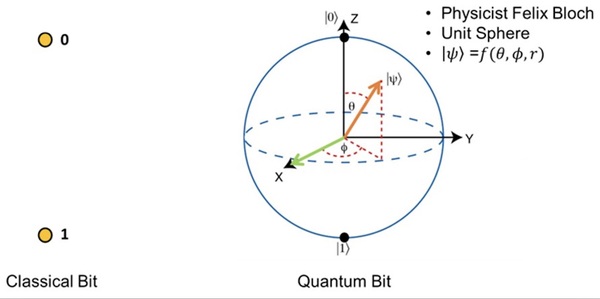
Current drug discovery processes can cost billions of dollars and usually take five to ten years. People have been researching and implementing various computational approaches to search for molecules and compounds from the chemical space, which can be on the order of 1060 molecules. One solution involves deep generative models, which are artificial intelligence models that learn from nonlinear data by modeling the probability distribution of chemical structures and creating similar data points from the trends it identifies. Aiming for faster runtime and greater robustness when analyzing high-dimensional data, we designed and implemented a Hybrid Quantum-Classical Generative Adversarial Network (QGAN) to synthesize molecules.
Read More...A computational quantum chemical study of fluorinated Allopurinol
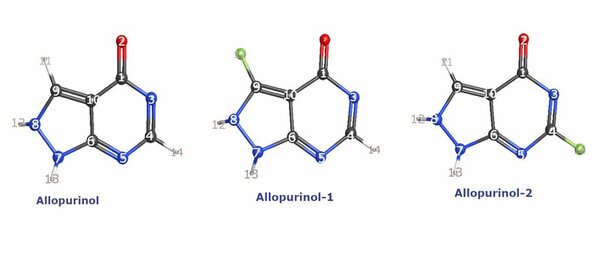
In this study, the impact of fluorination of heterocyclic drug Allopurinol on its stability and other chemical properties is investigated.
Read More...Modular mimics of neuroactive alkaloids - design, synthesis, and cholinesterase inhibitory activity of rivastigmine analogs
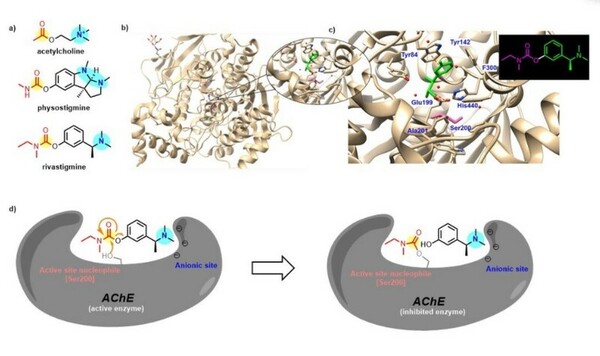
Naturally occurring neuroactive alkaloids are often studied for their potential to treat Neurological diseases. This team of students study Rivastigmine, a potent cholinesterase inhibitor that is a synthetic analog of physostigmine, which comes from the Calabar bean plant Physostigma venenosum. By comparing the effects of optimized synthetic analogs to the naturally occurring alkaloid, they determine the most favorable analog for inhibition of acetylcholinesterase (AChE), the enzyme that breaks down the neurotransmitter acetylcholine (ACh) to terminate neuronal transmission and signaling between synapses.
Read More...A comparative study on the suitability of virtual labs for school chemistry experiments
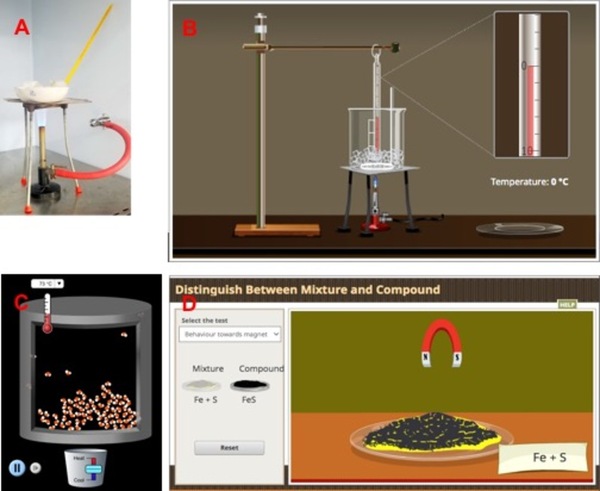
Virtual labs have been gaining popularity over the last few years, especially during the worldwide lockdown due to the COVID-19 pandemic. In this study, the suitability of virtual labs for school chemistry experiments is addressed and their effectiveness is compared to traditional physical lab experiments by focusing on physical and human resources, convenience, cost, safety, and time involved as well as topic "matter".
Read More...A novel approach for early detection of Alzheimer’s disease using deep neural networks with magnetic resonance imaging
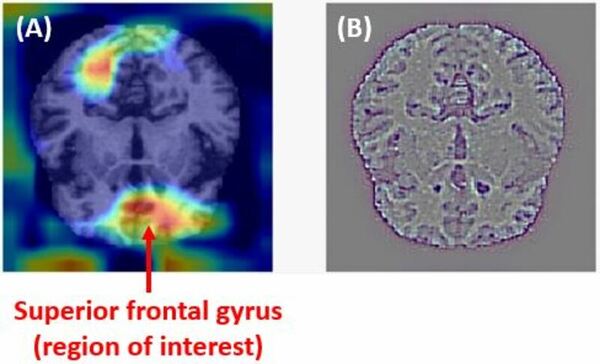
In the battle against Alzheimer's disease, early detection is critical to mitigating symptoms in patients. Here, the authors use a collection of MRI scans, layering with deep learning computer modeling, to investigate early stages of AD which can be hard to catch by human eye. Their model is successful, able to outperform previous models, and detected regions of interest in the brain for further consideration.
Read More...DNA-SEnet: A convolutional neural network for classifying DNA-asthma associations

In this study, the authors developed a model named DNA Sequence Embedding Network (DNA-SEnet) to classify DNA-asthma associations using their genomic patterns.
Read More...Leveraging E-Waste to Enhance Water Condensation by Effective Use of Solid-state Thermoelectric Cooling
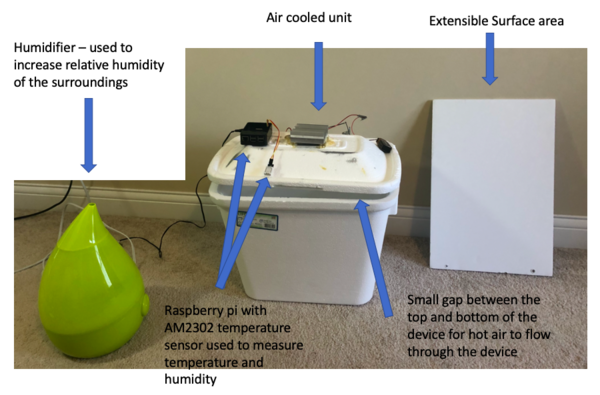
Water scarcity affects upwards of a billion people worldwide today. This project leverages the potential of capturing humidity to build a high-efficiency water condensation device that can generate water and be used for personal and commercial purposes. This compact environment-friendly device would have low power requirements, which would potentially allow it to utilize renewable energy sources and collect water at the most needed location.
Read More...A low-cost, Arduino-based system for real-time abiotic monitoring of a local watershed
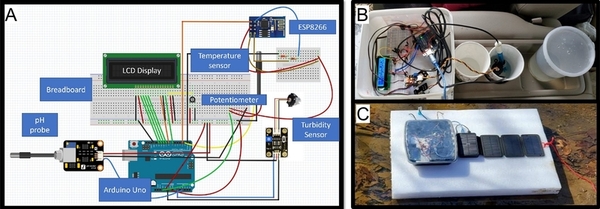
The authors monitored water quality over time looking for influences from construction and deforestation.
Read More...Weather-based power outage prediction in New York City: An ensemble machine learning approach

This study contributes to our understanding of how urban energy systems respond to climate variability and inform strategies for enhancing power grid resilience. The findings can help inform urban planners and infrastructure developers by identifying the factors that make regions within a power grid more vulnerable.
Read More...