Browse Articles

Honey Bee Pollen in Allergic Rhinitis Healing

Bjelajac et al. | Jun 24, 2020

Honey Bee Pollen in Allergic Rhinitis Healing

The most common atopic disease of the upper respiratory tract is allergic rhinitis. It is defined as a chronic inflammatory condition of nasal mucosa due to the effects of one or more allergens and is usually a long-term problem. The purpose of our study was to test the efficiency of apitherapy in allergic rhinitis healing by the application of honey bee pollen. Apitherapy is a branch of alternative medicine that uses honey bee products. Honey bee pollen can act as an allergen and cause new allergy attacks for those who suffer from allergic rhinitis. Conversely, we hoped to prove that smaller ingestion of honey bee pollen on a daily basis would desensitize participants to pollen and thus reduce the severity of allergic rhinitis.

Read More...

Testing the Effects of Resveratrol, Apigenin, and Glucosamine to Effectively Reduce Prostate Cancer Cell Proliferation, Migration Levels, and Increase Apoptosis

Yang et al. | Apr 16, 2020

Testing the Effects of Resveratrol, Apigenin, and Glucosamine to Effectively Reduce Prostate Cancer Cell Proliferation, Migration Levels, and Increase Apoptosis

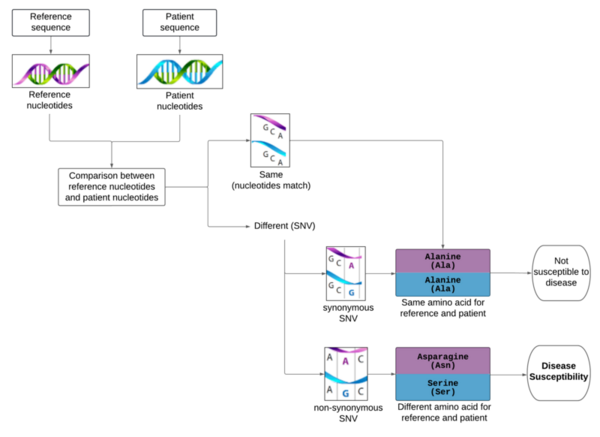
The current five-year survival rate of metastasized prostate cancer is only 30% and occurs in every one in nine men. Researchers have shown that people with a type of dwarfism called Laron’s Syndrome are immune to cancer due to their low levels of insulin-like growth factor-1 (IGF-1). For this reason, experimentally modifying the level of IGF-1 could provide better insight into whether lowering the levels of IGF-1 in prostate cancer cell lines (e.g. PC-3) could be an effective treatment to reduce their rates of proliferation and migration and increase apoptosis. We selected three compounds, which researchers have shown decrease IGF-1 levels, to test and combine to determine which is the most promising.

Read More...

People’s Preference to Bet on Home Teams Even When Losing is Likely

Weng et al. | Mar 10, 2020

People’s Preference to Bet on Home Teams Even When Losing is Likely

In this study, the authors investigate situations in which people make sports bets that seem to go against their better judgement. Using surveys, individuals were asked to bet on which team would win in scenarios when their home team was involved and others when they were not to determine whether fandom for a team can overshadow fans’ judgment. They found that fans bet much more on their home teams than neutral teams when their team was facing a large deficit.

Read More...

Effects of Ocean Acidification on the Photosynthetic Ability of Chaetoceros gracilis in the Monterey Bay

Harvell et al. | Jan 16, 2020

Effects of Ocean Acidification on the Photosynthetic Ability of <i>Chaetoceros gracilis</i> in the Monterey Bay

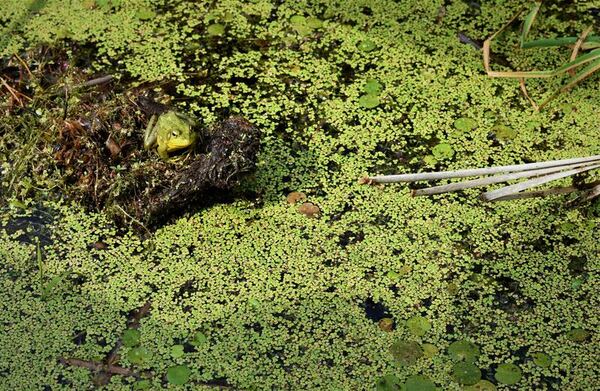
In this article, Harvell and Nicholson hypothesized that increased ocean acidity would decrease the photosynthetic ability of Chaetoceros gracilis, a diatom prolific in Monterey Bay, because of the usually corrosive effects of carbonic acid on both seashells and cells’ internal structures. They altered pH of algae environments and measured the photosynthetic ability of diatoms over four days by spectrophotometer. Overall, their findings indicate that C. gracilis may become more abundant in Monterey Bay as the pH of the ocean continues to drop, potentially contributing to harmful algal blooms.

Read More...

The Effect of Varying Training on Neural Network Weights and Visualizations

Fountain et al. | Dec 04, 2019

The Effect of Varying Training on Neural Network Weights and Visualizations

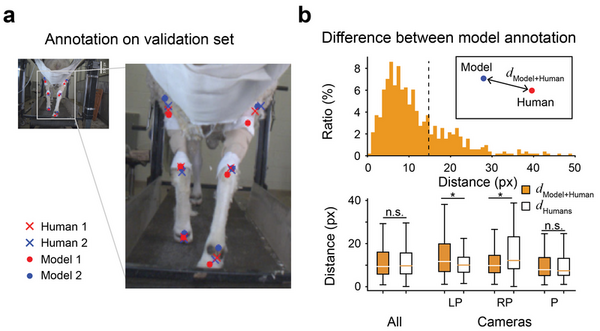
Neural networks are used throughout modern society to solve many problems commonly thought of as impossible for computers. Fountain and Rasmus designed a convolutional neural network and ran it with varying levels of training to see if consistent, accurate, and precise changes or patterns could be observed. They found that training introduced and strengthened patterns in the weights and visualizations, the patterns observed may not be consistent between all neural networks.

Read More...

Repulsion of Ants Using Non-Toxic Household Products

Ambati et al. | Sep 10, 2019

Repulsion of Ants Using Non-Toxic Household Products

Ant invasion causes damage exceeding $5 billion annually in North America. In this study, Ambati and Duvvuri aim to identify natural products with ant-repelling properties using a custom ring apparatus designed to quantify ant-repellence. They report that cinnamon and lemon were the most effective ant repellents of the tested products. These data suggest that compounds found in non-toxic household products, such as cinnamon oil and lemon juice, could be used in low-dose combinations as potent, effective, eco-friendly, and safe ant repellents.

Read More...

The Effect of Ultraviolet Radiation and the Antioxidant Curcumin on the Longevity, Fertility, and Physical Structure of Drosophila melanogaster: Can We Defend Our DNA?

Lateef et al. | May 18, 2019

The Effect of Ultraviolet Radiation and the Antioxidant Curcumin on the Longevity, Fertility, and Physical Structure of <em>Drosophila melanogaster</em>: Can We Defend Our DNA?

Ultraviolet (UV) radiation is known to alter DNA structure and impair cellular function in all living organisms. In this study, Lateef et al examine the effects of UV radiation to determine whether antioxidant-enriched nutrition can combat the potential deleterious effects of UV radiation on Drosophila melanogaster. They found that UVB (320nm) radiation caused a 59% decrease in the Drosophila lifespan and mutagenic effects on flies' physical appearance, but did not significantly affect fertility. Curcumin significantly prolonged lifespan and enhanced fertility for both UV- and non-UV-exposed flies. The research demonstrates the positive potential of natural antioxidants as weapons against radiation-induced diseases including cancer.

Read More...

The Effect of Caffeine on the Regeneration of Brown Planaria (Dugesia tigrina)

Lazorik et al. | May 10, 2019

The Effect of Caffeine on the Regeneration of Brown Planaria (<em>Dugesia tigrina</em>)

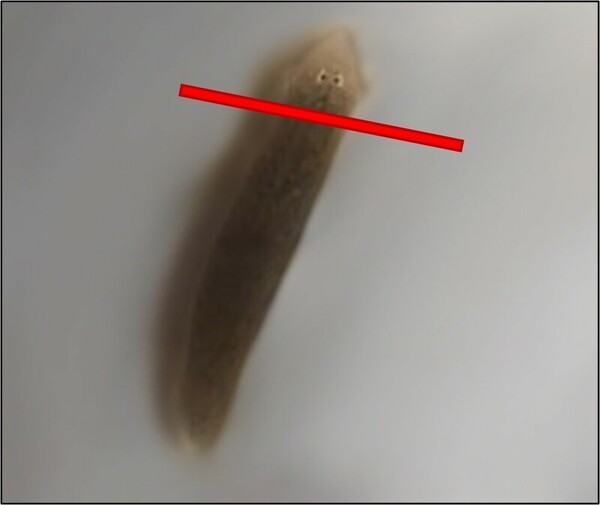
The degeneration of nerve cells in the brain can lead to pathologies such as Parkinson’s disease. It has been suggested that neurons in humans may regenerate. In this study, the effect of different doses of caffeine on regeneration was explored in the planeria model. Caffeine has been shown to enhance dopamine production, and dopamine is found in high concentrations in regenerating planeria tissues. Higher doses of caffeine accelerated planeria regeneration following decapitation, indicating a potential role for caffeine as a treatment to stimulate regeneration.

Read More...

An Analysis of Soil Microhabitats in Revolutionary War, Civil War, and Modern Graveyards on Long Island, NY

Caputo et al. | May 05, 2019

An Analysis of Soil Microhabitats in Revolutionary War, Civil War, and Modern Graveyards on Long Island, NY

Previously established data indicate that cemeteries have contributed to groundwater and soil pollution, as embalming fluids can impact the microbiomes that exist in decomposing remains. In this study, Caputo et al hypothesized that microbial variation would be high between cemeteries from different eras due to dissimilarities between embalming techniques employed, and furthermore, that specific microbes would act as an indication for certain contaminants. Overall, they found that there is a variation in the microbiomes of the different eras’ cemeteries according to the concentrations of the phyla and their more specific taxa.

Read More...