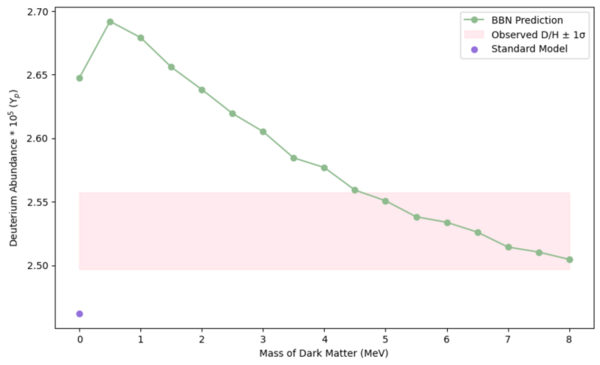
Recent observations by the “Extremely Metal-Poor Representatives Explored by the Subaru Survey” (EMPRESS) collaboration found normal deuterium levels but unexpectedly low helium-4, challenging current cosmological theories. This study used simulations with the PRyMordial package to test whether dark matter particles interacting with neutrinos in the early universe could explain the discrepancy.
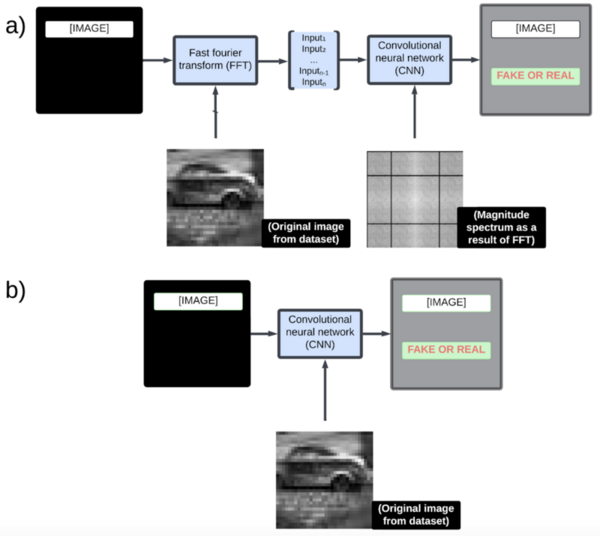
Recent advances in generative AI have made it increasingly hard to distinguish real images from AI-generated ones. Traditional detection models using CNNs or U-net architectures lack precision because they overlook key spatial and frequency domain details. This study introduced a hybrid model combining Convolutional Neural Networks (CNN) with Fast Fourier Transform (FFT) to better capture subtle edge and texture patterns.
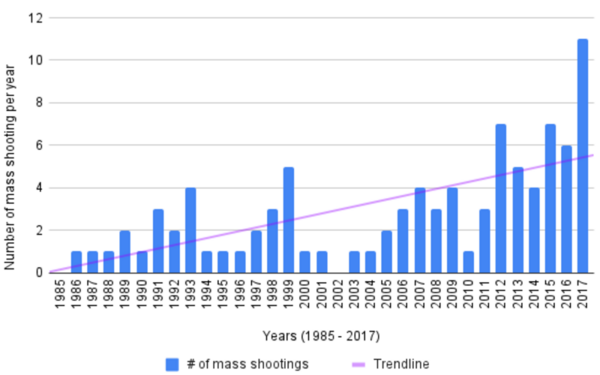
Researching gun violence and mass shootings in the U.S. is difficult due to the lack of consistent data collection. Some studies have linked mass shootings to personal financial stress, but little formal research exists on the impact of broader economic conditions. This study hypothesized an inverse relationship between mass shootings and economic performance, using the S&P 500 and unemployment rate as indicators.
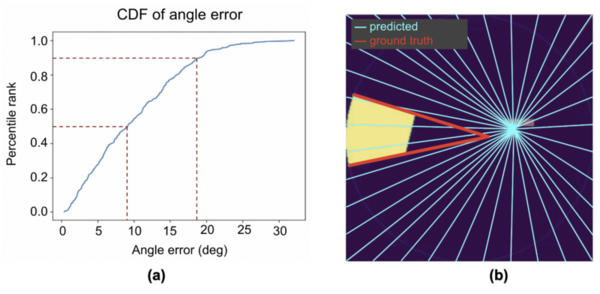
Robot-assisted minimally invasive surgery (RMIS) benefits from increased precision and faster recovery, with force feedback from the surgical tool being critical for control. Researchers tested the use of neural networks for detecting the vanishing point of the tool, a key element for force feedback.
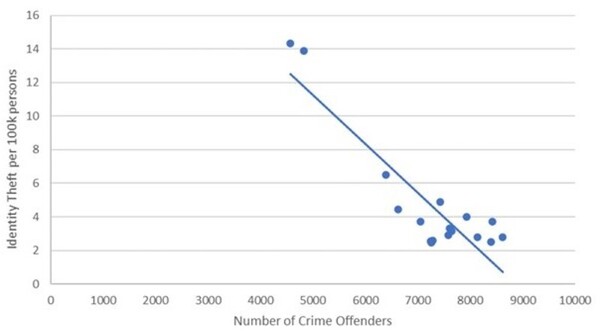
The authors looked at variables associated with identity fraud in the US. They found that national unemployment rate and online banking usage are among significant variables that explain identity fraud.
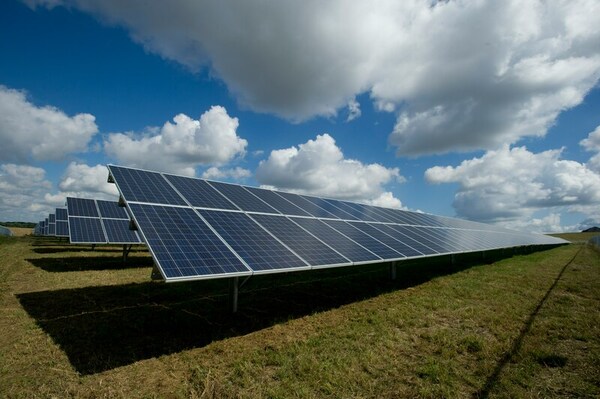
Here, recognizing the need to improve the efficiency of the conversion of solar energy to electrical energy, the authors used MATLAB to mathematically simulate a multi-layered thin film with an without an antireflective coating. They found that the use of alternating ZnO-SiO2 multilayers enhanced the transmission of light into the solar cell, increasing its efficiency and reducing the reflectivity of the Si-Air interface.
The lexical decision task is designed to test aspects of vocabulary retrieval from short-term and long-term memory by prompting the subject to differentiate between words and non-words. From this task, researchers can determine the effects of certain stimuli on linguistic processing. Numerous studies have investigated the effects of music on various cognitive capacities, like memory and vocabulary. In the current study, we hypothesized that participants would show greater accuracy rates on the lexical decision task when exposed to a selected piece of classical music while completing the task, as compared to completing the task in silence. We tested this hypothesis on a group of 25 participants who completed the lexical decision task once in silence and once while listening to Beethoven's “Moonlight Sonata, 1st Movement”. The results suggest a positive association between the effects of classical background music and improved accuracy. Our results indicate that listening to certain types of music may enhance linguistic processes such as reading and writing. Further research with a larger group of participants is necessary to better understand the association between music and linguistic processing abilities.
Here, the authors investigated the most efficient way to position magnets to hold the most pieces of paper on the surface of a refrigerator. They used a regression model along with an artificial neural network to identify the most efficient positions of four magnets to be at the vertices of a rectangle.
Recent research suggests that the "American Dream" of income mobility may be becoming increasingly hard to obtain. Datta and Schmitz explore the role of government spending in socioeconomic opportunity by determining which state government spending components are associated with increased income mobility.
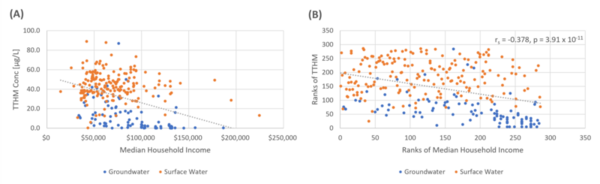
Trihalomethanes, probable human carcinogens, are commonly found disinfection by-products (DBPs) in public water systems (PWS). The authors investigated the correlation between trihalomethane concentrations and socioeconomic factors in New York State, finding a negative correlation between median household income and trihalomethane concentrations. The inverse association between trihalomethanes and household income may indicate socioeconomic disparity regarding drinking water quality and the need for improved efforts to assist small- and medium-sized community water systems to lower DBP levels in New York State.