Browse Articles

Characterization of Drought Tolerance in Arabidopsis Mutant fry1-6

Kim et al. | Jan 07, 2019

Characterization of Drought Tolerance in Arabidopsis Mutant  fry1-6

In a world where water shortage is becoming an increasing concern, and where population increase seems inevitable, food shortage is an overwhelming concern for many. In this paper, the authors aim to characterize a drought-resistant strain of A. thaliana, investigating the cause for its water resistance. These and similar studies help us learn how plants could be engineered to improve their ability to flourish in a changing climate.

Read More...

Floating aquatic plants form groups faster through current

May et al. | Oct 16, 2023

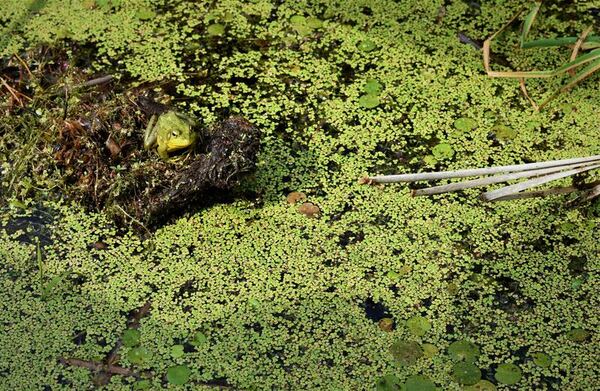
Floating aquatic plants form groups faster through current
Image credit: N Band

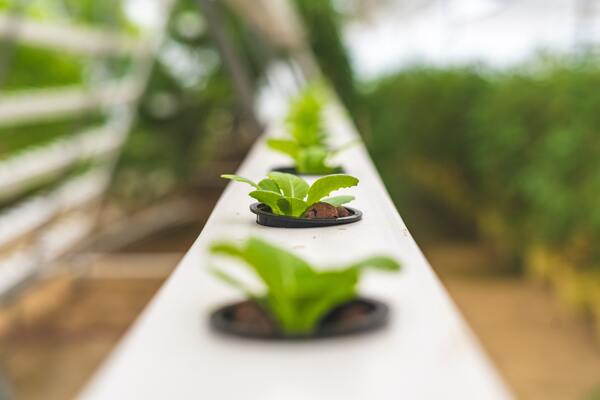
Here, the authors sought to investigate the effects of water current on the growth of colonies of duckweed, a floating plant that forms colonies in silent ponds, marshes, lakes , and streams in North America. They found that current flow mediates the formation of colonies, disrupting and recreating the colonies which provides the opportunity for reorganizations that were identified as beneficial.

Read More...

A novel filtration model for microplastics using natural oils and its application to the environment

Park et al. | Jun 27, 2022

A novel filtration model for microplastics using natural oils and its application to the environment

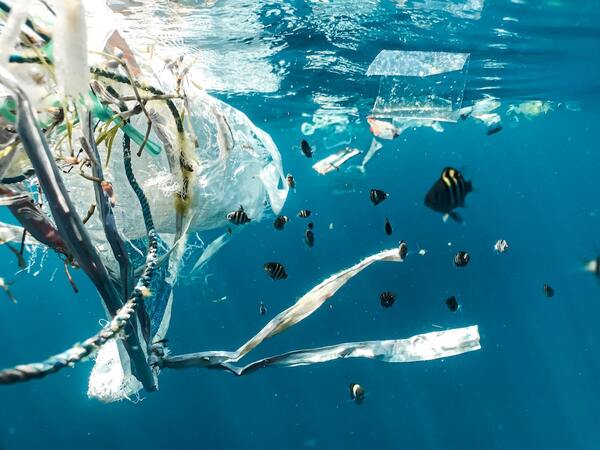
Recognizing the need for a method to filter microplastics from polluted water the authors sought to use nonpolar solvents, palm oil and palm kernel oil, to filter microplastics out of model seawater. By relying on the separation of polar and nonpolar solvents followed by freezing the nonpolar solvent, they reported that microplastics could be extracted with percentages ranging from 96.2% to 94.2%. They also provided an estimation to use this method as part of container ships to clean the Pacific Ocean of microplastics.

Read More...

Legacy mercury, reservoir dynamics, and dredging effects on methylmercury in San Francisco Bay

Silver et al. | Aug 24, 2026

Legacy mercury, reservoir dynamics, and dredging effects on methylmercury in San Francisco Bay

This study analyzes over two decades of monitoring data (1999-2022) to investigate how legacy mining, reservoir water releases, and dredging activities influence toxic methylmercury (MeHg) levels in San Francisco Bay. The findings reveal a significant delayed correlation between river flow and San Francisco Bay MeHg, and counter to the authors' hypothesis, a strong association between increased MeHg concentrations in the bay and both total annual dredging volume and beneficial sediment reuse / upland sediment disposal.

Read More...

Covalently Entrapping Catalase into Calcium Alginate Worm Pieces Using EDC Carbodiimide as a Crosslinker.

Suresh et al. | Mar 31, 2019

Covalently Entrapping Catalase into Calcium Alginate Worm Pieces Using EDC Carbodiimide as a Crosslinker.

Catalase is a biocatalyst used to break down toxic hydrogen peroxide into water and oxygen in industries such as cheese and textiles. Improving the efficiency of catalase would help us to make some industrial products, such as cheese, less expensively. The best way to maintain catalase’s conformation, and thus enhance its activity, is to immobilize it. The primary goal of this study was to find a new way of immobilizing catalase.

Read More...