Browse Articles

Genetic underpinnings of the sex bias in autism spectrum disorder

Lee et al. | Mar 29, 2024

Genetic underpinnings of the sex bias in autism spectrum disorder
Image credit: Louis Reed

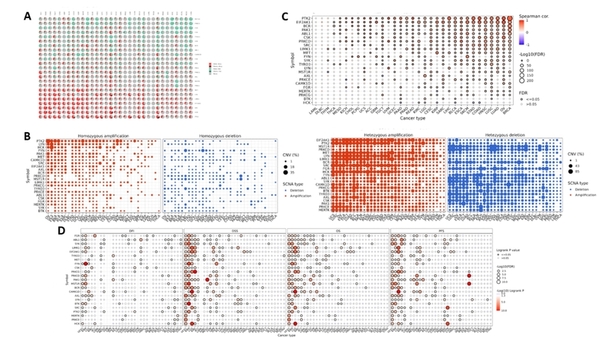
Here, seeking to identify a possible explanation for the more frequent diagnosis of autism spectrum disorder (ASD) in males than females, they sought to investigate a potential sex bias in the expression of ASD-associated genes. Based on their analysis, they identified 17 ASD-associated candidate genes that showed stronger collective sex-dependent expression.

Read More...

Using NLP to ascertain changes in the fast-fashion industry based on UN sustainable development goals

Chadha et al. | Sep 11, 2023

Using NLP to ascertain changes in the fast-fashion industry based on UN sustainable development goals
Image credit: Prudence Earl

Here, the authors sought to evaluate the efforts of fast fashion clothing companies towards sustainability, specifically in regards to the United Nations Sustainable Development Goals. The authors used natural language processing to investigate the sustainability reports of fast fashion companies focusing on terms established by the UN. They found that the most consistently addressed areas were related to sustainable consumption/production, with a focus on health and well-being emerging during the recent pandemic.

Read More...

Ramifications of natural and artificial sweeteners on the gastrointestinal system

Cowen et al. | Jun 19, 2023

Ramifications of natural and artificial sweeteners on the gastrointestinal system

This study aimed to determine whether artificial sweeteners are harmful to the human microbiome by investigating two different bacteria found to be advantageous to the human gut, Escherichia coli and Bacillus coagulans. Results showed dramatic reduction in bacterial growth for agar plates containing two artificial sweeteners in comparison to two natural sweeteners. This led to the conclusion that both artificial sweeteners inhibit the growth of the two bacteria and warrants further study to determine if zero-sugar sweeteners may be worse for the human gut than natural sugar itself.

Read More...

Deciphering correlation and causation in risk factors for heart disease with Mendelian randomization

Singh et al. | Feb 08, 2023

Deciphering correlation and causation in risk factors for heart disease with Mendelian randomization
Image credit: Robina Weermeijer

Here, seeking to identify the risk of coronary artery disease (CAD), a major cause of cardiovascular disease, the authors used Mendelian randomization. With this method they identified several traits such as blood pressure readings, LDL cholesterol and BMI as significant risk factors. While other traits were not found to be significant risk factors.

Read More...

A machine learning approach for abstraction and reasoning problems without large amounts of data

Isik et al. | Jun 25, 2022

A machine learning approach for abstraction and reasoning problems without large amounts of data

While remarkable in its ability to mirror human cognition, machine learning and its associated algorithms often require extensive data to prove effective in completing tasks. However, data is not always plentiful, with unpredictable events occurring throughout our daily lives that require flexibility by artificial intelligence utilized in technology such as personal assistants and self-driving vehicles. Driven by the need for AI to complete tasks without extensive training, the researchers in this article use fluid intelligence assessments to develop an algorithm capable of generalization and abstraction. By forgoing prioritization on skill-based training, this article demonstrates the potential of focusing on a more generalized cognitive ability for artificial intelligence, proving more flexible and thus human-like in solving unique tasks than skill-focused algorithms.

Read More...

The Effect of Poverty on Mosquito-borne Illness Across the United States

Kar et al. | Feb 25, 2021

The Effect of Poverty on Mosquito-borne Illness Across the United States

Mosquito-borne diseases are a major issue across the world, and the objective for this project was to determine the characteristics that make some communities more susceptible to these diseases than others. The authors identified and studied characteristics that make communities susceptible to mosquito-borne diseases, including water in square miles, average temperature, population, population density, and poverty rates per county. They found that the population of a county is the best indicator of the prevalence of mosquito-borne diseases.

Read More...