Browse Articles

Phytochemical Analysis of Amaranthus spinosus Linn.: An in vitro Analysis

Sharma et al. | Mar 20, 2021

Phytochemical Analysis of <em>Amaranthus spinosus</em> Linn.: An <em>in vitro</em> Analysis

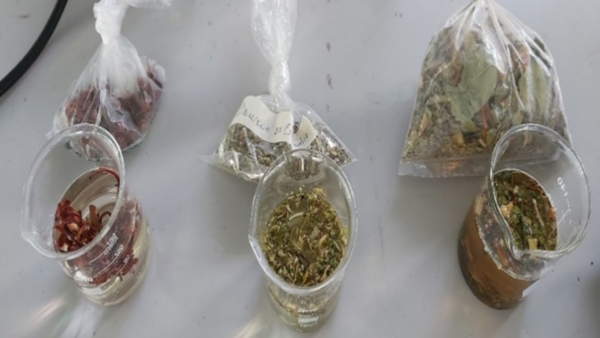
Mainstream cancer treatments, which include radiotherapy and chemotherapeutic drugs, are known to induce oxidative damage to healthy somatic cells due to the liberation of harmful free radicals. In order to avert this, physiological antioxidants must be complemented with external antioxidants. Here the authors performed a preliminary phytochemical screen to identify alkaloids, saponins, flavonoids, polyphenols, and tannins in all parts of the Amaranthus spinosus Linn. plant. This paper describes the preparation of this crude extract and assesses its antioxidant properties for potential use in complementary cancer treatment.

Read More...

Modulation of VEGF and TGF beta in 5-FU induced inflammation in MCF-7 using an herbal formulation

Vinay Nair et al. | Jun 03, 2022

Modulation of VEGF and TGF beta in 5-FU induced inflammation in MCF-7 using an herbal formulation

Acquired drug resistance is an increasing challenge in treating cancer with chemotherapy. One mechanism
behind this resistance is the increased inflammation that supports the progression and development of
cancer that arises because of the drug’s presence. Integrative oncology is the field that focuses on including natural products alongside traditional therapy to create a treatment that focuses on holistic patient well-being.
In this study, the authors demonstrate that the use of an herbal formulation, consisting of turmeric and green tea, alongside a traditional chemotherapeutic drug, 5-fluorouracil (FU) significantly decreases the level of cytokines produced in breast cancer cells when compared to the levels produced when exposed solely to the chemo drug. The authors conclude that this combination of treatment, based on the principle of integrative oncology, shows potential for reducing the resistance against treatment conferred through increased inflammation. Consequently, this suggests a prospective way forward in improving the efficacy of cancer treatment.

Read More...

Cell cytotoxicity and pro-apoptosis on MCF-7 cells using polyherbal formulation, MAT20

Tarigopula et al. | Feb 17, 2023

Cell cytotoxicity and pro-apoptosis on MCF-7  cells using polyherbal formulation, MAT20

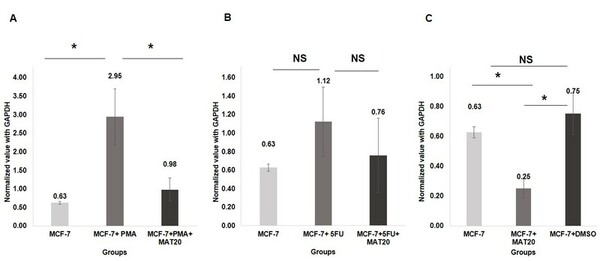
The purpose of this study was to test the anti-cancer properties and pro-apoptotic effects of the polyherbal formulation MAT20 as a complementary treatment. Moringa oleifera (Moringa), Phyllanthus emblica (Amla) and Ocimum sanctum (Tulsi), these 3 herbs were used to formulate MAT20, which contain phytochemicals that are known to display anti-cancer properties. In this study, we hypothesized that MCF-7 breast cancer cells treated with MAT20 would show increased cytotoxicity compared to its individual plant extracts.

Read More...

Combating drug resistance in cancer cells: Cooperative effect of green tea and turmeric with chemotherapeutic drug

Nair et al. | Jul 27, 2020

Combating drug resistance in cancer cells: Cooperative effect of green tea and turmeric with chemotherapeutic drug

The major drawback of chemotherapy regimens for treating cancer is that the cancerous cells acquire drug resistance and become impervious to further dose escalation. Keeping in mind the studied success of herbal formulations with regard to alternative treatments for cancer, we hypothesized that the use of a chemotherapeutic drug and proprietary herbal formulation, HF1, would combat this phenomenon when administered with common chemotherapeutic drug 5FU. Results demonstrated a cooperative effect between HF1 and 5FU on the drug resistant cell line, implying that administration of HF1 with 5FU results in cell death as measured by MTT assay.

Read More...

The Potential of Fibroblast Growth Factors to Stimulate Hair Growth In Vitro

Cheng et al. | Nov 07, 2021

The Potential of Fibroblast Growth Factors to Stimulate Hair Growth In Vitro

Identifying treatments that can stimulate hair growth use could help those struggling with undesirable hair loss. Here, the authors show that Fibroblast Growth Factors can stimulate the division of cells isolated from the mouse hair follicle. Their results suggest that this family of growth factors might be helpful in stimulating hair growth in living animals as well.

Read More...