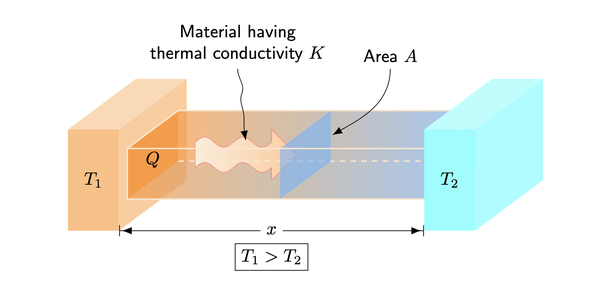
In this experiment, the authors modify the heat equation to account for imperfect insulation during heat transfer and compare it to experimental data to determine which is more accurate.
Read More...Heat conduction: Mathematical modeling and experimental data
In this experiment, the authors modify the heat equation to account for imperfect insulation during heat transfer and compare it to experimental data to determine which is more accurate.
Read More...LawCrypt: Secret Sharing for Attorney-Client Data in a Multi-Provider Cloud Architecture
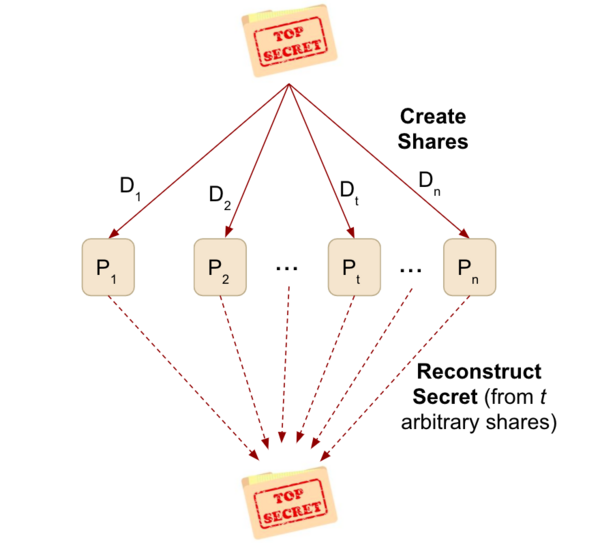
In this study, the authors develop an architecture to implement in a cloud-based database used by law firms to ensure confidentiality, availability, and integrity of attorney documents while maintaining greater efficiency than traditional encryption algorithms. They assessed whether the architecture satisfies necessary criteria and tested the overall file sizes the architecture could process. The authors found that their system was able to handle larger file sizes and fit engineering criteria. This study presents a valuable new tool that can be used to ensure law firms have adequate security as they shift to using cloud-based storage systems for their files.
Read More...A Retrospective Study of Research Data on End Stage Renal Disease
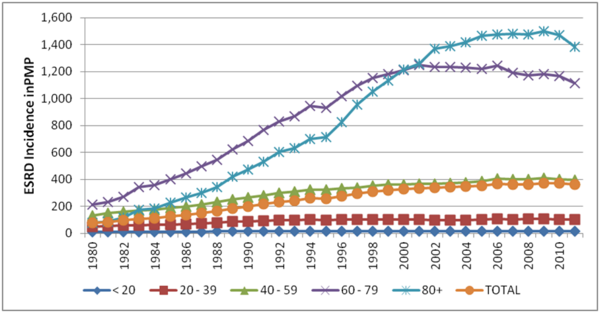
End Stage Renal Disease (ESRD) is a growing health concern in the United States. The authors of this study present a study of ESRD incidence over a 32-year period, providing an in-depth look at the contributions of age, race, gender, and underlying medical factors to this disease.
Read More...Understanding the impossibility of machine learning fairness with data examples

Machine learning systems are often expected to make fair decisions, yet the most widely used fairness criteria—independence, separation, and sufficiency—cannot generally be satisfied at the same time. In this study, students tested these criteria using a logistic regression model on a real-world student performance dataset and found that each criterion was met only at different prediction thresholds, with no threshold satisfying all three simultaneously. These results illustrate the inherent trade-offs in algorithmic fairness and highlight why achieving perfectly fair machine learning models is often impossible in practice.
Read More...Gradient boosting with temporal feature extraction for modeling keystroke log data
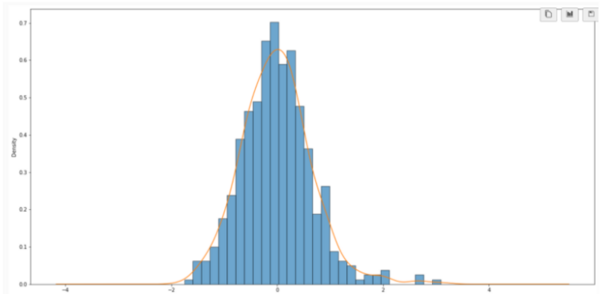
Although there has been great progress in the field of Natural language processing (NLP) over the last few years, particularly with the development of attention-based models, less research has contributed towards modeling keystroke log data. State of the art methods handle textual data directly and while this has produced excellent results, the time complexity and resource usage are quite high for such methods. Additionally, these methods fail to incorporate the actual writing process when assessing text and instead solely focus on the content. Therefore, we proposed a framework for modeling textual data using keystroke-based features. Such methods pay attention to how a document or response was written, rather than the final text that was produced. These features are vastly different from the kind of features extracted from raw text but reveal information that is otherwise hidden. We hypothesized that pairing efficient machine learning techniques with keystroke log information should produce results comparable to transformer techniques, models which pay more or less attention to the different components of a text sequence in a far quicker time. Transformer-based methods dominate the field of NLP currently due to the strong understanding they display of natural language. We showed that models trained on keystroke log data are capable of effectively evaluating the quality of writing and do it in a significantly shorter amount of time compared to traditional methods. This is significant as it provides a necessary fast and cheap alternative to increasingly larger and slower LLMs.
Read More...Exploring the effects of diverse historical stock price data on the accuracy of stock price prediction models
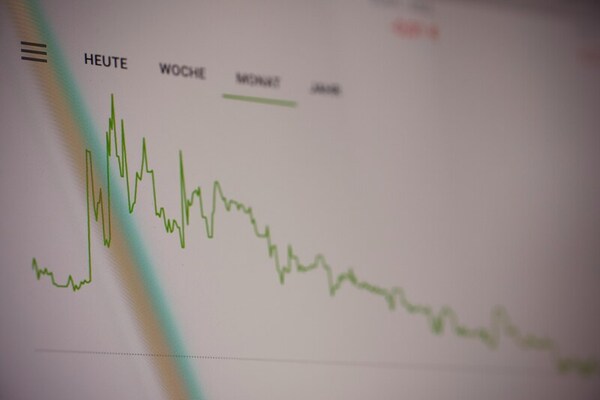
Algorithmic trading has been increasingly used by Americans. In this work, we tested whether including the opening, closing, and highest prices in three supervised learning models affected their performance. Indeed, we found that including all three prices decreased the error of the prediction significantly.
Read More...Analyzing aerosol variation during the COVID-19 pandemic lockdown using satellite data
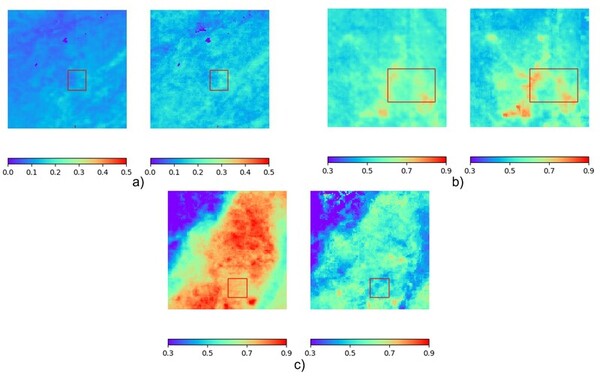
In this study, the authors use aerosol optical depth data to determine if aerosol levels were lower in major metropolitan areas around the world during the COVID-19 pandemic.
Read More...An Investigative Analysis of Climate Change Using Historical and Modern Weather Data
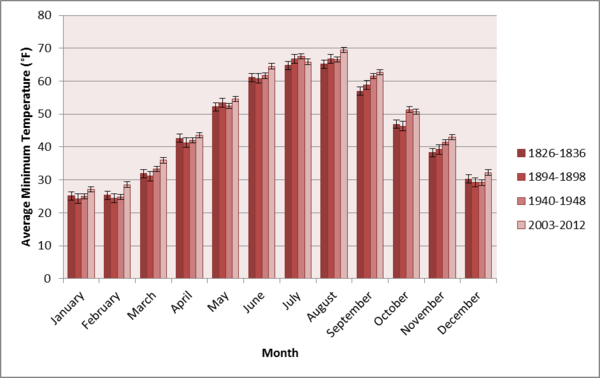
Climate change is an important and contentious issue that has far-reaching implications for our future. The authors here compare primary temperature and precipitation data from almost 200 years ago against the present day. They find that the average annual temperature in Brooklyn, NY has risen significantly over this time, as has the frequency of precipitation, though not the amount of precipitation. These data stress the need for more ecologically-conscious choices in our daily lives.
Read More...The characterization of quorum sensing trajectories of Vibrio fischeri using longitudinal data analytics
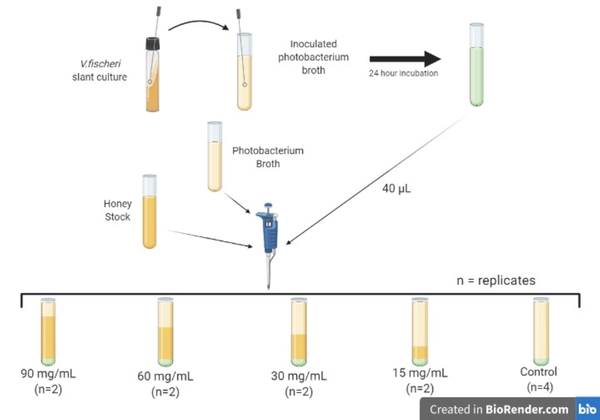
Quorum sensing (QS) is the process in which bacteria recognize and respond to the surrounding cell density, and it can be inhibited by certain antimicrobial substances. This study showed that illumination intensity data is insufficient for evaluating QS activity without proper statistical modeling. It concluded that modeling illumination intensity through time provides a more accurate evaluation of QS activity than conventional cross-sectional analysis.
Read More...Integrated expression, mutation, and survival analysis of 17 key genes in breast cancer using TCGA-BRCA data
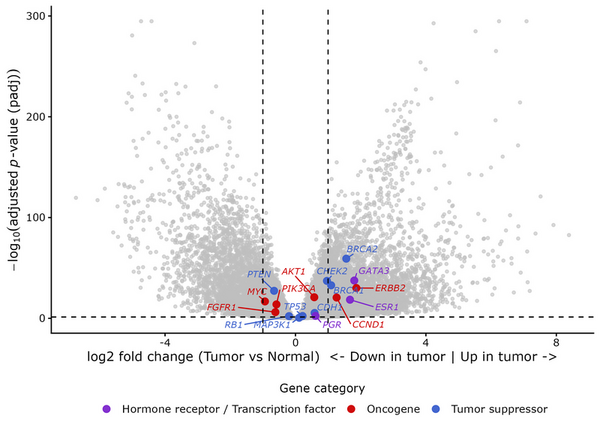
This study combines gene expression, mutation profiling, and survival analysis of 17 clinically important genes in breast cancer, utilizing the TCGA-BRCA dataset. Our results show that there are different patterns of oncogene upregulation, different levels of tumor suppressor activity, and complicated survival associations. TP53 was the most frequently mutated gene in this cohort. The results underscore the significance of multidimensional genomic analyses for a comprehensive understanding of breast cancer biology and its therapeutic ramifications.
Read More...