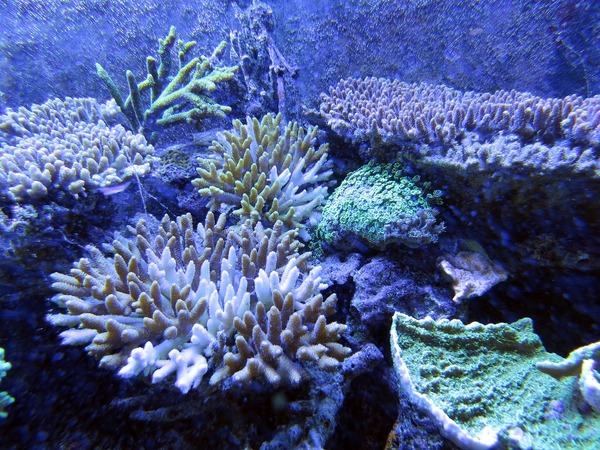
Industrialization has transformed human life and improved it for many. Nonetheless, a side effect has been an increase in chemical waste, which when not disposed of properly, has detrimental effects on surrounding habitats. An increase in ocean acidification could potentially affect many forms of life, disrupting the ecological balance in unforeseeable ways. In this article the authors explore the effect of acidification on corals and shells, and observe that an increase in ocean acidity has a significant effect on corals, but not shells. This illustrates how acidification could negatively affect marine life, and calls our attention to managing the factors that contribute to increasing the pH of the Earth's water bodies.
Understanding how bacteria respond to other bacteria could facilitate their ability to initiate and maintain their infectiousness. The phenomenon by which bacteria signal to each other via chemical signals is called quorum sensing, which could be targeted to deter bacterial infection in some cases if better understood. In this article, the authors study how a bacterium called V. fischeri uses quorum sensing to change bioluminescence, an easy readout that facilitates studying quorum sensing in this strain.
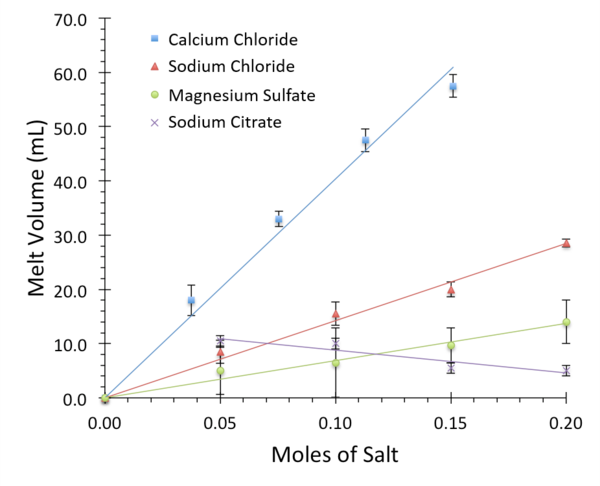
The use of salt to melt ice is a common and important practice to keep roadways safe during winter months. However, various subtypes of salt differ in their chemical and physical properties, as well as their environmental impact. In this study, the authors measure the effectiveness of different salts at disrupting ice structures and identify calcium chloride as the most effective.
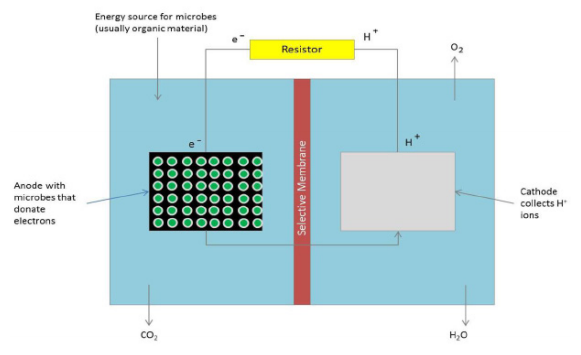
Microbial fuel cells (MFCs) are bio-electrochemical systems that utilize bacteria and are promising forms of alternative energy. Similar to chemical fuel cells, MFCs employ both an anode (accepts electrons) and a cathode (donates electrons), but in these devices the live bacteria donate the electrons necessary for current. In this study, the authors assess the functionality of a photosynthetic MFC that utilizes a purple non-sulfur bacterium. The MFC prototype they constructed was found to function over a range of environmental conditions, suggesting its potential use in industrial models.
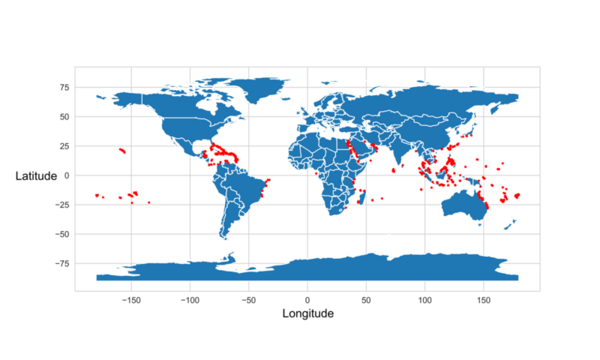
Coral bleaching is a fatal process that reduces coral diversity, leads to habitat loss for marine organisms, and is a symptom of climate change. This process occurs when corals expel their symbiotic dinoflagellates, algae that photosynthesize within coral tissue providing corals with glucose. Restoration efforts have attempted to repair damaged reefs; however, there are over 360,000 square miles of coral reefs worldwide, making it challenging to target conservation efforts. Thus, predicting the likelihood of bleaching in a certain region would make it easier to allocate resources for conservation efforts. We developed a machine learning model to predict global locations at risk for coral bleaching. Data obtained from the Biological and Chemical Oceanography Data Management Office consisted of various coral bleaching events and the parameters under which the bleaching occurred. Sea surface temperature, sea surface temperature anomalies, longitude, latitude, and coral depth below the surface were the features found to be most correlated to coral bleaching. Thirty-nine machine learning models were tested to determine which one most accurately used the parameters of interest to predict the percentage of corals that would be bleached. A random forest regressor model with an R-squared value of 0.25 and a root mean squared error value of 7.91 was determined to be the best model for predicting coral bleaching. In the end, the random model had a 96% accuracy in predicting the percentage of corals that would be bleached. This prediction system can make it easier for researchers and conservationists to identify coral bleaching hotspots and properly allocate resources to prevent or mitigate bleaching events.
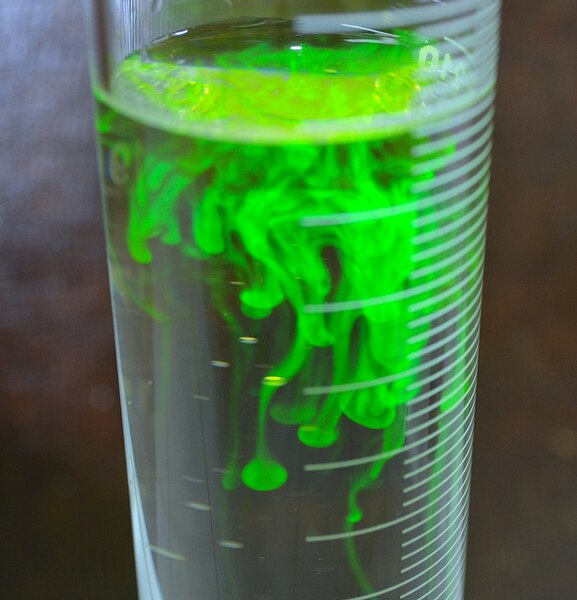
Currently there is no early dehydration detection system using temperature and pH as indicators. A sensor could alert the wearer and others of low hydration levels, which would normally be difficult to catch prior to more serious complications resulting from dehydration. In this study, a protein fluorophore, green fluorescent protein (GFP), and a chemical fluorophore, fluorescein, were tested for a change in fluorescence in response to increased temperature or decreased pH. Reversing the pH change did not restore GFP fluorescence, but that of fluorescein was re-established. This finding suggests that fluorescein could be used as a reusable sensor for a dehydration-related pH change.
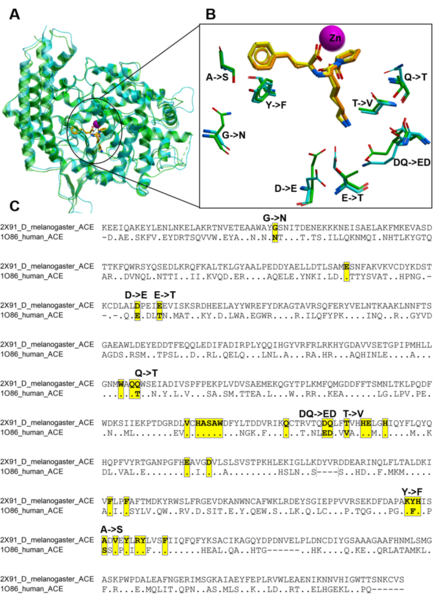
This study examines the possibility of utilizing proteins from Drosophila melanogaster in early drug discovery. Structural and sequence analysis of five diverse Drosophila proteins and its human homologs were conducted. Drosophila proteins with high conservation of amino acids at functionally significant positions are better candidates for use as human surrogate in drug discovery efforts.
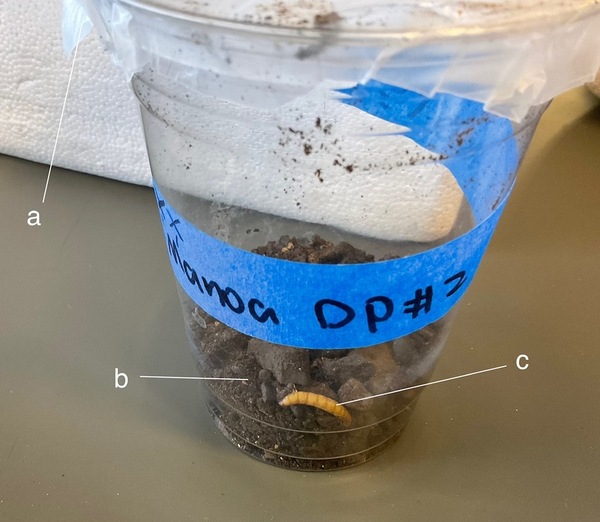
Fungi that attack and kill insects have promise for targeting mosquitoes without the harmful environmental impacts of chemicals like DDT. To find out whether fungi might be effective in controlling mosquitoes in Hawaii, Jiang and Chan test the effects of Hawaiian fungal isolates on mosquito larvae.
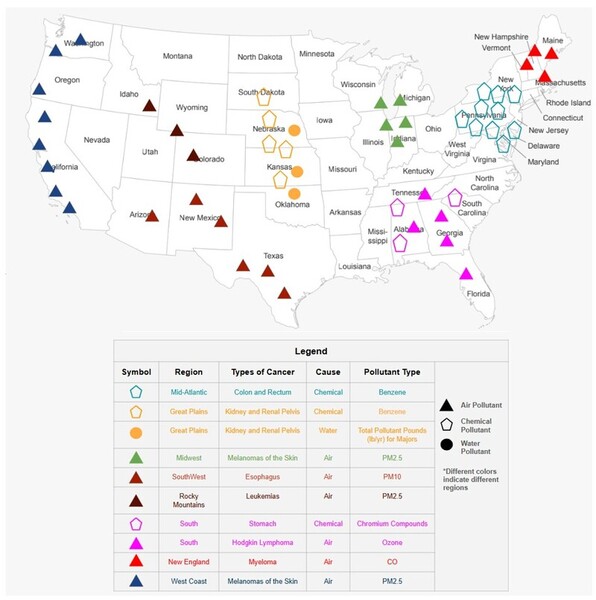
Here the authors investigate the relationship between environmental pollutants and cancer incidence rates across various geographical clusters in the United States from 2018 to 2020. By calculating Pearson correlation coefficients and t-statistics on CDC and EPA data, they demonstrated a strong correlation between specific pollutants and various cancers, offering insights that could help explain regional disparities in cancer rates and aid in preventing premature deaths.