Browse Articles

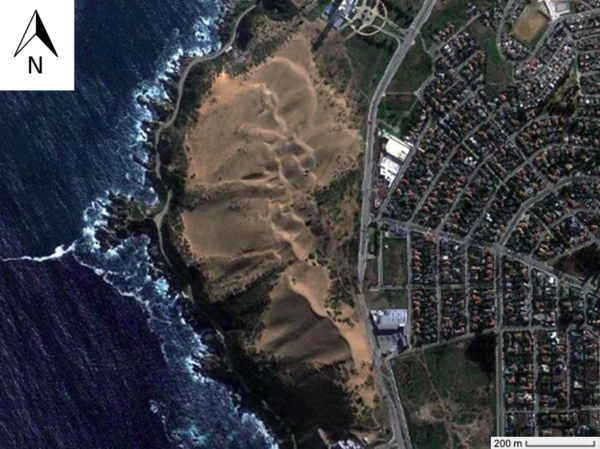
Dune flora can emerge from seed islands (Concon, Chile)

Farías Giusti-Bilz et al. | Dec 07, 2020

Dune flora can emerge from seed islands (Concon, Chile)

In the field of ecology, little is known about how plant communities originate. Through the process of characterizing dunes, mounds of sand formed by the wind, and their plant communities we can get to know the physiognomy and floristic composition of the territory. Based on the hypothesis that dune flora can emerge from seed islands: holes in the sand 6 cm deep containing a mixture of seeds, broken branches of shrubbery, and rabbit feces, during spring, the authors determined the composition of 20 seed islands in the sand dunes of Concon, Chile and measured how many seeds germinated in each one.

Read More...

The journey to Proxima Centauri b

Ramaswamy et al. | Apr 01, 2024

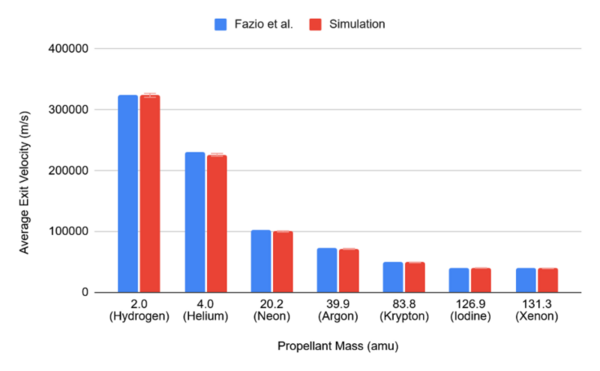
The journey to Proxima Centauri b
Image credit: The authors

Someday, rockets from Earth may be launched towards worlds beyond our solar system. But will these rockets be able to reach their destination within a human lifetime? Ramaswamy and Giovinazzi simulate rocket launches to an Earth-like exoplanet to uncover whether it's physically possible to complete the journey within a lifetime.

Read More...

Estimating Paleoenvironments Utilizing Foraminiferal Fossils from the Toyohama Formation, Aichi Prefecture, Central Japan

Kimitsuki et al. | Dec 11, 2017

Estimating Paleoenvironments Utilizing Foraminiferal Fossils from the Toyohama Formation, Aichi Prefecture, Central Japan

Foraminifera are a diverse phylum of marine protists that produce elaborate shells. Because of their abundance and morphological diversity, foraminiferal fossil assemblages are used for biostratigraphy, to accurately date sedimentary rocks and to characterize past ocean environments. In this paper, authors collected fossils within the Morozaki Group in central Honshu, Japan, to assess past marine environments and species diversity.

Read More...

Optimizing Interplanetary Travel Using a Genetic Algorithm

Murali et al. | Oct 28, 2018

Optimizing Interplanetary Travel Using a Genetic Algorithm

In this work, the authors develop an algorithm that solves the problem of efficient space travel between planets. This is a problem that could soon be of relevance as mankind continues to expand its exploration of outer space, and potentially attempt to inhabit it.

Read More...