Browse Articles

Factors Influencing Muon Flux and Lifetime: An Experimental Analysis Using Cosmic Ray Detectors

Samson et al. | May 18, 2020

Factors Influencing Muon Flux and Lifetime: An Experimental Analysis Using Cosmic Ray Detectors

Muons, one of the fundamental elementary particles, originate from the collision of cosmic rays with atmospheric particles and are also generated in particle accelerator collisions. In this study, Samson et al analyze the factors that influence muon flux and lifetime using Cosmic Ray Muon Detectors (CRMDs). Overall, the study suggests that water can be used to decrease muon flux and that scintillator orientation is a potential determinant of the volume of data collected in muon decay studies.

Read More...

The Effects of Ezetimibe on Triglyceride and Alanine Transaminase Reduction in Drosophila Melanogaster Model of Nonalcoholic Fatty Liver Disease (NAFLD)

Dania et al. | Apr 30, 2020

The Effects of Ezetimibe on Triglyceride and Alanine Transaminase Reduction in <i>Drosophila Melanogaster</i> Model of Nonalcoholic Fatty Liver Disease (NAFLD)

Nonalcoholic Fatty Liver Disease (NAFLD) is a condition where a surplus of triglycerides or fat are present in the liver. In this study, ezetimibe, a cholesterol lowering drug, was used to treat flies modeling NAFLD. Compared to the coconut oil fed flies that were transferred to the control medium, the flies transferred to the control medium treated with ezetimibe showed a decrease in their triglyceride and alanine transaminase level.

Read More...

Analysis of Monotherapy and Combination Therapy on Helicobacter felis

Custodio et al. | Apr 28, 2020

Analysis of Monotherapy and Combination Therapy on <em>Helicobacter felis</em>

Heliobacter felis causes gastritis which is accompanied by a range of unpleasant symptoms in small animals such as cats. In order to identify effective antibiotics for treating H. felis infections, the researchers investigate whether a combination of different antibiotics is more effective than the use of individual antibiotics alone. Of the antibiotics they selected, Streptomycin alone was better than any other single antibiotic or in combination. Their results have not yet been validated in live animals, but suggest that Streptomycin alone might be an effective treatment of H. felis-induced gastritis in cats.

Read More...

Investigation of Everyday Locations for Antibiotic-Resistant Bacteria in Cambridge, Massachusetts

Maggio et al. | Dec 12, 2019

Investigation of Everyday Locations for Antibiotic-Resistant Bacteria in Cambridge, Massachusetts

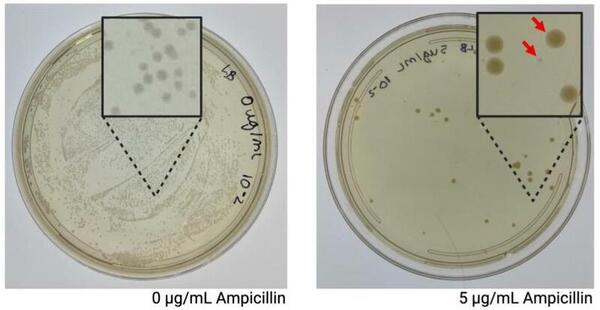
In this study, the authors investigate whether antibiotic-resistant bacteria can be found in everyday locations. To do this, they collected samples from multiple high-trafficked areas in Cambridge, MA and grew them in the presence and absence of antibiotics. Interestingly, they grew bacterial colonies from many locations' samples, but not all could grow in the presence of ampicillin. These findings are intriguing and relevant given the rising concern about antibiotic-resistant bacteria.

Read More...

Comparing Consumer Personality and Brand Personality: Do Fashion Styles Speak of Who You Are?

Stevenson et al. | Oct 02, 2019

Comparing Consumer Personality and Brand Personality: Do Fashion Styles Speak of Who You Are?

This study investigated how fashion brand personalities are similar to people’s personalities and whether people may prefer a particular clothing brand based on their own personal traits. All together, Stevenson and Scott found that the Big Five Personality Factors are generally not related to participants’ preferred brand personalities. Generally, brands should consider different factors besides the Big Five Personality Factors for identifying potential customers.

Read More...

Utilizing a Wastewater-Based Medium for Engineered Saccharomyces cerevisiae for the Biological Production of Fatty Alcohols and Carboxylic Acids to Replace Petrochemicals

Ramesh et al. | Oct 02, 2019

Utilizing a Wastewater-Based Medium for Engineered <em>Saccharomyces cerevisiae</em> for the Biological Production of Fatty Alcohols and Carboxylic Acids to Replace Petrochemicals

Saccharomyces cerevisiae yeast is used to produce bioethanol, an alternative to fossil fuels. In this study, authors take advantage of this well studied yeast by genetically engineering them to increase fatty acid biosynthesis and culturing in a cost-effective wastewater based medium; potentially providing a sustainable alternative to petrochemicals.

Read More...