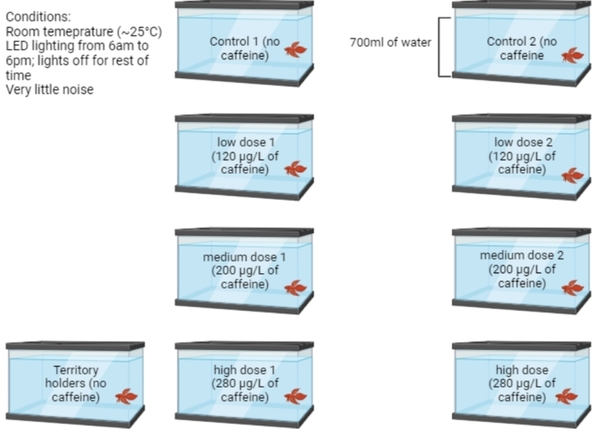
The authors test the effect of caffeine on the behavior of the Siamese fighting fish Betta splendens.
Read More...Determining the impact of caffeine on aggression in Betta splendens
The authors test the effect of caffeine on the behavior of the Siamese fighting fish Betta splendens.
Read More...Administration of Stephania tetrandra to Drosophila melanogaster to create obsessive compulsive disorder model
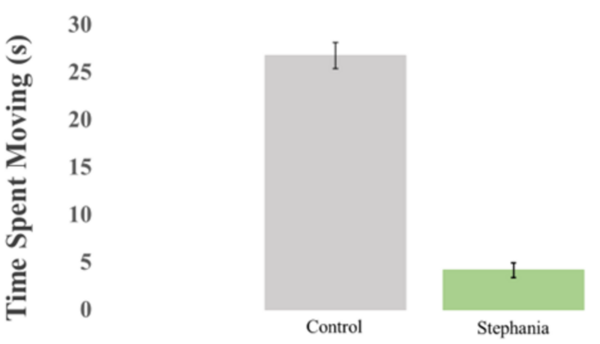
In this study the authors looked at the extract of Stephania tetrandra and its impact on symptoms related to obsessive compulsive disorder in fruit flies.
Read More...A novel in vitro blood-brain barrier model using 3D bioprinter: A pilot study
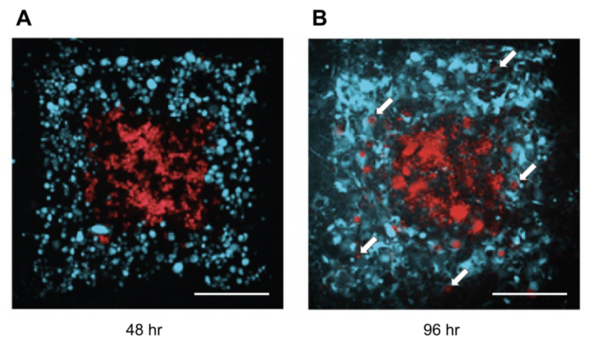
The authors looked at how a 3D bioprinter could be used to model the blood brain barrier.
Read More...Socio-economic and awareness correlates of physical activity of government school children in India

Here, based on the identified importance of physical activity in the development of young children, the authors investigated the effects of socioeconomic factors on the amount of physical activity of government-school children in India. They found significant differences between boys and girls, rural and urban, and children who were encouraged to exercise and those who were not. Overall, they suggest that their findings point to the important role of schools and communities in promoting healthy active lifestyles for developing children.
Read More...Assessing CDK5 as a Nanomotor for Chemotactic Drug Delivery
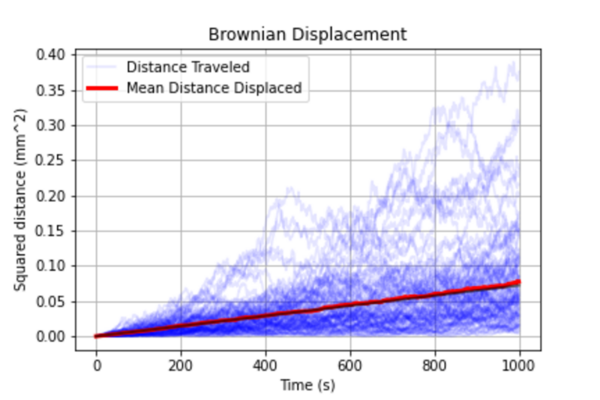
Enzyme chemotaxis is a thermodynamic phenomenon in which enzymes move along a substrate concentration gradient towards regions with higher substrate concentrations and can be used to steer nanovehicles towards targets along natural substrate concentrations. In patients with Alzheimer’s disease, a gradient of tau protein forms in the bloodstream. Tau protein is a substrate of the enzyme CDK5, which catalyzes the phosphorylation of tau protein and can travel using chemotaxis along tau protein gradients to increasing concentrations of tau and amyloid-beta proteins. The authors hypothesized that CDK5 would be able to overcome these barriers of Brownian motion and developed a quantitative model using Michaelis-Menten kinetics to define the necessary parameters to confirm and characterize CDK5’s chemotactic behavior to establish its utility in drug delivery and other applications.
Read More...A comparative study on the suitability of virtual labs for school chemistry experiments
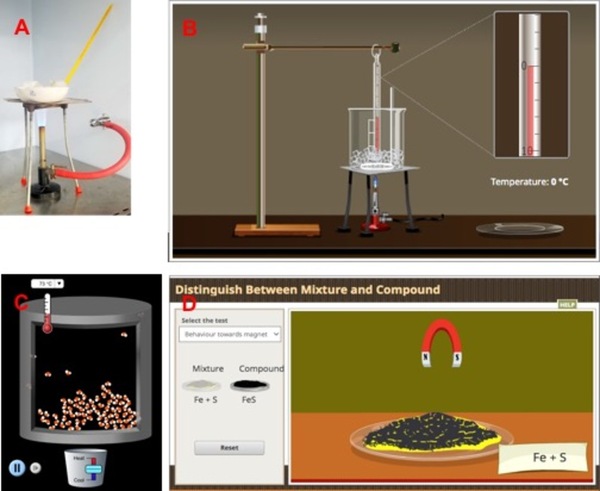
Virtual labs have been gaining popularity over the last few years, especially during the worldwide lockdown due to the COVID-19 pandemic. In this study, the suitability of virtual labs for school chemistry experiments is addressed and their effectiveness is compared to traditional physical lab experiments by focusing on physical and human resources, convenience, cost, safety, and time involved as well as topic "matter".
Read More...Low environmental pH inhibits phagosome formation and motility of Tetrahymena pyriformis
.jpg)
In this study, the authors look into some of the implications of rising carbon dioxide levels by studying the effects of acidic pH on the ability of T. pyriformis to feed by quantifying phagosome formation and motility.
Read More...EEG study of virtual learning demonstrates worsened learning outcomes and increased mirror neuron activation

In this article, Choi and Rossitto investigated the limitations of virtual learning by examining in-person dance learning compared to virtual dance learning while wearing EEG headsets. They found that in-person learners outperformed virtual learners and that virtual learners had higher mirror neuron activity as assessed by Mu rhythm power.
Read More...The Cohesiveness of the Oscillating Belousov-Zhabotinsky Reaction

In this study the author undertakes a careful characterization of a special type of chemical reaction, called an oscillating Belousov-Zhabotinsky (or B-Z) reaction, which has a number of existing applications in biomedical engineering as well as the potential to be useful in future developments in other fields of science and engineering. Specifically, she uses experimental measurements in combination with computational analysis to investigate whether the reaction is cohesive – that is, whether the oscillations between chemical states will remain consistent or change over time as the reaction progresses. Her results indicate that the reaction is not cohesive, providing an important foundation for the development of future technologies using B-Z reactions.
Read More...Effects of microconvection on bubble displacement during water electrolysis under microgravity
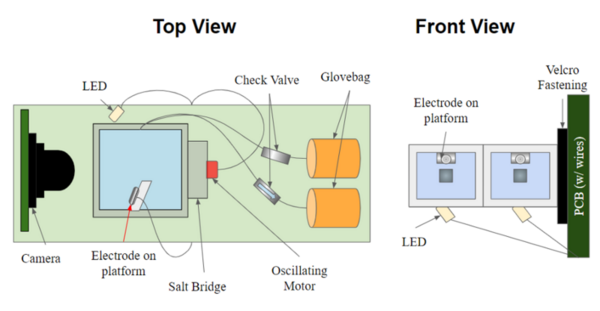
The authors looked at the effect of microconvection on displacing bubbles during electrolysis. They found that microconvection does have a role in bubble displacement in water electrolysis which can be applied in the production of hydrogen.
Read More...