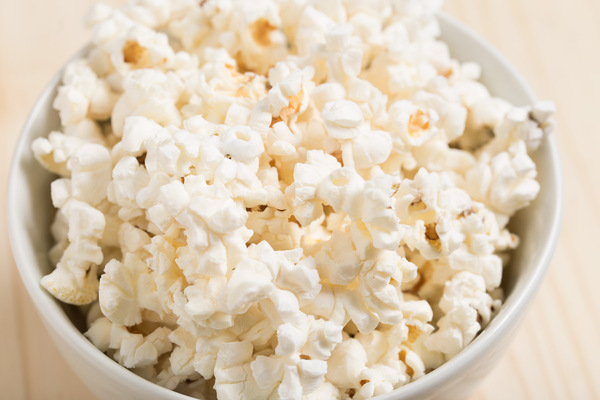
Have you ever wondered what contributes to the popping ability of popcorn? In this study, the authors use Quantitative Trait Locus (QTL) mapping to identify genes that may contribute to specific popping characteristics including kernel size and popping expansion volume (PEV).
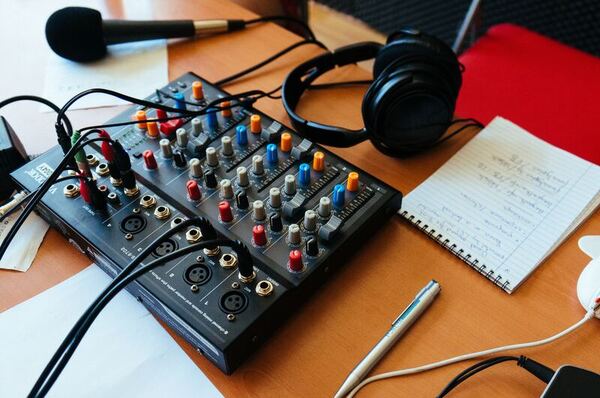
Here, the authors investigated methods to reduce noise in audio composed of real-word sounds. They specifically used two spectral subtraction noise reduction algorithms: stationary and non-stationary finding notable differences in noise improvements depending on the noise sources.
With the advance of technology, artificial intelligence (AI) is now applied widely in society. In the study of AI, machine learning (ML) is a subfield in which a machine learns to be better at performing certain tasks through experience. This work focuses on the convolutional neural network (CNN), a framework of ML, applied to an image classification task. Specifically, we analyzed the performance of the CNN as the type of neural activation function changes.
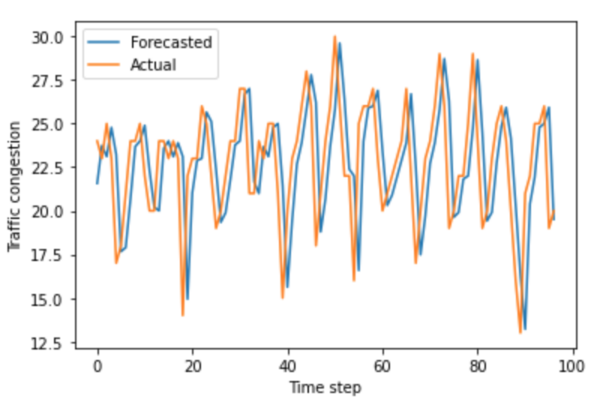
In this paper, we measured the privacy budgets and utilities of different differentially private mechanisms combined with different machine learning models that forecast traffic congestion at future timestamps. We expected the ANNs combined with the Staircase mechanism to perform the best with every value in the privacy budget range, especially with the medium high values of the privacy budget. In this study, we used the Autoregressive Integrated Moving Average (ARIMA) and neural network models to forecast and then added differentially private Laplacian, Gaussian, and Staircase noise to our datasets. We tested two real traffic congestion datasets, experimented with the different models, and examined their utility for different privacy budgets. We found that a favorable combination for this application was neural networks with the Staircase mechanism. Our findings identify the optimal models when dealing with tricky time series forecasting and can be used in non-traffic applications like disease tracking and population growth.
The diagnosis of malaria remains one of the major hurdles to eradicating the disease, especially among poorer populations. Here, the authors use machine learning to improve the accuracy of deep learning algorithms that automate the diagnosis of malaria using images of blood smears from patients, which could make diagnosis easier and faster for many.
In this article, the authors identify the characteristics that make a book a best-seller. Knowing what, besides content, predicts the success of a book can help publishers maximize the success of their print products.
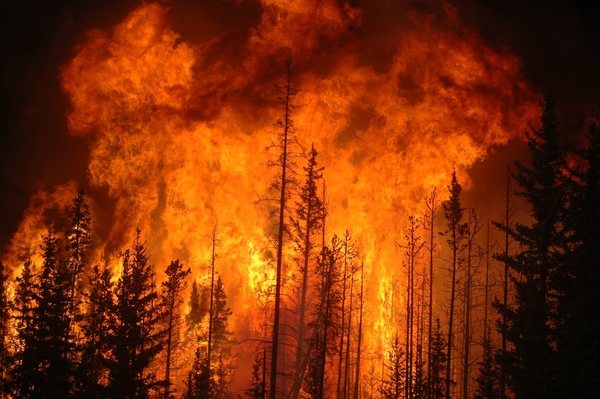
Droughts have a wide range of effects, from ecosystems failing and crops dying, to increased illness and decreased water quality. Drought prediction is important because it can help communities, businesses, and governments plan and prepare for these detrimental effects. This study predicts drought conditions by using predictable weather patterns in machine learning models.
Zoos offer educational and scientific advantages but face high maintenance costs and challenges in animal care due to diverse species' habits. Challenges include tracking animals, detecting illnesses, and creating suitable habitats. We developed a deep learning framework called SmartZoo to address these issues and enable efficient animal monitoring, condition alerts, and data aggregation. We discovered that the data generated by our model is closer to real data than random data, and we were able to demonstrate that the model excels at generating data that resembles real-world data.
Middle school math forms the basis for advanced mathematical courses leading up to the university level. Large language models (LLMs) have the potential to power next-generation educational technologies, acting as digital tutors to students. The main objective of this study was to determine whether LLMs like ChatGPT, Bard, and Llama 2 can serve as reliable middle school math tutoring assistants on three tutoring tasks: hint generation, comprehensive solution, and exercise creation.
There are believed to be ~20,000 nebulae in the Milky Way Galaxy. However, humans have only cataloged ~1,800 of them even though we have gathered 1.3 million nebula images. Classification of nebulae is important as it helps scientists understand the chemical composition of a nebula which in turn helps them understand the material of the original star. Our research on nebulae classification aims to make the process of classifying new nebulae faster and more accurate using a hybrid of deep learning and machine learning techniques.