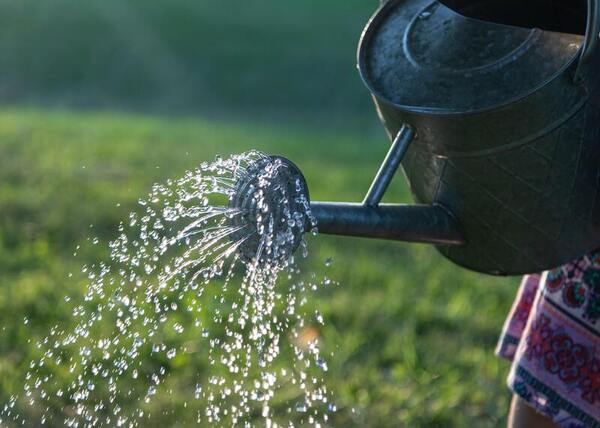
Here, the authors investigated alternative methods to irrigate plants based on the their identification that current irrigation systems waste a large amount of fresh water. They compared three different delivery methods for water: conventional sprinkler, underground cloth, and a perforated pipe embedded in the soil. They found the cloth method to save the most water, although plant growth was slightly less in comparison to plants watered with the sprinkler method or pipe method.
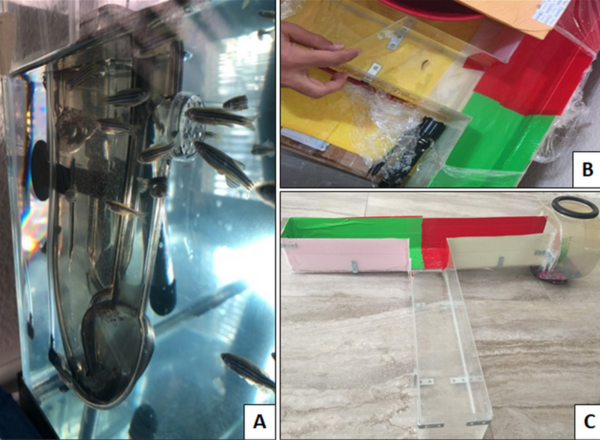
The authors compared the short-term effects of processed versus unprocessed food on spatial learning and survival in zebrafish, given the large public concern regarding processed foods. By randomly assigning zebrafish to a diet of brine shrimp flakes (processed) or live brine shrimp (unprocessed), the authors show while there is no immediate effect on a fish's decision process between the two diets, there are significant correlations between improved learning and stress response with the unprocessed diet.
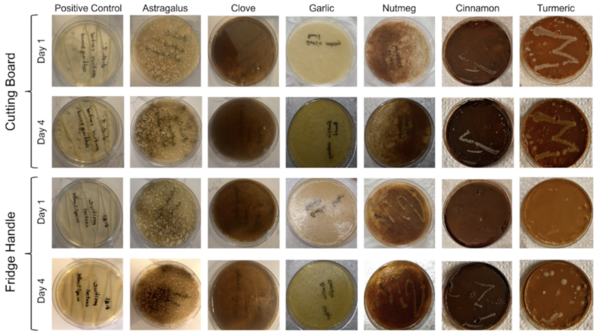
The number of bacterial infections in humans is rising, and a major contributor is foodborne illnesses, which affect a large portion of the population and result in many hospitalizations and deaths. Common household cleaners are an effective strategy to combat foodborne illness, but they are often costly and contain harmful chemicals. Thus, the authors sought to test the antimicrobial effectiveness of spices (clove, nutmeg, astragalus, cinnamon, turmeric, and garlic) on microbes cultured from refrigerator handles and cutting boards. Results from this study demonstrate long-lasting, antimicrobial effects of multiple spices that support their use as alternatives to common household cleaners.
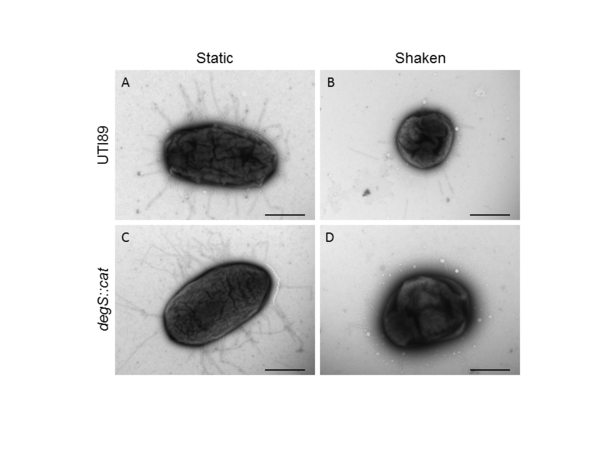
DegS is an integral inner membrane protein in E. coli that helps break down misfolded proteins. When it is mutated, there is a large increase in the production of outer membrane vesicles (OMVs), which are thought to play a role in pathogenesis. This study used mutant strains of uropathogenic E. coli (UPEC) to characterize the role of DegS and OMVs on UPEC virulence.
Galaxy clusters offer several advantages for measuring H0 compared to traditional methods, such as Cepheid variables or Type Ia supernovae. Unlike individual stars or supernovae, clusters are less affected by local variations in stellar population or interstellar medium properties, providing a more stable and consistent measure over large cosmological distances. This work proposes using galaxy clusters as an alternative method for determining the H0. It provides an independent perspective on the H0 debate and contribute to ongoing efforts to reconcile the differing values obtained from the other two measurements.
Image credit: Chunduri, Srinivas and McMahan, 2024.
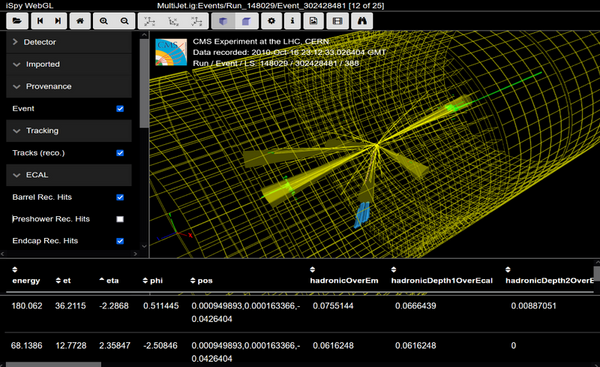
Collisions of heavy ions, such as muons result in jets and noise. In high-energy particle physics, researchers use jets as crucial event-shaped observable objects to determine the properties of a collision. However, many ionic collisions result in large amounts of energy lost as noise, thus reducing the efficiency of collisions with heavy ions. The purpose of our study is to analyze the relationships between properties of muons in a dimuon collision to optimize conditions of dimuon collisions and minimize the noise lost. We used principles of Newtonian mechanics at the particle level, allowing us to further analyze different models. We used simple Python algorithms as well as linear regression models with tools such as sci-kit Learn, NumPy, and Pandas to help analyze our results. We hypothesized that since the invariant mass, the energy, and the resultant momentum vector are correlated with noise, if we constrain these inputs optimally, there will be scenarios in which the noise of the heavy-ion collision is minimized.
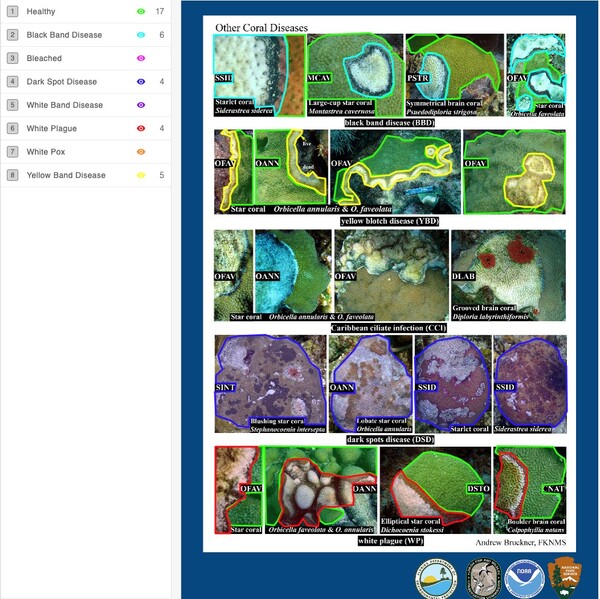
Triggered largely by the warming and pollution of oceans, corals are experiencing bleaching and a variety of diseases caused by the spread of bacteria, fungi, and viruses. Identification of bleached/diseased corals enables implementation of measures to halt or retard disease. Benthic cover analysis, a standard metric used in large databases to assess live coral cover, as a standalone measure of reef health is insufficient for identification of coral bleaching/disease. Proposed herein is a solution that couples machine learning with crowd-sourced data – images from government archives, citizen science projects, and personal images collected by tourists – to build a model capable of identifying healthy, bleached, and/or diseased coral.
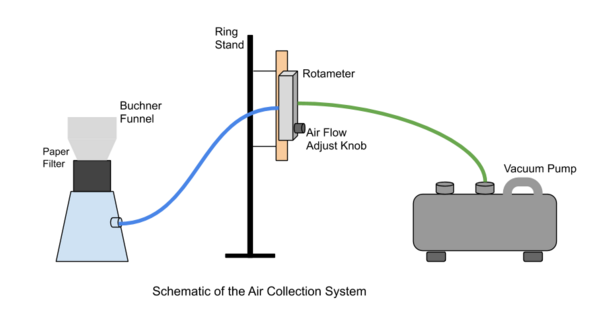
Microplastics can have detrimental effects on various wildlife, as well as pollute aquatic and atmospheric environments. This study focused on air samples collected from five locations to investigate microplastic concentrations in atmospheric fallout from indoor and outdoor settings, through a process utilizing a hand-held vacuum pump and a rotameter. The authors found that the difference between the average number of microplastic fragments and fibers collected from all locations was not large enough to be statistically significant. The results collected in this study will contribute to knowledge of the prevalence of airborne microplastics.
How accurate are DNA parentage tests? In this study, the authors hypothesized that current parentage tests are reliable if the analysis involves only one or a few families of yellow perch fish Perca flavescens. Their results suggest that DNA parentage tests are reliable as long as the right methods are used, since these tests involve only one family in most cases, and that the results from parentage analyses of large populations can only be used as a reference.
In this study, the authors investigate situations in which people make sports bets that seem to go against their better judgement. Using surveys, individuals were asked to bet on which team would win in scenarios when their home team was involved and others when they were not to determine whether fandom for a team can overshadow fans’ judgment. They found that fans bet much more on their home teams than neutral teams when their team was facing a large deficit.