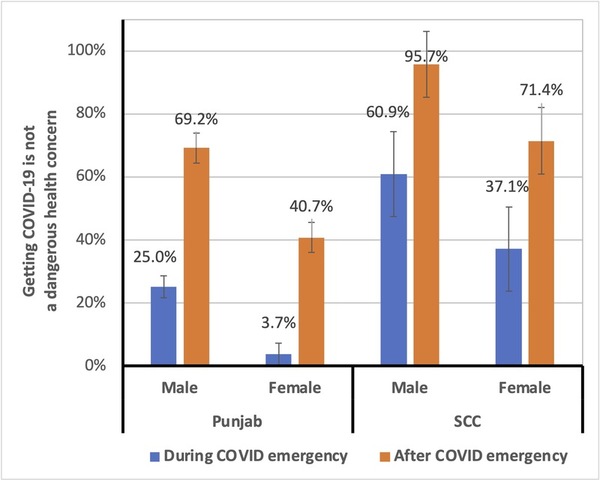
COVID-19 has officially been downgraded from the status of a global health emergency, but have COVID-19 safety practices become a new way of life for students? The authors collected survey data on COVID-19-related knowledge and behaviors of high-school students in Punjab, Pakistan and Santa Clara County, California, USA, so see where high-schoolers stand on pandemic safety today.
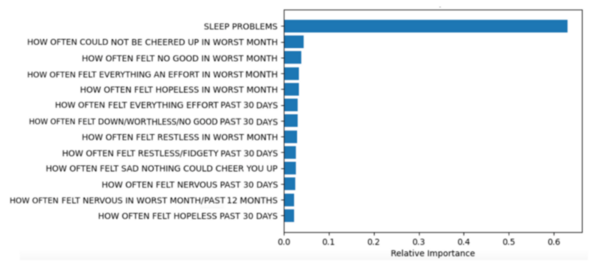
Sadly, around 800,000 people die by suicide worldwide each year. Dong and Pearce analyze health survey data to identify associations between suicidal ideation and relevant variables, such as sleep quality, hopelessness, and anxious behavior.
Here, seeking to identify the possible role of sports in helping teenagers navigate the troubles associated with societal changes during a pandemic, the authors surveyed 50 adolescents to collect Beck Depression Inventory scores. They found that 9 out of students with severe depressions did not do sports, while no significant relationship between depressive symptoms and either gender or place of exercise was observed.
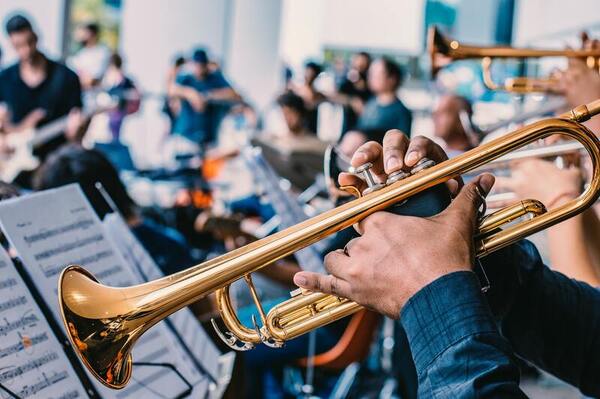
With healthy lung performance being critical to daily function and maintenance of physical health, the authors of this study explored the impact of airflow training from playing a wind instrument on respiratory system function. With careful quantification of peak expiratory flow of individuals who played the trumpet, the authors found no expiratory capacity difference between students who played the trumpet and students who did not play a wind instrument.
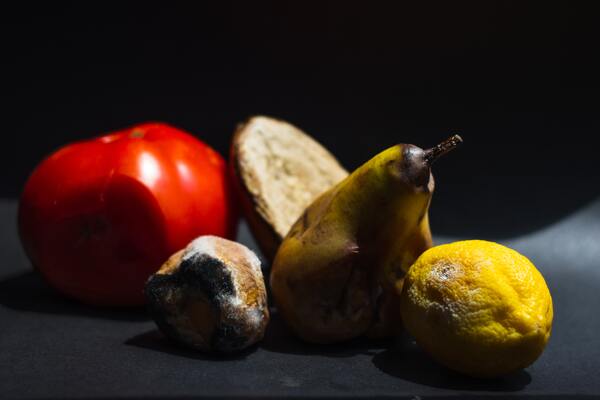
Food spoilage leads to a significant loss in agricultural produce each year. Here, the authors investigate whether certain essential oils can protect against fungus-mediated spoilage of fruits and vegetables. Their results suggest that the compounds they tested might indeed inhibit fungal growth, at various temperatures, a promising result that could reduce food wasting.
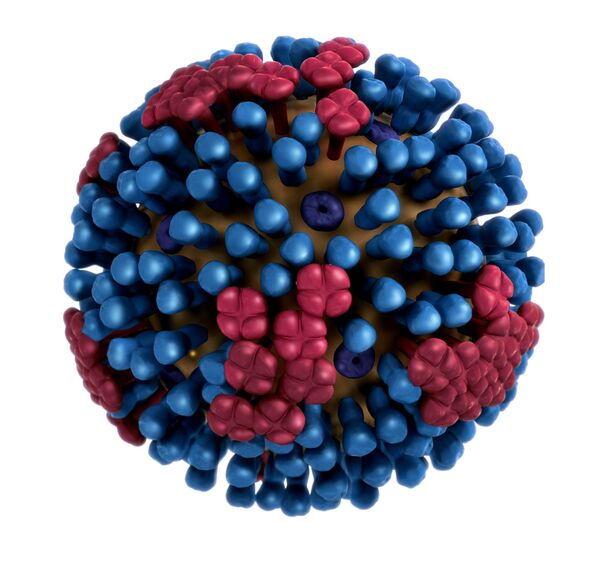
In this study, we developed an algorithm to estimate the contact rate and the average infectious period of influenza using a Susceptible, Infected, and Recovered (SIR) epidemic model. The parameters in this model were estimated using data on infected Greek individuals collected from the National Public Health Organization. Our model labeled influenza as an epidemic with a basic reproduction value greater than one.
In this study, the authors tested different approaches for removing arsenic from rice. Due to higher arsenic levels in water, some areas grow rice with higher levels as well. This is a health hazard and so developing methods to remove arsenic from the rice will be helpful to many. Using a rapid arsenic kit, the authors found that activated charcoal was the most effective at removing arsenic from rice.
Effective treatment of depression requires early detection. Depressive symptoms overlap with olfactory regions, which led to several studies of the correlation between sense of smell and depression. The alarming rise of depression, its related crimes, suicides, and lack of inexpensive, quick tools in detecting early depression — this study aims in demonstrating decreased olfaction and depression correlation. Forty-two subjects (ages 13-83) underwent POC-MON (Pocket Lemon) assessment — an oven-dried lemon peel sniff test, subjected to distance measurement when odor first detected (threshold) and completed Patient Health Questionnaires (PHQ-9). POC-MON and PHQ-9 scores yielded a correlation of 20% and 18% for the right and left nostrils, respectively. Among male (n=17) subjects, the average distance of POC-MON and PHQ-9 scores produced a correlation of 14% and 16% for the right and left nostrils, respectively. Females (n=25) demonstrated a correlation of 28% and 21% for the right and left nostrils, respectively. These results suggest the correlation between olfaction and depression in diagnosing its early-stage, using a quick, inexpensive, and patient-friendly tool — POC-MON.
Physical activity when performed regularly has beneficial effects on all systems of the body, including pulmonary functions. This study, conducted at Springdales School in Dhaula Kuan, New Delhi, aimed to determine the effect of sports and singing on the vital capacity (the maximum amount of air a person can expel from the lungs after a maximum inhalation), an important measure of pulmonary health.