A small town with low crime rates and relatively high education levels usually gives the perception of a safe and comfortable community. This study explored the connection between this perception, as defined by public opinion, and reality, as defined by US Census and FBI crime data.
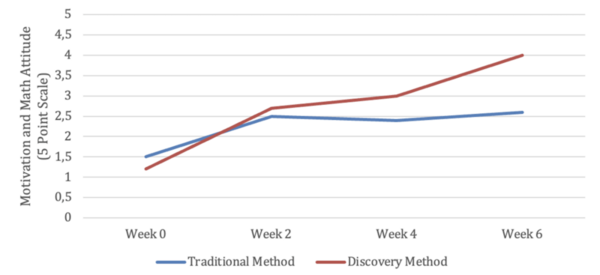
This study compares traditional and discovery-based instructional methods in online middle school mathematics education. Findings show that discovery-based learning significantly improves students’ academic performance and attitudes, highlighting the value of inquiry-driven instruction for enhancing both understanding and motivation.
The authors investigate the effects of popular media consumption on the public's opinion on nuclear power. They find that regardless of education level or positive/negative bias of the article, participants are willing to modify their opinions on nuclear power after consuming a single article.
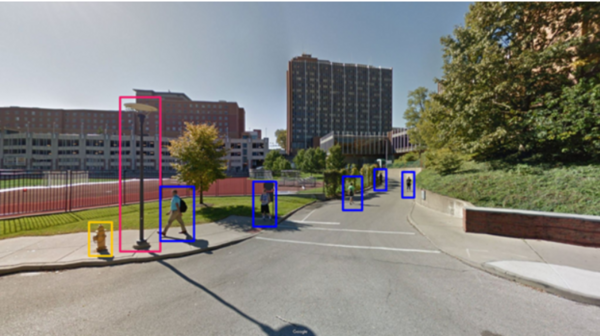
Every year, around 40% of undergraduate students in the United States discontinue their studies, resulting in a loss of valuable education for students and a loss of money for colleges. Even so, colleges across the nation struggle to discover the underlying causes of these high dropout rates. In this paper, the authors discuss the use of machine learning to find correlations between the built environment factors and the retention rates of colleges. They hypothesized that one way for colleges to improve their retention rates could be to improve the physical characteristics of their campus to be more pleasing. The authors used image classification techniques to look at images of colleges and correlate certain features like colors, cars, and people to higher or lower retention rates. With three possible options of high, medium, and low retention rates, the probability that their models reached the right conclusion if they simply chose randomly was 33%. After finding that this 33%, or 0.33 mark, always fell outside of the 99% confidence intervals built around their models’ accuracies, the authors concluded that their machine learning techniques can be used to find correlations between certain environmental factors and retention rates.
The authors investigate the negative effects stress has on teen mental and physical health. Through a survey, they give Virginia teens a voice in revising the Health and Physical Education curriculum to include a standards of learning (SOL). Notably they identify factors contributing to stress levels including homework level, amount of free and sleep time, parental pressure and family encouragement.
Many cases of viral hepatitis are easily preventable if caught early; however, a lack of public awareness regarding often leads to diagnoses near the final stages of disease when it is most lethal. Thus, we wanted to understand to what extent an individual's sex, age, education and country of residence (India or Singapore) impacts disease identification. We sent out a survey and quiz to residents in India (n = 239) and Singapore (n = 130) with questions that test their knowledge and awareness of the disease. We hypothesized that older and more educated individuals would score higher because they are more experienced, but that the Indian population will not be as knowledgeable as the Singaporean population because they do not have as many resources, such as socioeconomic access to schools and accessibility to healthcare, available to them. Additionally, we predicted that there would not be any notable differences between make and females. The results revealed that the accuracy for all groups we looked at was primarily below 50%, demonstrating a severe knowledge gap. Therefore, we concluded that if more medical professionals discussed viral hepatitis during hospital visits and in schools, patients can avoid the end stages of the disease in notable cases.
This paper presents findings on Carcharhinus leucas (bull shark) and Carcharhinus amblyrhynchos (grey reef shark) aggression towards humans at Beqa Adventure Divers in Shark Reef Marine Reserve, Fiji. We hypothesized that grey reef sharks would receive more prods than bull sharks because grey reef sharks are typically more aggressive than bull sharks. The results supported our hypothesis, as an individual grey reef shark received 2.44 prods on average per feed, while a bull shark had an average of 0.61. These findings are meaningful not only to the world’s general understanding of shark aggression, but also to human protection against grey reef sharks as well as public education on bull sharks and the conservation of the species.
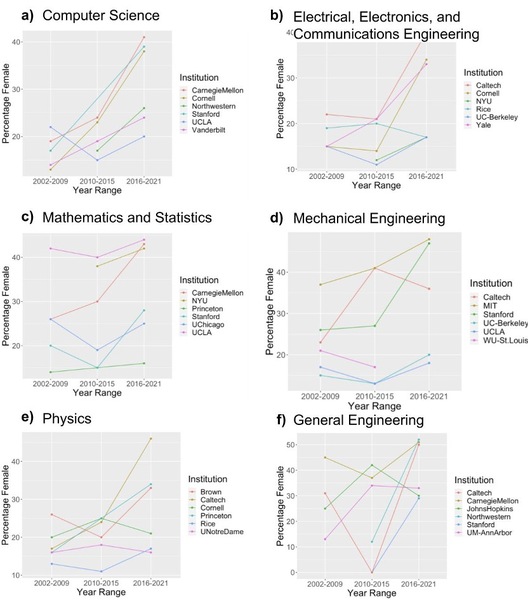
Authors address the gender disparity in STEM fields, examining changes in gender diversity across male-dominated undergraduate programs over 19 years at 24 top universities. Analyzing data from NCES IPEDS, it identifies STEM as persistently male-dominated but notes increasing gender diversity in many disciplines, particularly in recent years. Results indicate that higher-ranked universities in disciplines like computer science and mechanical engineering show a weak correlation with improved gender diversity, suggesting effective initiatives can mitigate the gender gap in STEM, despite ongoing challenges.