Browse Articles

Relationship between p62 and learning behavior in male and female mice deficient in hippocampal folliculin

Guvenir et al. | Jun 10, 2025

Relationship between p62 and learning behavior in male and female mice deficient in hippocampal folliculin
Image credit: Robina Weermeijer

Here the authors hypothesized that reducing folliculin (FLCN) might affect p62 protein levels in the dorsal hippocampus of mice, given their potential functional connection and p62's role in neurodegenerative diseases. Their study, using western blots and a two-way ANOVA on young wild-type mice, found that p62 levels correlated with FLCN expression, but ultimately concluded there's no evidence of a functional connection between FLCN and p62 in this specific model.

Read More...

Unit-price anchoring affects consumer purchasing behavior

James et al. | Jan 15, 2025

Unit-price anchoring affects consumer purchasing behavior

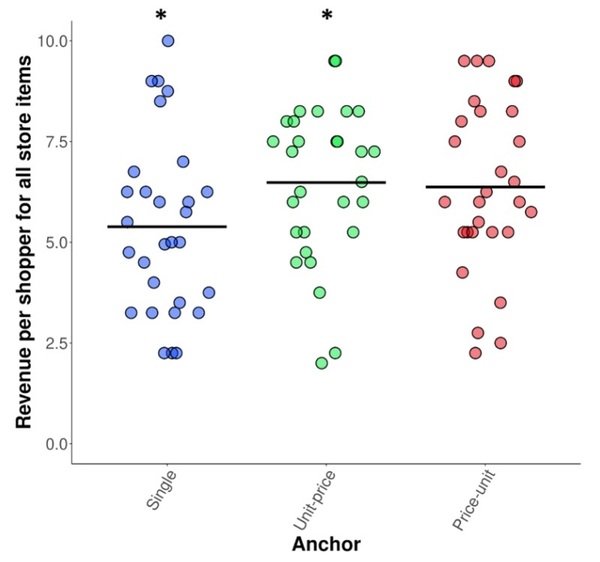
This study examines how anchoring—providing numerical suggestions like "2 for $4"—can influence consumer purchasing decisions and increase revenue. The researchers tested three types of price anchors on 29 high school students shopping in a mock store.

Read More...

The effect of the pandemic on the behavior of junior high school students

Kong Grisius et al. | May 01, 2023

The effect of the pandemic on the behavior of junior high school students
Image credit: Chris Montgomery

Here, seeking to understand how the COVID-19 pandemic affected the social interactions of junior high school students, the authors surveyed students, teachers, and parents. Contrary to their initial hypotheses, the authors found positive correlation between increased virtual contact during social isolation and in-person conflict and disregard for social norms after the pandemic. While the authors identified the limitations of their study, they suggest that further research into the effect of online interactions is becoming increasingly important.

Read More...

A study on the stretching behavior of rubber bands

Davuluri et al. | Jan 18, 2022

A study on the stretching behavior of rubber bands

Here, the authors considered the stretching behavior of rubber bands by exposing the rubber bands to increasing loads and measuring their stretch response. They found that a linear stretch response was observed for intermediate loading steps, but this behavior was lost at lower or higher loads, deviating from Hooke's Law. The authors suggest that studies such as these can be used to evaluate other visco-elastic structures.

Read More...

Significance of Tumor Growth Modeling in the Behavior of Homogeneous Cancer Cell Populations: Are Tumor Growth Models Applicable to Both Heterogeneous and Homogeneous Populations?

Reddy et al. | Jun 10, 2021

Significance of Tumor Growth Modeling in the Behavior of Homogeneous Cancer Cell Populations: Are Tumor Growth Models Applicable to Both Heterogeneous and Homogeneous Populations?

This study follows the process of single-cloning and the growth of a homogeneous cell population in a superficial environment over the course of six weeks with the end goal of showing which of five tumor growth models commonly used to predict heterogeneous cancer cell population growth (Exponential, Logistic, Gompertz, Linear, and Bertalanffy) would also best exemplify that of homogeneous cell populations.

Read More...

Digestion products of bread and cheese cause addictive behavior in a planaria model

Cochin et al. | Sep 26, 2024

Digestion products of bread and cheese cause addictive behavior in a planaria model

The authors looked at two peptides, gluteomorphin and casomorphin, that are present after the digestion of bread and cheese. As these peptides can bind opioid receptors the authors want to know if they could be addictive in the same way as conventional opioids (i.e., morphine) are known to be. Their results in a planaria model suggest that both of these peptides are addictive.

Read More...

The influence of implicit social pressure on prosocial behavior of adolescents

Carroll et al. | Dec 13, 2021

The influence of implicit social pressure on prosocial behavior of adolescents

In this study the authors sought to understand the influence of implicit social pressure on prosocial behavior (voluntary acts that benefit someone else) in adolescents age 12–19. They considered how participants divided money between themselves and four teammate they did a school project with. Despite being shown examples of how to divide money (social pressure), their results showed that both boys and girls were unaffected by prosocial, neutral, and antisocial pressures.

Read More...

Discovery of the Heart in Mathematics: Modeling the Chaotic Behaviors of Quantized Periods in the Mandelbrot Set

Golla et al. | Dec 14, 2020

Discovery of the Heart in Mathematics: Modeling the Chaotic Behaviors of Quantized Periods in the Mandelbrot Set

This study aimed to predict and explain chaotic behavior in the Mandelbrot Set, one of the world’s most popular models of fractals and exhibitors of Chaos Theory. The authors hypothesized that repeatedly iterating the Mandelbrot Set’s characteristic function would give rise to a more intricate layout of the fractal and elliptical models that predict and highlight “hotspots” of chaos through their overlaps. The positive and negative results from this study may provide a new perspective on fractals and their chaotic nature, helping to solve problems involving chaotic phenomena.

Read More...

Expression of Anti-Neurodegeneration Genes in Mutant Caenorhabditis elegans Using CRISPR-Cas9 Improves Behavior Associated With Alzheimer’s Disease

Mishra et al. | Sep 14, 2019

Expression of Anti-Neurodegeneration Genes in Mutant <em>Caenorhabditis elegans</em> Using CRISPR-Cas9 Improves Behavior Associated With Alzheimer’s Disease

Alzheimer's disease is one of the leading causes of death in the United States and is characterized by neurodegeneration. Mishra et al. wanted to understand the role of two transport proteins, LRP1 and AQP4, in the neurodegeneration of Alzheimer's disease. They used a model organism for Alzheimer's disease, the nematode C. elegans, and genetic engineering to look at whether they would see a decrease in neurodegeneration if they increased the amount of these two transport proteins. They found that the best improvements were caused by increased expression of both transport proteins, with smaller improvements when just one of the proteins is overly expressed. Their work has important implications for how we understand neurodegeneration in Alzheimer's disease and what we can do to slow or prevent the progression of the disease.

Read More...