Browse Articles

Temperature and Precipitation Responses to a Stratospheric Aerosol Geoengineering Experiment Using the Community Climate System Model 4

Anderson et al. | Aug 19, 2014

Temperature and Precipitation Responses to a Stratospheric Aerosol Geoengineering Experiment Using the Community Climate System Model 4

We are changing our environment with steadily increasing carbon dioxide emissions, but we might be able to help. The authors here use a computer program called Community Climate System Model 4 to predict the effects of spraying small particles into the atmosphere to reflect away some of the sun's rays. The software predicts that this could reduce the amount of energy the Earth's atmosphere absorbs and may limit but will not completely counteract our carbon dioxide production.

Read More...

A Simple Printing Solution to Aid Deficit Reduction

Mirchandani et al. | Mar 09, 2014

A Simple Printing Solution to Aid Deficit Reduction

The printing-related expenditure that is budgeted in 2014 for U.S. Federal agencies is $1.8 billion. A sample of five publically available documents produced by various federal agencies is analyzed and the cost savings arising from a change in font type are estimated. The analysis predicts that the Government’s annual savings by switching to Garamond are likely to be about $234 million with worst-case savings of $62 million and best-case savings of $394 million. Indirect benefits arising from a less detrimental impact on the environment due to lower ink production and disposal volumes are not included in these estimates. Times New Roman is not as efficient as Garamond, and the third federally-recommended font, Century Gothic, is actually worse on average than the fonts used in the sample documents.

Read More...

Trust in the use of artificial intelligence technology for treatment planning

Srivastava et al. | Sep 18, 2024

Trust in the use of artificial intelligence technology for treatment planning

As AI becomes more integrated into healthcare, public trust in AI-developed treatment plans remains a concern, especially for emotionally charged health decisions. In a study of 81 community college students, AI-created treatment plans received lower trust ratings compared to physician-developed plans, supporting the hypothesis. The study found no significant differences in AI trust levels across demographic factors, suggesting overall skepticism toward AI-driven healthcare.

Read More...

Transcriptomic profiling identifies differential gene expression associated with childhood abuse

Li et al. | Jul 23, 2024

Transcriptomic profiling identifies differential gene expression associated with childhood abuse
Image credit: The authors

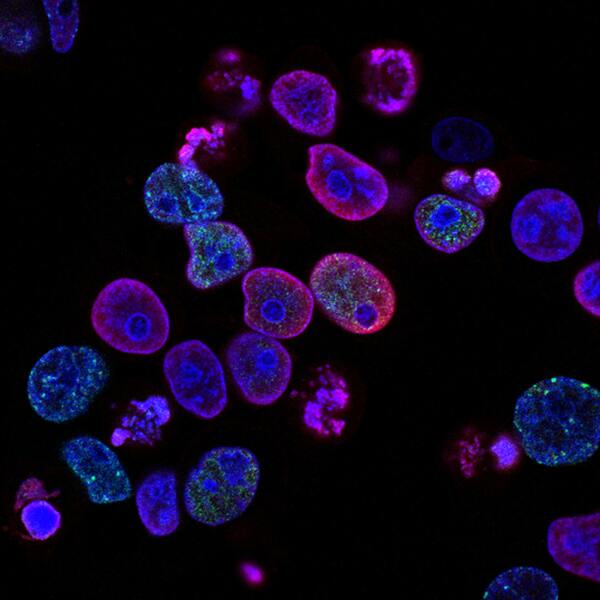
Childhood abuse has severe and lasting effects throughout an individual's life, and may even have long-term biological effects on individuals who suffer it. To learn more about the effects of abuse in childhood, Li and Yearwood analyze gene expression data to look for genes differentially expressed genes in individuals with a history of childhood abuse.

Read More...

Quantitative analysis and development of alopecia areata classification frameworks

Dubey et al. | Jun 03, 2024

Quantitative analysis and development of alopecia areata classification frameworks

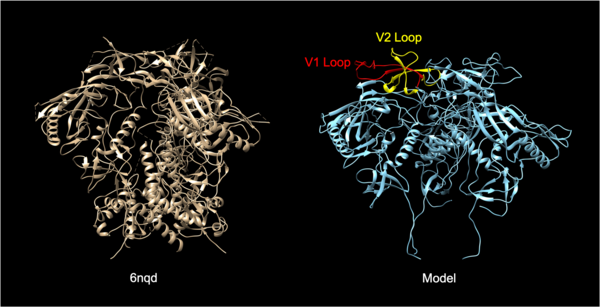
This article discusses Alopecia areata, an autoimmune disorder causing sudden hair loss due to the immune system mistakenly attacking hair follicles. The article introduces the use of deep learning (DL) techniques, particularly convolutional neural networks (CNN), for classifying images of healthy and alopecia-affected hair. The study presents a comparative analysis of newly optimized CNN models with existing ones, trained on datasets containing images of healthy and alopecia-affected hair. The Inception-Resnet-v2 model emerged as the most effective for classifying Alopecia Areata.

Read More...

Comparison of three large language models as middle school math tutoring assistants

Ramanathan et al. | May 02, 2024

Comparison of three large language models as middle school math tutoring assistants
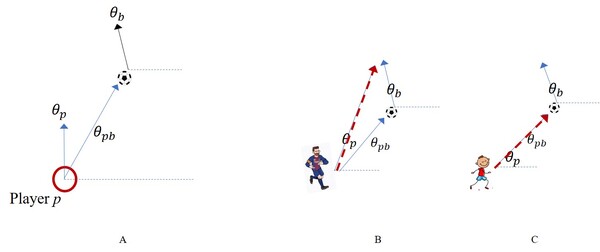
Image credit: Thirdman

Middle school math forms the basis for advanced mathematical courses leading up to the university level. Large language models (LLMs) have the potential to power next-generation educational technologies, acting as digital tutors to students. The main objective of this study was to determine whether LLMs like ChatGPT, Bard, and Llama 2 can serve as reliable middle school math tutoring assistants on three tutoring tasks: hint generation, comprehensive solution, and exercise creation.

Read More...