Browse Articles

Varying Growth Hormone Levels in Chondrocytes Increases Proliferation Rate and Collagen Production by a Direct Pathway

Bennett et al. | Sep 03, 2019

Varying Growth Hormone Levels in Chondrocytes Increases Proliferation Rate and Collagen Production by a Direct Pathway

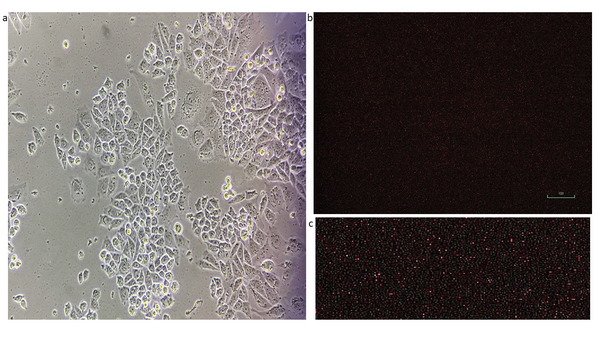
Bennett and Joykutty test whether growth hormone directly or indirectly affected the rate at which cartilage renewed itself. Growth hormone could exert a direct effect on cartilage or chondrocytes by modifying the expression of different genes, whereas an indirect effect would come from growth hormone stimulating insulin-like growth factor. The results from this research support the hypothesis that growth hormone increases proliferation rate using the direct pathway. This research can be used in the medical sciences for people who suffer from joint damage and other cartilage-related diseases, since the results demonstrated conditions that lead to increased proliferation of chondrocytes. These combined results could be applied in a clinical setting with the goal of allowing patient cartilage to renew itself at a faster pace, therefore keeping those patients out of pain from these chondrocyte-related diseases.

Read More...

Measuring Exoplanetary Radii Using Transit Photometry

Tang et al. | May 07, 2019

Measuring Exoplanetary Radii Using Transit Photometry

Studying exoplanets, or planets that orbit a star other than the Sun, is critical to a greater understanding the formation of planets and how Earth's solar system differs from others. In this study the authors analyze the transit light curves of three hot Jupiter exoplanets to ultimately determine if and how these planets have changed since their discovery.

Read More...

Music's Effect on Dogs' Heart Rates

Aubin et al. | Oct 03, 2017

Music's Effect on Dogs' Heart Rates

Music can affect the behavior of humans and other animals. In this study, the authors studied five types of music with different tempos and demonstrated how each one affected dogs' heart rates.

Read More...

More Efficient Helicopter Blades Based on Whale Tubercles

Weitzman et al. | Dec 22, 2013

More Efficient Helicopter Blades Based on Whale Tubercles

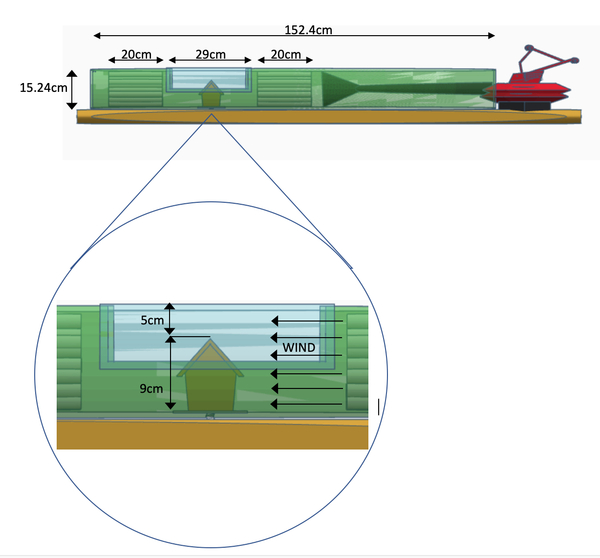
Biomimicry is the practice of applying models and systems found in nature to improve the efficiency and usefulness of human technologies. In this study, the authors designed helicopter blades with tubercle structures similar to those found on the tails of humpback whales. The authors found that certain arrangements of these tubercle structures improved the windspeed and efficiency of a model helicopter.

Read More...

Determining the Habitable Zone Around a Star

Lee et al. | May 29, 2013

Determining the Habitable Zone Around a Star

Life requires many things, including a hospitable temperature, elements, and energy. Here the authors utilize Newton's laws of physics and information relating a star's luminosity and temperature to determine the minimum and maximum masses and luminosities of planets and stars that would support life as we know it. This work can be used to determine the likelihood of a planet being able to support life based on attributes we can measure from here on Earth.

Read More...

Effectiveness of Biodegradable Plastic in Preventing Food Spoilage

Zhang et al. | Mar 20, 2012

Effectiveness of Biodegradable Plastic in Preventing Food Spoilage

Most people put little thought into the type of plastic wrap they use to store their leftovers. This study investigates the differences between biodegradable plastic wrap and non-biodegradable plastic wrap in their ability to prevent food spoilage. Does one work better than the other? Read more to find out!

Read More...

Formation and sticking of air bubbles in water in d-block containers

Gupta et al. | Jun 21, 2021

Formation and sticking of air bubbles in water in d-block containers

Bubbles! In this study, the authors investigate the effects that different materials, temperature, and distance have on the formation of water bubbles on the surface of copper and steel. They calculated mathematical relations based on the outcomes to better understand whether interstitial hydrogen present in the d-block metals form hydrogen bonds with the water bubbles to account for the structural and mechanical stability.

Read More...

Nanotexturing as a method to reduce dust accumulation on solar panels

Choi et al. | Jan 30, 2025

Nanotexturing as a method to reduce dust accumulation on solar panels

Dust accumulation on solar panels can reduce electricity output by 20–50%, posing a major challenge for solar energy collection. Instead of altering panel design, we explored a simpler approach by modifying surface energy through nanotexturing, predicting that hydrophobic surfaces would repel both water and dust. This study found that treating glass and silicone surfaces with potassium hydroxide (KOH) for 13 and 10 minutes, respectively, created optimal nanotextures (445 nm for glass, 205 nm for silicone), significantly reducing dirt accumulation and improving solar energy capture.

Read More...