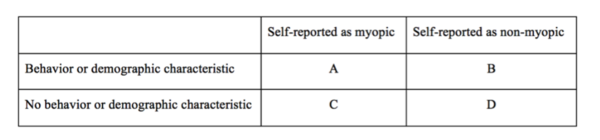
The goal of this project was to assess the relationships among low myopia, behavioral and demographic factors, and a single-nucleotide polymorphism (SNP) in the TGFβ1 gene.
Read More...TGFβ1 Codon 10 Polymorphism and its Association with the Prevalence of Low Myopia
The goal of this project was to assess the relationships among low myopia, behavioral and demographic factors, and a single-nucleotide polymorphism (SNP) in the TGFβ1 gene.
Read More...Model selection and optimization for poverty prediction on household data from Cambodia

Here the authors sought to use three machine learning models to predict poverty levels in Cambodia based on available household data. They found teat multilayer perceptron outperformed the other models, with an accuracy of 87 %. They suggest that data-driven approaches such as these could be used more effectively target and alleviate poverty.
Read More...The effect of the pandemic on the behavior of junior high school students

Here, seeking to understand how the COVID-19 pandemic affected the social interactions of junior high school students, the authors surveyed students, teachers, and parents. Contrary to their initial hypotheses, the authors found positive correlation between increased virtual contact during social isolation and in-person conflict and disregard for social norms after the pandemic. While the authors identified the limitations of their study, they suggest that further research into the effect of online interactions is becoming increasingly important.
Read More...The relationship between digit ratio and personality: 4D:5D digit ratio, sex, and the trait of conscientiousness

In this study, the authors use quantitative digit ratio measurements and a survey of personality traits to evaluate the potential relationship between sex and levels of conscientiousness.
Read More...Awareness of plastic pollution and adoption of green consumer lifestyles among students from high school

In this study, the authors test ways to increase knowledge of green consumerism amongst high school students. Their knowledge was measured based on the New Ecological Paradigm Scale.
Read More...Survey of medication disposal: Patient views and awareness

The authors investigate how improper disposal of medication can be mitigated through community education efforts.
Read More...Using broad health-related survey questions to predict the presence of coronary heart disease
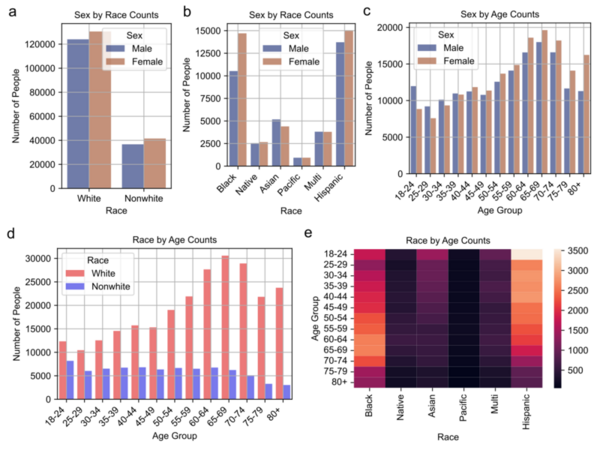
Coronary heart disease (CHD) is the leading cause of death in the U.S., responsible for nearly 700,000 deaths in 2021, and is marked by artery clogging that can lead to heart attacks. Traditional prediction methods require expensive clinical tests, but a new study explores using machine learning on demographic, clinical, and behavioral survey data to predict CHD.
Read More...Health services in Iraq - A cross-sectional survey of adolescents in Basra
This study is a cross-sectional survey of adolescents in Basra, Iraq, from November 2020 to March 2021 about types of adolescent problems, the individuals and institutions adolescents turn to, and the role of public health centers in dealing with their problems. The survey found that psychological problems represent the largest proportion of health problems, and most adolescents turn to their parents to discuss their problems. The work indicates that there is an urgent need to pay attention to public health centers and provide health and psychological support to adolescents.
Read More...Investigating Teen Audism: The Development and Use of a Survey Scale to Measure Misconceptions of the Deaf Community in a Hearing High School
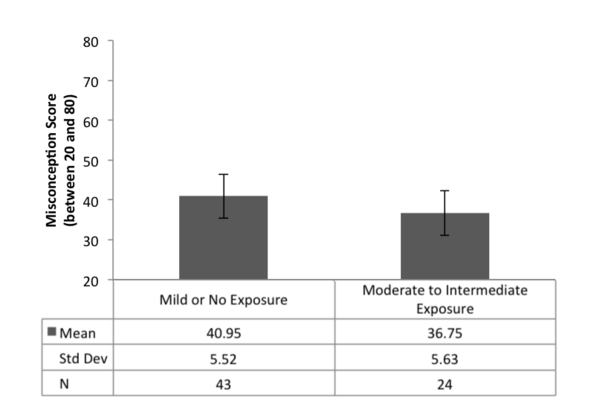
The authors explore hearing students' misconceptions about the Deaf and Hard of Hearing (HoH) community. Results indicate that some misconceptions are more common than others, and that personal experience with individuals in the Deaf and HoH community reduces the frequency of such misconceptions.
Read More...COVID 19 and the perceived impacts on adolescents’ and young adults’ mental health: A quantitative survey

Here, recognizing the effects of the COVID-19 pandemic on young peoples' mental health and wellbeing the authors used an online survey which included the short General Health Questionnaire (GHQ-12) to probe 102 young adults. Overall they found that young adults perceived the pandemic to be detrimental to many areas of their wellbeing, with females and those aged 18-19 and 22-23 reporting to be the most significantly impacted.
Read More...