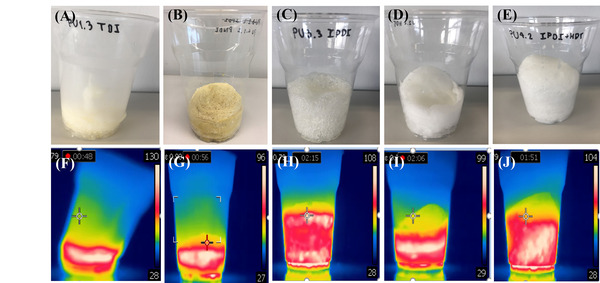
In this study, the authors utilize an infrared camera to visualize and investigate the exothermic reaction of polyurethane foam, which has many everyday uses including automotive seats, bedding, and insulation.
Read More...Monitoring the formation of polyurethane foams with an infrared camera: Classroom activity
In this study, the authors utilize an infrared camera to visualize and investigate the exothermic reaction of polyurethane foam, which has many everyday uses including automotive seats, bedding, and insulation.
Read More...Towards an Integrated Solution for Renewable Water and Energy
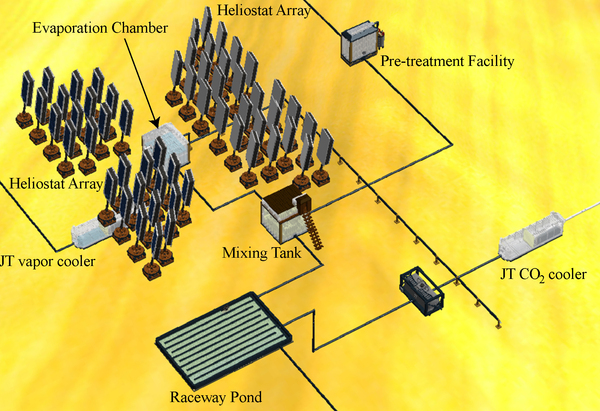
An integrated plant that would generate energy from solar power and provide clean water would help solve multiple sustainability issues. The feasibility of such a plant was investigated by looking at the efficacy of several different modules of such a plant on a small scale.
Read More...Monitoring drought using explainable statistical machine learning models
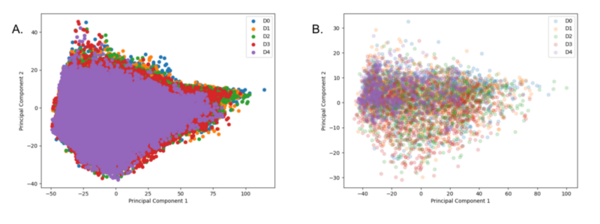
Droughts have a wide range of effects, from ecosystems failing and crops dying, to increased illness and decreased water quality. Drought prediction is important because it can help communities, businesses, and governments plan and prepare for these detrimental effects. This study predicts drought conditions by using predictable weather patterns in machine learning models.
Read More...The effects of container materials on food microwave heat times
The authors analyzed the heat transfer of different containers in the microwave aiming to identify the most optimal material of container to reduce heating time.
Read More...Development of novel biodegradable bioplastics for packaging film using mango peels
Here the authors explored the development of biodegradable bioplastic films derived from mango peels as a sustainable solution to plastic pollution and greenhouse gas emissions from fruit waste. They optimized the film's mechanical properties and water resistance through adjusting processing conditions and incorporating plasticizers and a hydrophobic coating, ultimately demonstrating its potential as a bacteriostatic and biodegradable alternative to conventional plastic food wrap.
Read More...Surface cleanliness of hydrothermally grown zinc oxide microparticles compared to commercial nanoparticles
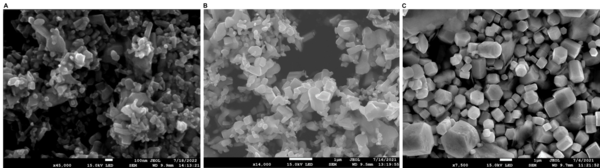
The authors test the usefulness of zinc oxide microparticles relative to zinc oxide nanoparticles as antibacterial agents.
Read More...Determining surface tension of various liquids and shear modulus of paper using crumpling effect
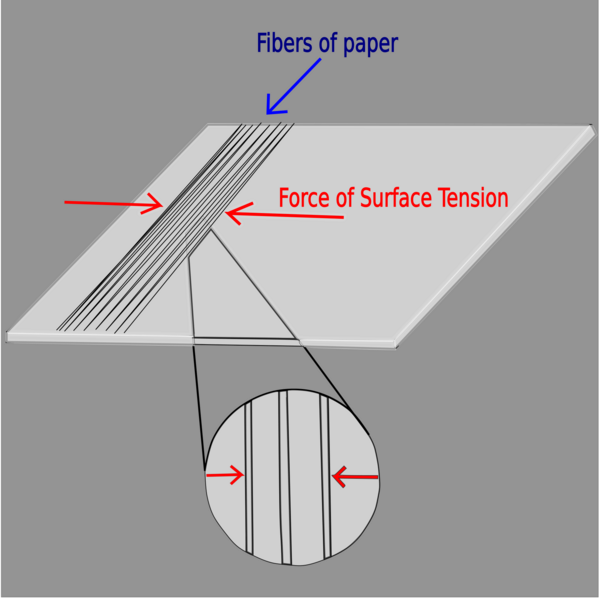
In this article, the authors investigate the shear modulus of different types of paper in the setting of the crumpling effect.
Read More...On the Relationship Between Viscosity and Surface Tension
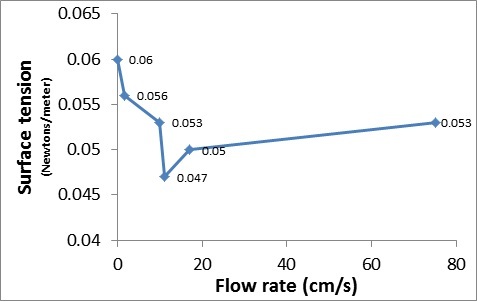
Surface tension and viscosity are both measures of how "sticky" a liquid is, but are they related? The authors here investigate the surface tension and viscosity of mixtures of water with different concentrations of agar agar, flour, or detergent. Surprisingly, they find that the least viscous mixtures had the strongest surface tensions, indicating that the two properties are not linked.
Read More...Optimizing surface contact area and electrolyte type to develop a more effective rechargeable battery
Rechargeable batteries are playing an increasingly prominent role in our lives due to the ongoing transition from fossil energy sources to green energy. The purpose of this study was to investigate variables that impact the effectiveness of rechargeable batteries. Alkaline (non-rechargeable) and rechargeable batteries share common features that are critical for the operation of a battery. The positive and negative electrodes, also known as the cathode and anode, are where the energy of the battery is stored. The electrolyte is what facilitates the transfer of cations and anions in a battery to generate electricity. Due to the importance of these components, we felt that a systematic investigation examining the surface area of the cathode and anode as well the impact of electrolytes with different properties on battery performance was justified. Utilizing a copper cathode and aluminum anode coupled with a water in salt electrolyte, a model rechargeable battery system was developed to test two hypotheses: a) increasing the contact area between the electrodes and electrolyte would improve battery capacity, and b) more soluble salt-based electrolytes would improve battery capacity. After soaking in an electrolyte solution, the battery was charged and the capacity, starting voltage, and ending voltage of each battery were measured. The results of this study supported our hypothesis that larger anode/cathodes surface areas and more ionic electrolytes such as sodium chloride, potassium chloride and potassium sulfate resulted in superior battery capacity. Incorporating these findings can help maximize the efficiency of commercial rechargeable batteries.
Read More...Changing the surface properties of the backside of a silicon wafer to repel oil and prevent particle binding
Wafers, essential in microchip production, can develop issues like leveling problems and wafer slip due to the formation of silanol bonds on their backside, which attract silica particles and oil. Authors tested addressing this issue with a coating of [acetoxy(polyethyleneoxy)propyl]triethoxysilane (APTS) applied to the wafer’s backside, preventing particle binding and oil adherence.
Read More...