Browse Articles

A Study on the Coagulating Properties of the M. oleifera Seed

Lakshmanan et al. | Feb 14, 2020

A Study on the Coagulating Properties of the <em>M. oleifera</em> Seed

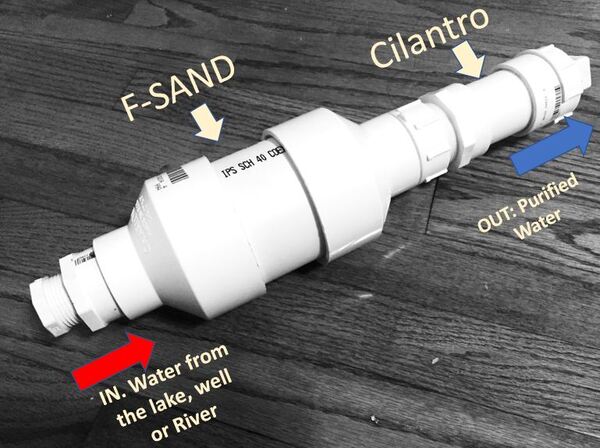
In this study, the authors investigate whether Moringa Oleifera seeds can serve as material to aid in purifying water. M. oleifera seeds have coagulating properties and the authors hypothesized that including it in a water filtration system would reduce particles, specifically bacteria, in water. Their results show that this system removed the largest percent of bacteria. When used in combination with cilantro, it was actually more efficient than the other techniques! These findings have important implications for creating better and more economical water purification systems.

Read More...

Artificial Intelligence-Based Smart Solution to Reduce Respiratory Problems Caused by Air Pollution

Bhardwaj et al. | Dec 14, 2021

Artificial Intelligence-Based Smart Solution to Reduce Respiratory Problems Caused by Air Pollution

In this report, Bhardwaj and Sharma tested whether placing specific plants indoors can reduce levels of indoor air pollution that can lead to lung-related illnesses. Using machine learning, they show that plants improved overall indoor air quality and reduced levels of particulate matter. They suggest that plant-based interventions coupled with sensors may be a useful long-term solution to reducing and maintaining indoor air pollution.

Read More...

An analysis of the distribution of microplastics along the South Shore of Long Island, NY

Sanderson et al. | Sep 21, 2020

An analysis of the distribution of microplastics along the South Shore of Long Island, NY

This study is focused on the distribution of microplastics in Long Island, NY. Microplastics are plastic particles that measure less than 5 mm in length and pose an environmental risk due to their size, composition, and ubiquitous location in the marine environment. Focusing on the South Shore of Long Island, the authors investigated the locations and concentrations of microplastics at four locations along the shore line. While they did not find significant differences in the number of microplastics per location, there were microplastics at all four locations. This finding is important to drive future research and environmental policy as well.

Read More...
Using Gravitational Waves to Determine if Primordial Black Holes are Sources of Dark Matter

Sivakumar et al. | Jul 15, 2024

Using Gravitational Waves to Determine if Primordial Black Holes are Sources of Dark Matter

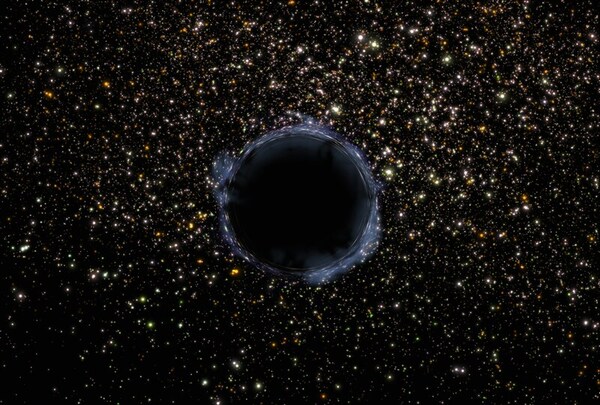
In the quest to understand dark matter, scientists face a profound mystery. Two compelling candidates, Massive Compact Halo Objects (MACHOs) and Weakly Interacting Massive Particles (WIMPs), have emerged as potential sources. By analyzing gravitational waves from binary mergers involving these black holes, authors sought to determine if MACHOs could be the elusive dark matter.

Read More...

The Effects of Atmospheric Attenuation on Cosmic Ray Muons: How is Surface Level Cosmic Ray Muon Flux Affected by Atmospheric Attenuation?

Sun et al. | Sep 11, 2021

The Effects of Atmospheric Attenuation on Cosmic Ray Muons: How is Surface Level Cosmic Ray Muon Flux Affected by Atmospheric Attenuation?

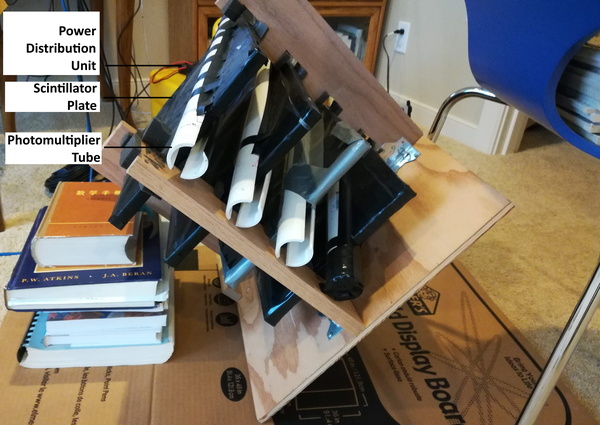
Cosmic rays are high-energy astronomical particles originating from various sources across the universe. Here, The authors sought to understand how surface-level cosmic-ray muon flux is affected by atmospheric attenuation by measuring the variation in relative muon-flux rate relative to zenith angle, testing the hypothesis that muons follow an exponential attenuation model. The attenuation model predicts an attenuation length of 6.3 km. This result implies that only a maximum of 24% of muons can reach the Earth’s surface, due to both decay and atmospheric interactions.

Read More...

Testing Different Polymers and Boron Nitride Nanotube Properties in Fabrication of Ion-selective Membranes

Yi et al. | Sep 28, 2020

Testing Different Polymers and Boron Nitride Nanotube Properties in Fabrication of Ion-selective Membranes

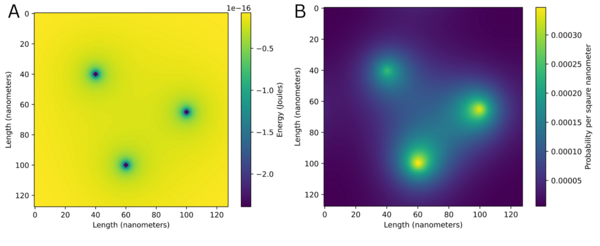
One largely untapped source of clean energy is the use of osmotic gradients where freshwater and saltwater are mixed, for example at estuaries. To harness such energy, charge-selective membranes are needed to separate the anions and cations in saltwater, establishing an electric potential like a battery. The objective of this study was twofold: to investigate the creation of the polymer matrix and test the properties of boron nitride nanotubes, as both are essential in the creation of an ion-selective membrane. Out of three polymer samples tested in this study, the mixture known as Soltech 704 showed the best resistance to etching, as well as the highest UV cure rate.

Read More...

Testing filtration capabilities of household fabrics for protection against airborne contaminants

Shah et al. | May 31, 2025

Testing filtration capabilities of household fabrics for protection against airborne contaminants

Toxic particulates in the atmosphere pose significant health risks, and while modern masks can help reduce inhalation of these pollutants, their availability may be limited during health crises. This study evaluated the effectiveness of household fabrics (cotton, fleece, wool, and rayon) as particulate filters, finding that cotton outperformed the others in filtration efficiency, while rayon was the least effective. The findings suggest that cotton is a preferable alternative for filtration purposes, while rayon should be avoided.

Read More...

The Analysis of the Effects of Smoke and Water Vapor on Insect Pheromone Communication and Physical Condition: An Investigation of the Causes of Colony Collapse Disorder

Delatorre et al. | May 20, 2015

The Analysis of the Effects of Smoke and Water Vapor on Insect Pheromone Communication and Physical Condition: An Investigation of the Causes of Colony Collapse Disorder

The cause of insect colony collapse disorder (CCD) is still a mystery. In this study, the authors aimed to test the effects of two environmental factors, water vapor and smoke levels, on the social behavior and physical condition of insects. Their findings could help shed light on how changing environmental factors can contribute to CCD.

Read More...