.png)
To best identify tuberculosis and pneumonia diagnoses in chest x-rays, the authors compare different deep learning convolution neural networks.
Read More...Determining the best convolutional neural network for identifying tuberculosis and pneumonia in chest x-rays
To best identify tuberculosis and pneumonia diagnoses in chest x-rays, the authors compare different deep learning convolution neural networks.
Read More...Practical applications of the Fourier analysis to identify pitches and synthesize sounds in music
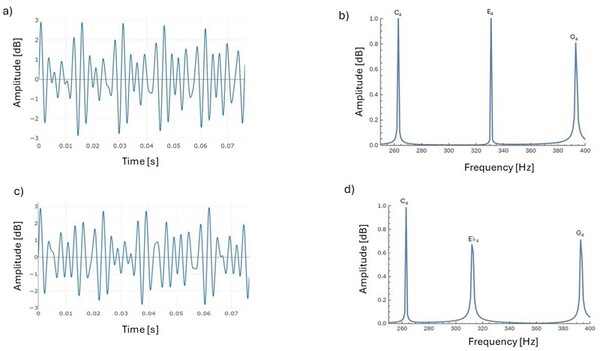
In this study the authors looked at the ability of the Discrete Fourier Transform (DFT) to analyze different musical elements. They found that DFT is a powerful method to analyze recorded music.
Read More...Using explainable artificial intelligence to identify patient-specific breast cancer subtypes
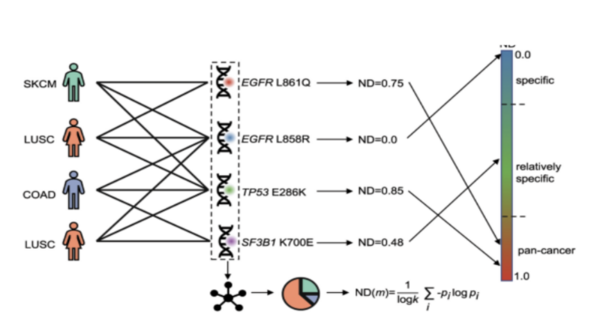
Breast cancer is the most common cancer in women, with approximately 300,000 diagnosed with breast cancer in 2023. It ranks second in cancer-related deaths for women, after lung cancer with nearly 50,000 deaths. Scientists have identified important genetic mutations in genes like BRCA1 and BRCA2 that lead to the development of breast cancer, but previous studies were limited as they focused on specific populations. To overcome limitations, diverse populations and powerful statistical methods like genome-wide association studies and whole-genome sequencing are needed. Explainable artificial intelligence (XAI) can be used in oncology and breast cancer research to overcome these limitations of specificity as it can analyze datasets of diagnosed patients by providing interpretable explanations for identified patterns and predictions. This project aims to achieve technological and medicinal goals by using advanced algorithms to identify breast cancer subtypes for faster diagnoses. Multiple methods were utilized to develop an efficient algorithm. We hypothesized that an XAI approach would be best as it can assign scores to genes, specifically with a 90% success rate. To test that, we ran multiple trials utilizing XAI methods through the identification of class-specific and patient-specific key genes. We found that the study demonstrated a pipeline that combines multiple XAI techniques to identify potential biomarker genes for breast cancer with a 95% success rate.
Read More...Friend or foe: Using DNA barcoding to identify arthropods found at home
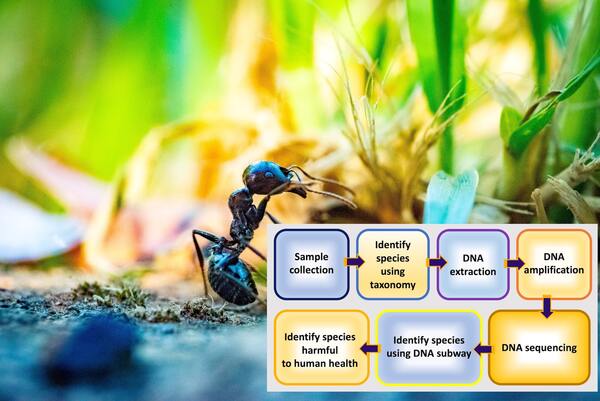
Here the authors used morphological characters and DNA barcoding to identify arthropods found within a residential house. With this method they identified their species and compared them against pests lists provided by the US government. They found that none of their identified species were considered to be pests providing evidence against the misconception that arthropods found at home are harmful to humans. They suggest that these methods could be used at larger scales to better understand and aid in mapping ecosystems.
Read More...Using a Risk Assessment Questionnaire to Identify Prediabetics and Diabetics in Tandag, Philippines
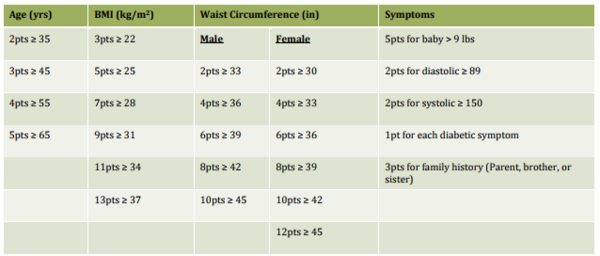
Diabetes is a growing health concern in the developing world. This study aimed to develop a questionnaire that uses factors including age, blood pressure, BMI, and family history to predict whether Filipino participants are at risk for diabetes.
Read More...Comparing neural networks with a traditional method for identifying the vanishing points of surgical tools
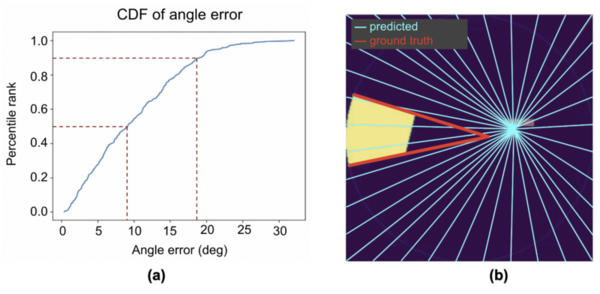
Robot-assisted minimally invasive surgery (RMIS) benefits from increased precision and faster recovery, with force feedback from the surgical tool being critical for control. Researchers tested the use of neural networks for detecting the vanishing point of the tool, a key element for force feedback.
Read More...A novel CNN-based machine learning approach to identify skin cancers
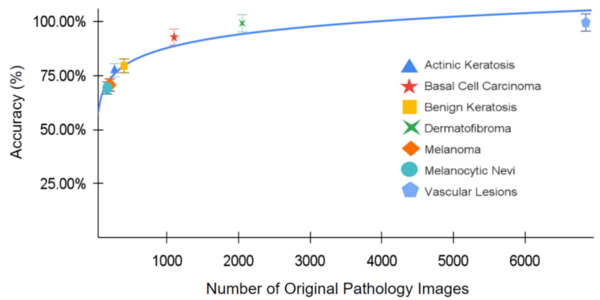
In this study, the authors developed and assessed the accuracy of a machine learning algorithm to identify skin cancers using images of biopsies.
Read More...Development of a novel machine learning platform to identify structural trends among NNRTI HIV-1 reverse transcriptase inhibitors
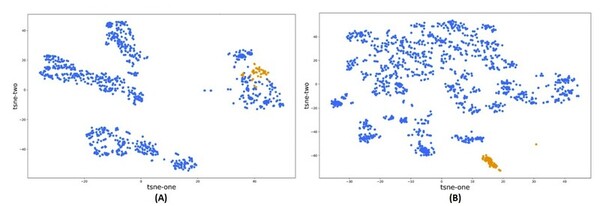
With advancements in machine learning a large data scale, high throughput virtual screening has become a more attractive method for screening drug candidates. This study compared the accuracy of molecular descriptors from two cheminformatics Mordred and PaDEL, software libraries, in characterizing the chemo-structural composition of 53 compounds from the non-nucleoside reverse transcriptase inhibitors (NNRTI) class. The classification model built with the filtered set of descriptors from Mordred was superior to the model using PaDEL descriptors. This approach can accelerate the identification of hit compounds and improve the efficiency of the drug discovery pipeline.
Read More...The Potential of Fibroblast Growth Factors to Stimulate Hair Growth In Vitro
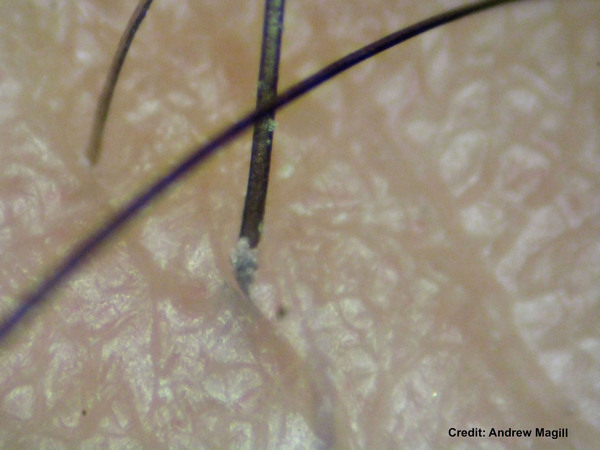
Identifying treatments that can stimulate hair growth use could help those struggling with undesirable hair loss. Here, the authors show that Fibroblast Growth Factors can stimulate the division of cells isolated from the mouse hair follicle. Their results suggest that this family of growth factors might be helpful in stimulating hair growth in living animals as well.
Read More...Varying levels of disinfectant resistance among invasive Klebsiella pneumoniae isolates
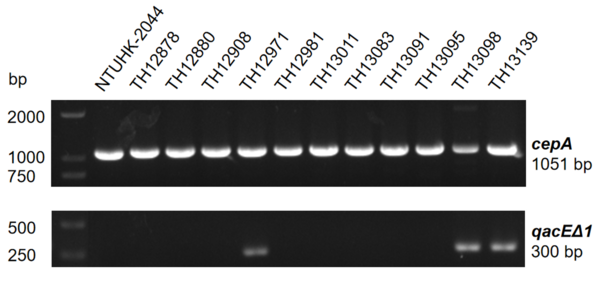
The authors identify disinfectant-resistant bacterial strains of infection-causing bacteria from samples collected at a hospital setting.
Read More...