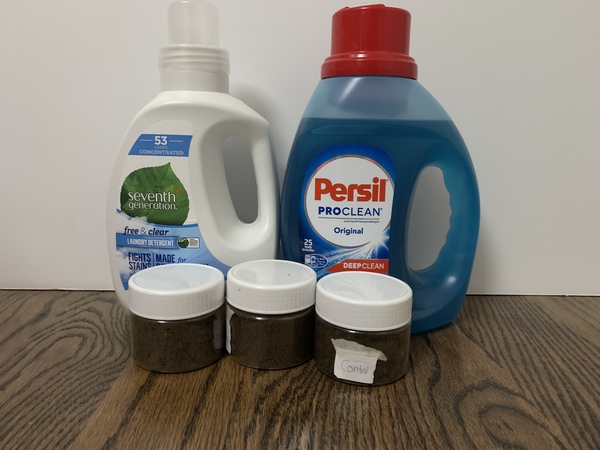
Household detergents have surfactants that can potentially harm the soil and broader ecosystems. In this study, the authors investigate whether eco-friendly and less-eco-friendly detergents affect soil pH, phosphorus, nitrogen, and potassium levels.
Read More...Browse Articles
Stress and depression among individuals with low socioeconomic status during economic inflation
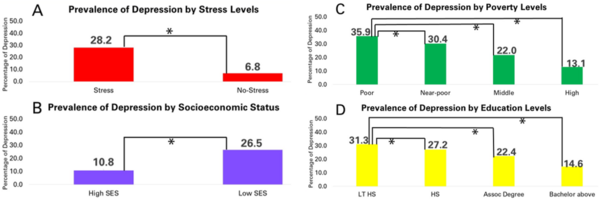
The authors use the Census Household Pulse Survey issued by the US Census Bureau to examine the prevalence of stress and depression among people across socioeconomic statuses.
Read More...The effect of floating plant on water purification: Comparison of the water purification capability of Water Hyacinth, Duckweed, and Azolla
Clean water is a necessity for every household, yet water pollution is a serious problem in many parts of the world and plays a major role in compromising water security in the 21st century. In this paper, the authors address the utility of several plants as natural water purifiers. They estimate the effectiveness of duckweed, hyacinth, and azolla in improving the quality of water from the Mithi river in India by measuring several metrics. They conclude that all three plants are effective in improving water quality, suggesting that these plants as eco-friendly options for water treatment.
Read More...Antibacterial activity of homemade Indian tomato tamarind soup (rasam) against common pathogens
Systematic consumption of traditional foods is a popular way of treating diseases in India. Rasam, a soup of spices and tomato with a tamarind base, is a home remedy for viral infections such as the common cold. Here, we investigate if rasam, prepared under household conditions, exhibits antibacterial activity against Escherichia coli and Staphylococcus aureus, two common pathogenic bacteria. Our results show rasam prepared under household conditions lacks antibacterial activity despite its ingredients possessing such properties.
Read More...The Effect of Various Liquid Mediums on the Transport of Photonic Energy and its Impact on the Quantum Efficiency of Photovoltaic Cells
A photovoltaic cell (PV cell), or solar cell, converts the energy of light into electricity and is the basis for solar power. In order to increase the efficiency of PV cells, the authors in this study used common household items as photon transmissions mediums and measured their effects on the temperature and voltage output of the PV cells.
Read More...A study on the stretching behavior of rubber bands
Here, the authors considered the stretching behavior of rubber bands by exposing the rubber bands to increasing loads and measuring their stretch response. They found that a linear stretch response was observed for intermediate loading steps, but this behavior was lost at lower or higher loads, deviating from Hooke's Law. The authors suggest that studies such as these can be used to evaluate other visco-elastic structures.
Read More...Optical anisotropy of crystallized vanillin thin film: the science behind the art
Microscopic beauty is hiding in common kitchen ingredients - even vanillin flavoring can be turned into mesmerizing artwork by crystallizing the vanillin and examining it under a polarizing microscope. Wang and Pang explore this hidden beauty by determining the optimal conditions to grow crystalline vanillin films and by creating computer simulations of chemical interactions between vanillin molecules.
Read More...Yeast catalysis of hydrogen peroxide as an enhanced chemical treatment method for harvested rainwater
The authors looked at different treatments to clean up rainwater collected at home. They found that chlorine treatment and treatment with hydrogen peroxide catalyzed by yeast showed similar potential for cleaning up contaminated rainwater, but that further studies are needed to better assess impact on specific contaminant levels still present.
Read More...Predicting clogs in water pipelines using sound sensors and machine learning linear regression
The authors looked the ability of sound sensors to predict clogged pipes when the sound intensity data is run through a machine learning algorithm.
Read More...Antibacterial effectiveness of turmeric against gram-positive Staphylococcus epidermidis
Infections caused by antibiotic resistance are a leading issue faced by the medical field. The authors studied the antibacterial effectiveness of turmeric against gram-positive Staphylococcus epidermidis using antibiotic sensitivity disks. They infused blank antibiotic sensitivity disks with a 5% concentrated solution of turmeric and placed them on agar plates inoculated with bacteria. Overall, there was no measurable ZOI surrounding the turmeric disk so the measurements for all trials were 0 cm, suggesting that turmeric at a 5% concentration is not an effective antibacterial against S. epidermidis.
Read More...