Browse Articles

Can the Growth Mindset Encourage Girls to Pursue “Male” Careers?

Lateef et al. | Oct 03, 2021

Can the Growth Mindset Encourage Girls to Pursue “Male” Careers?

Despite major advances in gender equality, men still far outnumber women in science, technology, engineering and math (STEM) professions. The purpose of this project was to determine whether mindset could affect a student’s future career choices and whether this effect differed based on gender. When looking within the gender groups, 86% of females who had a growth mindset were likely to consider a “male” career, whereas only 16% of females with fixed mindset would likely to consider a “male” career. Especially for girls, cultivating a growth mindset may be a great strategy to address the problem of fewer girls picking STEM careers.

Read More...

Propagation of representation bias in machine learning

Dass-Vattam et al. | Jun 10, 2021

Propagation of representation bias in machine learning

Using facial recognition as a use-case scenario, we attempt to identify sources of bias in a model developed using transfer learning. To achieve this task, we developed a model based on a pre-trained facial recognition model, and scrutinized the accuracy of the model’s image classification against factors such as age, gender, and race to observe whether or not the model performed better on some demographic groups than others. By identifying the bias and finding potential sources of bias, his work contributes a unique technical perspective from the view of a small scale developer to emerging discussions of accountability and transparency in AI.

Read More...

High school students show some reluctance to COVID-19 guidelines

Basit Abid et al. | Jun 25, 2024

High school students show some reluctance to COVID-19 guidelines
Image credit: The authors

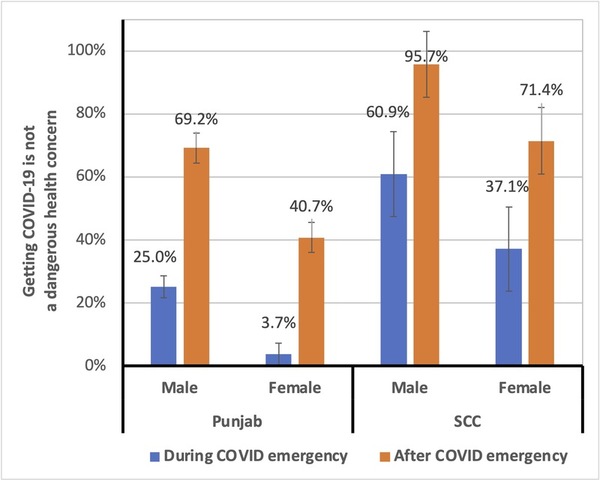
COVID-19 has officially been downgraded from the status of a global health emergency, but have COVID-19 safety practices become a new way of life for students? The authors collected survey data on COVID-19-related knowledge and behaviors of high-school students in Punjab, Pakistan and Santa Clara County, California, USA, so see where high-schoolers stand on pandemic safety today.

Read More...

Survival analysis in cardiovascular epidemiology: nexus between heart disease and mortality

Lachwani et al. | Oct 23, 2024

Survival analysis in cardiovascular epidemiology: nexus between heart disease and mortality

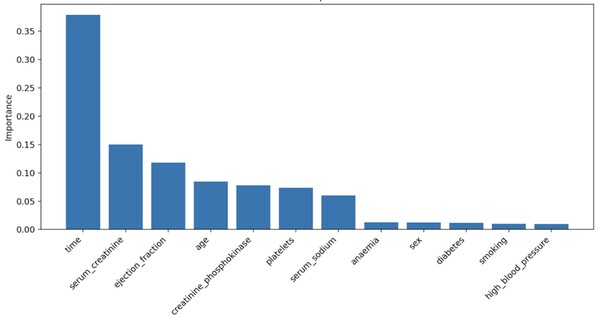
In 2021, over 20 million people died from cardiovascular diseases, highlighting the need for a deeper understanding of factors influencing heart failure outcomes. This study examined multiple variables affecting mortality after heart failure, using random forest models to identify time, serum creatinine, and ejection fraction as key predictors. These findings could contribute to personalized medicine, improving survival rates by tailoring treatment strategies for heart failure patients.

Read More...

Health services in Iraq - A cross-sectional survey of adolescents in Basra

Al Saeedi et al. | Aug 12, 2022

Health services in Iraq - A cross-sectional survey of adolescents in Basra

This study is a cross-sectional survey of adolescents in Basra, Iraq, from November 2020 to March 2021 about types of adolescent problems, the individuals and institutions adolescents turn to, and the role of public health centers in dealing with their problems. The survey found that psychological problems represent the largest proportion of health problems, and most adolescents turn to their parents to discuss their problems. The work indicates that there is an urgent need to pay attention to public health centers and provide health and psychological support to adolescents.

Read More...

Who is at Risk for a Spinal Fracture? – A Comparative Study of National Health and Nutrition Examination Survey Data

He et al. | Mar 01, 2018

Who is at Risk for a Spinal Fracture? – A Comparative Study of National Health and Nutrition Examination Survey Data

One common age-related health problem is the loss of bone mineral density (BMD), which can lead to a variety of negative health outcomes, including increased risk of spinal fracture. In this study, the authors investigate risk factors that may be predictive of an individual's risk of spinal fracture. Their findings provide valuable information that clinicians can use in patient evaluations.

Read More...