Browse Articles

Health services in Iraq - A cross-sectional survey of adolescents in Basra

Al Saeedi et al. | Aug 12, 2022

Health services in Iraq - A cross-sectional survey of adolescents in Basra

This study is a cross-sectional survey of adolescents in Basra, Iraq, from November 2020 to March 2021 about types of adolescent problems, the individuals and institutions adolescents turn to, and the role of public health centers in dealing with their problems. The survey found that psychological problems represent the largest proportion of health problems, and most adolescents turn to their parents to discuss their problems. The work indicates that there is an urgent need to pay attention to public health centers and provide health and psychological support to adolescents.

Read More...

Who is at Risk for a Spinal Fracture? – A Comparative Study of National Health and Nutrition Examination Survey Data

He et al. | Mar 01, 2018

Who is at Risk for a Spinal Fracture? – A Comparative Study of National Health and Nutrition Examination Survey Data

One common age-related health problem is the loss of bone mineral density (BMD), which can lead to a variety of negative health outcomes, including increased risk of spinal fracture. In this study, the authors investigate risk factors that may be predictive of an individual's risk of spinal fracture. Their findings provide valuable information that clinicians can use in patient evaluations.

Read More...

Extroverts as Materialists: Correlating Personality Traits, Materialism, and Spending Behavior

Jackson et al. | Feb 19, 2017

Extroverts as Materialists: Correlating Personality Traits, Materialism, and Spending Behavior

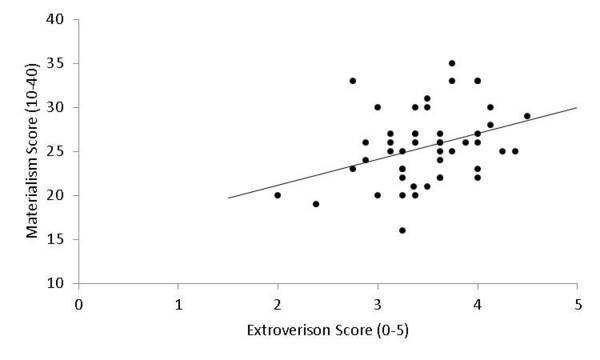
The authors investigated the relationship between personality traits and adolescent materialism, as well as how materialism relates to spending habits. Results indicate that extroversion was positively correlated with materialism, and that adolescents' purchases were affected by the purchasing behaviors of their friends or peers. Moreover, materialistic youth were more likely than non-materialistic youth to spend money on themselves when given a hypothetical windfall of $500.

Read More...

The effect of adverse childhood experiences on e-cigarette usage in people aged 18–30 in the US

Bloomer et al. | Oct 06, 2022

The effect of adverse childhood experiences on e-cigarette usage in people aged 18–30 in the US

Recently, e-cigarette usage has been increasing rapidly. Previous research has found that adverse
childhood experiences (ACEs) are correlated to cigarette usage. However, there is limited data exploring if ACEs affect vaping. Therefore, in this work, we investigated the effects of ACEs on e-cigarette usage and hypothesize that witnessing vaping in the house and facing ACEs would increase e-cigarette usage while education on the dangers of vaping would decrease e-cigarette usage. We found that different types of ACEs had different correlations with e-cigarette usage and that education on the dangers of vaping had no effect on e-cigarette usage.

Read More...

The impact of attending a more selective college on future income

Ho et al. | Oct 16, 2024

The impact of attending a more selective college on future income

Debates around legacy preferences, recruited athletes, and affirmative action in U.S. college admissions often focus on the belief that graduating from a more selective institution leads to higher future earnings. The study hypothesized a positive correlation between college selectivity and future income due to enhanced resources and opportunities.

Read More...