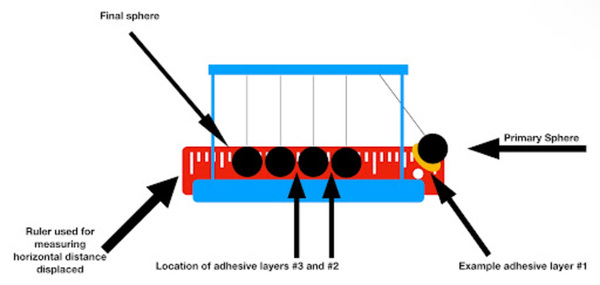
Understanding the techniques used to improve the adhesion strength of the epoxy resin is important especially for consumer applications such as repairing car parts, bonding aluminum sheeting, and repairing furniture or applications within the aviation or civil industry. Selleys Araldite epoxy makes specific strength claims emphasizing that the load or weight that can be supported by the adhesive is 72 kg/cm2. Nguyen and Clarke aimed to test the strength claims of Selley’s Araldite Epoxy by gluing two steel adhesion surfaces: a steel tube and bracket. Results showed that there is a lack of consideration by Selleys for adhesion loss mechanisms and environmental factors when accounting for consumer use of the product leading to disputable claims.
Read More...Browse Articles
Evaluating Biomarkers and Treatments for Acute Kidney Injury in a Zebrafish Model
Coronary Artery Disease (CAD) is the leading cause of death in the United States, and 81% of Acute Kidney Injury (AKI) patients in the renal fibrosis stage later develop CAD. In this study, Mathew and Joykutty aimed to create a cost-effective strategy to treat AKI and thus prevent CAD using a model of the zebrafish, Danio rerio. They first tested whether AKI is induced in Danio rerio upon exposure to environmental toxins, then evaluated nitrotyrosine as an early biomarker for toxin-induced AKI. Finally, they evaluated 4 treatments of renal fibrosis, the last stage of AKI, and found that the compound SB431542 was the most effective treatment (reduced fibrosis by 99.97%). Their approach to treating AKI patients, and potentially prevent CAD, is economically feasible for translation into the clinic in both developing and developed countries.
Read More...The Development and Maximization of a Novel Photosynthetic Microbial Fuel Cell Using Rhodospirillum rubrum
Microbial fuel cells (MFCs) are bio-electrochemical systems that utilize bacteria and are promising forms of alternative energy. Similar to chemical fuel cells, MFCs employ both an anode (accepts electrons) and a cathode (donates electrons), but in these devices the live bacteria donate the electrons necessary for current. In this study, the authors assess the functionality of a photosynthetic MFC that utilizes a purple non-sulfur bacterium. The MFC prototype they constructed was found to function over a range of environmental conditions, suggesting its potential use in industrial models.
Read More...Effects of copper sulfate exposure on the nervous system of the Hirudo verbana leech
In this study, the authors test whether excess copper exposure has neurobehavioral effects on Hirudo verbana leeches.
Read More...Too hot to work? Heat waves, household income, and labor adaptation in India
Paper found that heat waves in India are linked to lower household income, agricultural income, and consumption, with agriculture being affected the most. It also suggests farm workers may adapt to extreme heat over time by increasing labor inputs despite rising temperatures.
Read More...Variation, relationship, and trade-offs of leaf traits in large and small deciduous broadleaf tree species
The authors access a panel of leaf traits across ten deciduous tree species to explore adaptive strategies between large and small trees.
Read More...A comparison of starches and plasticizers for biopolymer synthesis and degradation
Optimized biochemical depolymerization of plastics from surgical face masks
The authors combine chemical, enzymatic, and microbial-based methods to optimize degradation of plastics within a surgical facemask.
Read More...Investigating facilitated biofilm formation in Escherichia coli exposed to sublethal levels of ampicillin
Here, the authors recognized the tendency of bacteria to form biofilms, where this behavior offers protection against threats such as antibiotics. To investigate this, they observed the effects of sublethal exposure of the antibiotic ampicillin on E. coli biofilm formation with an optical density crystal violet assay. They found that exposure to ampicillin resulted in the favored formation of biofilms over time, as free-floating bacteria were eradicated.
Read More...Computational evidence for differential endocrine disruption by DEHP and PET via estrogen receptor beta binding
The authors demonstrate computationally that two types of nanoplastics can bind to estrogen receptor beta and potentially disrupt endocrine systems.
Read More...