Browse Articles

3D Printed Polymer Scaffolds for Bone Tissue Regeneration

Jayatissa et al. | Apr 26, 2019

3D Printed Polymer Scaffolds for Bone Tissue Regeneration

Scientists are always on the quest to improve the body's healing abilities and broken bones are no exception. In this article, the authors investigate properties of 3D-printed biocompatible polymers used to improve bone healing. With such efforts, we can hope to, one day, improve bone scaffolding materials in ways that make the natural healing processes more efficient, reducing the time needed for recovery from bone fractures.

Read More...

The Effect of Bead Shape and Texture on the Energy Loss Characteristics in a Rotating Capsule

Misra et al. | Jan 25, 2019

The Effect of Bead Shape and Texture on the Energy Loss Characteristics in a Rotating Capsule

Industrial process are designed to optimize speed, energy use and quality. Some steps involve the translation of product-filled barrels, how far and fast this happens depends on the properties of the product within. This article investigates such properties on a mini-scale, where the roll of bead size, texture and material on the distance travelled by a cylindrical capsule is investigated.

Read More...

Evaluation of Tea Extract as an Inhibitor of Oxidative Stress in Prostate Cells

Zhang et al. | Jan 22, 2019

Evaluation of Tea Extract as an Inhibitor of Oxidative Stress in Prostate Cells

One important factor that contributes to human cancers is accumulated damage to cells' DNA due to the oxidative stress caused by free radicals. In this study, the authors investigate the effects of several different tea leaf extracts on oxidative stress in cultured human prostate cells to see if antioxidants in the tea leaves could help protect cells from this type of DNA damage. They found that all four types of tea extract (as well as direct application of the antioxidant EGCG) improved the outcomes for the cultured cells, with white tea extract having the strongest effect. This research suggests that tea extracts and the antioxidants that they contain may have applications in the treatment of the many diseases associated with cellular DNA damage, including cancer.

Read More...

The Effects of Post-Consumer Waste Polystyrene on the Rate of Mealworm Consumption

Green et al. | Nov 29, 2018

The Effects of Post-Consumer Waste Polystyrene on the Rate of Mealworm Consumption

In a world where plastic waste accumulation is threatening both land and sea life, Green et al. investigate the ability of mealworms to breakdown polystyrene, a non-recyclable form of petrochemical-based polymer we use in our daily lives. They confirm that these organisms, can degrade various forms of polystyrene, even after it has been put to use in our daily lives. Although the efficiency of the degradation process still requires improvement, the good news is, the worms are tiny and themselves are biodegradable, so we can use plenty of them without worrying about space and how to get rid of them. This is very promising and certainly good news for the planet.

Read More...

Can Children Acquire Their Parents’ History of Fracture?

Boulis et al. | Sep 24, 2018

Can Children Acquire Their Parents’ History of Fracture?

While the genetic basis of hip fracture risk has been studied extensively in adults, it is not known whether parental history of bone fractures affects their children's fracture risk. In this article, the authors investigated whether a parental history of bone fractures influences the rate of fractures in their children. They found that adolescent children whose parents had a more extensive history of fractures were more likely to have a history of fractures themselves, suggesting that parents' medical histories may be an important consideration in future pediatric health research.

Read More...

Effects of Paan Extracts on Periodontal Ligament and Osteosarcoma Cells

Venkatachalam et al. | Sep 20, 2018

Effects of Paan Extracts on Periodontal Ligament and Osteosarcoma Cells

In South Asian countries, the major cause of oral cancer is reported to be chewing paan, which is comprised of betel leaf daubed with slaked lime paste and areca nut. To investigate how paan may contribute to the onset of cancer, the authors treated two immortalized cell lines with extracts of betel leaf, areca nut, and lime and evaluated how these treatments affected cell proliferation and cell death. Initial results indicate that while betel leaf alone may inhibit cell growth, areca nut promoted cancer cell survival and proliferation, even when co-treated with betel leaf. These data suggest that areca nut could exacerbate the progression of oral cancer in humans.

Read More...

Who is at Risk for a Spinal Fracture? – A Comparative Study of National Health and Nutrition Examination Survey Data

He et al. | Mar 01, 2018

Who is at Risk for a Spinal Fracture? – A Comparative Study of National Health and Nutrition Examination Survey Data

One common age-related health problem is the loss of bone mineral density (BMD), which can lead to a variety of negative health outcomes, including increased risk of spinal fracture. In this study, the authors investigate risk factors that may be predictive of an individual's risk of spinal fracture. Their findings provide valuable information that clinicians can use in patient evaluations.

Read More...

Effect of Natural Compounds Curcumin and Nicotinamide on α-synuclein Accumulation in a C. elegans Model of Parkinson’s Disease

Mehrotra et al. | Jan 29, 2018

Effect of Natural Compounds Curcumin and Nicotinamide on α-synuclein Accumulation in a C. elegans Model of Parkinson’s Disease

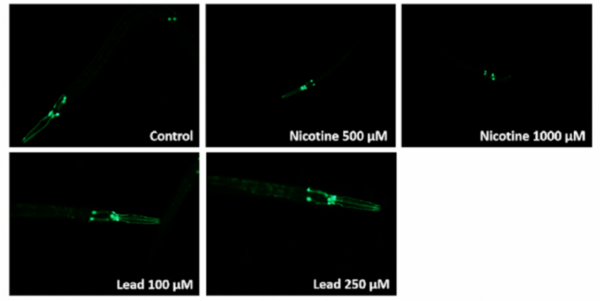
Parkinson's disease is a neurodegenerative disorder that affects over 10 million people worldwide. It is caused by destruction of dopamine-producing neurons, which results in severe motor and movement symptoms. In this study, the authors investigated the anti-Parkinsonian effects of two natural compounds curcumin and nicotinamide using C. elegans as a model organism.

Read More...