Browse Articles

From trash to treasure: A sustainable approach to oil spill clean-up

Kathir et al. | Aug 02, 2023

From trash to treasure: A sustainable approach to oil spill clean-up

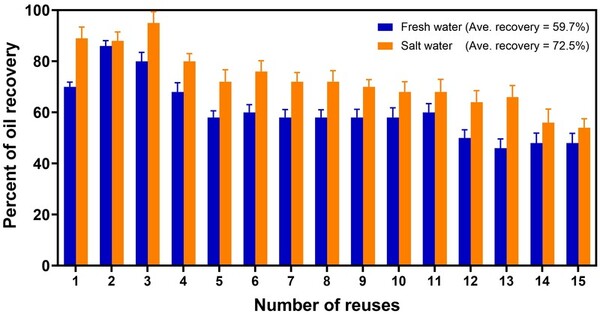
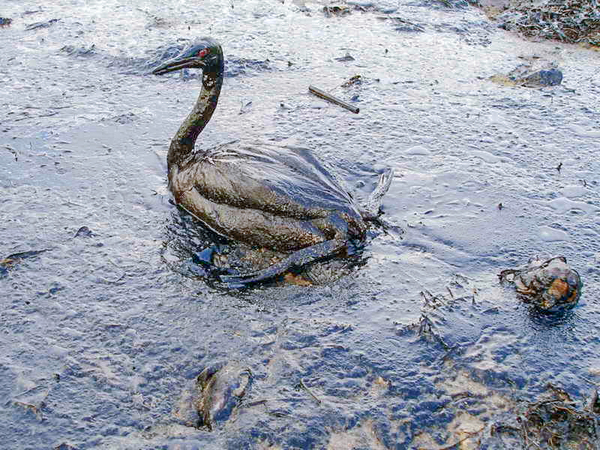
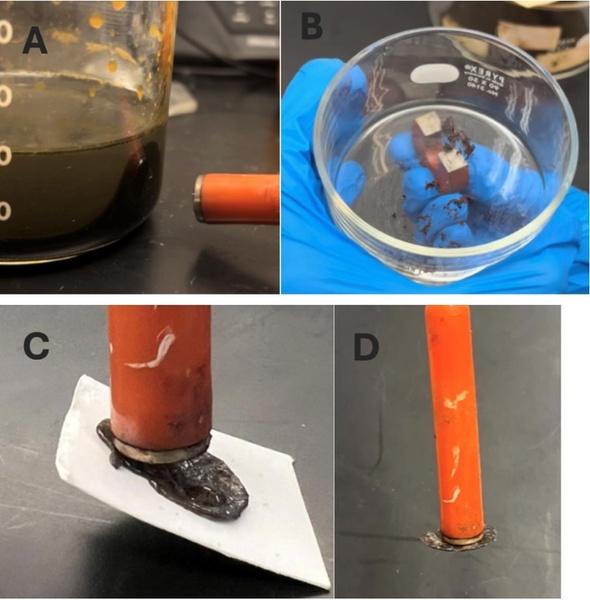
In this study the authors looked at sustainable ways to clean up oil spills that harm marine life. Using water spangle leaves and milk week the authors looked at the ability to recovery oil from both fresh and salt water and the ability to reuse the organic material to clean up spills. Their results show promise to help find a sustainable, eco-friendly way to clean up oil spills and protect marine life and habitats.

Read More...
Integrated Ocean Cleanup System for Sustainable and Healthy Aquatic Ecosystems

Anand et al. | Nov 14, 2020

Integrated Ocean Cleanup System for Sustainable and Healthy Aquatic Ecosystems

Oil spills are one of the most devastating events for marine life. Finding ways to clean up oil spills without the need for harsh chemicals could help decrease the negative impact of such spills. Here the authors demonstrate that using a combination of several biodegradable substances can effectively adsorb oil in seawater in a laboratory setting. They suggest further exploring the potential of such a combination as a possible alternative to commonly-used non-biodegradable substances in oil spill management.

Read More...

Using NLP to ascertain changes in the fast-fashion industry based on UN sustainable development goals

Chadha et al. | Sep 11, 2023

Using NLP to ascertain changes in the fast-fashion industry based on UN sustainable development goals
Image credit: Prudence Earl

Here, the authors sought to evaluate the efforts of fast fashion clothing companies towards sustainability, specifically in regards to the United Nations Sustainable Development Goals. The authors used natural language processing to investigate the sustainability reports of fast fashion companies focusing on terms established by the UN. They found that the most consistently addressed areas were related to sustainable consumption/production, with a focus on health and well-being emerging during the recent pandemic.

Read More...

Comparing the Biodegradability of Petroleum-based Plastic with a Novel, Sustainable Bio-plastic Alternative

Van Note et al. | Dec 02, 2020

Comparing the Biodegradability of Petroleum-based Plastic with a Novel, Sustainable Bio-plastic Alternative

In this research, a novel bioplastic inclusive of bamboo tannins and chitosan is selected from more than 60 trial formula variations based on resulting strength, fatigue, and transparency attributes. The biodegradability of the finalized bioplastic is compared to that of conventional polyethylene, in addition to investigating its solubility and water absorbance. This research displays the potential of a legitimate, fully biodegradable plastic alternative to current marketplace bioplastics.

Read More...

Developing a Portable, Reusable, and Inexpensive Magnesium-Air Fuel Cell

Tota et al. | Mar 28, 2019

Developing a Portable, Reusable, and Inexpensive Magnesium-Air Fuel Cell

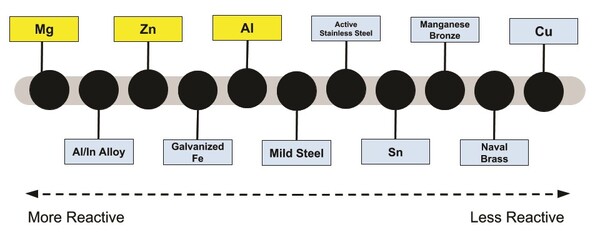
One of the greatest challenges we face today is the sustainable production, storage, and distribution of electrical power. One emerging technology with great promise in this area is that of metal-air fuel cells—a long-term and reusable electricity storage system made from a reactive metal anode and a saline solution. In this study the authors tested several different types of metal to determine which was the most suitable for this application. They found that a fuel cell with a magnesium anode was superior to fuel cells made from aluminum or zinc, producing a voltage and current sufficient for real-world applications such as charging a mobile phone.

Read More...

Kinetic Monitoring and Fourier-Transform Infrared (FTIR) Spectroscopy of the Green Oxidation of (-)-Menthol to (-)-Menthone

Surapaneni et al. | Aug 06, 2020

Kinetic Monitoring and Fourier-Transform Infrared (FTIR) Spectroscopy of the Green Oxidation of (-)-Menthol to (-)-Menthone

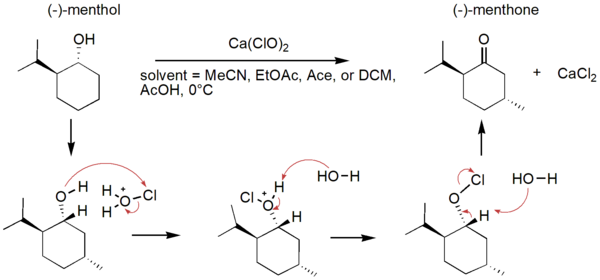
In an effort to reduce the production of hazardous substances, green chemistry aims to make chemical processes more sustainable. One way to do so is changing solvents in chemical reactions. Here, authors assessed different “green” solvents on the oxidation of (-)-menthol to (-)-menthone using Fourier-transform infrared (FTIR) spectroscopy, optimizing the solvent system for this reaction.

Read More...

Investigating auxin import and export proteins in Chlorella vulgaris

Wang et al. | Apr 19, 2025

Investigating auxin import and export proteins in <i>Chlorella vulgaris</i>

This study explores auxin signaling in Chlorella vulgaris, a green alga with potential for sustainable biofuel and food production. Evidence from protoplast swelling experiments suggests that C. vulgaris secretes auxin and possesses auxin import proteins, highlighting previously uncharacterized signaling pathways. These findings could support more efficient cultivation and resource extraction strategies.

Read More...

Development of novel biodegradable bioplastics for packaging film using mango peels

Wang et al. | Apr 06, 2025

Development of novel biodegradable bioplastics for packaging film using mango peels
Image credit: JACQUELINE BRANDWAYN

Here the authors explored the development of biodegradable bioplastic films derived from mango peels as a sustainable solution to plastic pollution and greenhouse gas emissions from fruit waste. They optimized the film's mechanical properties and water resistance through adjusting processing conditions and incorporating plasticizers and a hydrophobic coating, ultimately demonstrating its potential as a bacteriostatic and biodegradable alternative to conventional plastic food wrap.

Read More...

Wind Resistance and Automobile Shapes

Neelakantan et al. | Jan 25, 2019

Wind Resistance and Automobile Shapes

Energy efficiency is becoming more important as we struggle to find better, more sustainable energy sources to power our planet; the car industry is no exception. In this article, the authors examine the effect of shape on automobile aerodynamics By finding the shape that makes cars less resistant to wind, and therefore more energy efficient, can help the automobile industry make better, more eco-friendly cars that are also cheaper to operate.

Read More...