Browse Articles

Antibacterial effectiveness of turmeric against gram-positive Staphylococcus epidermidis

Cox et al. | Jan 10, 2022

Antibacterial effectiveness of turmeric against gram-positive <i>Staphylococcus epidermidis</i>

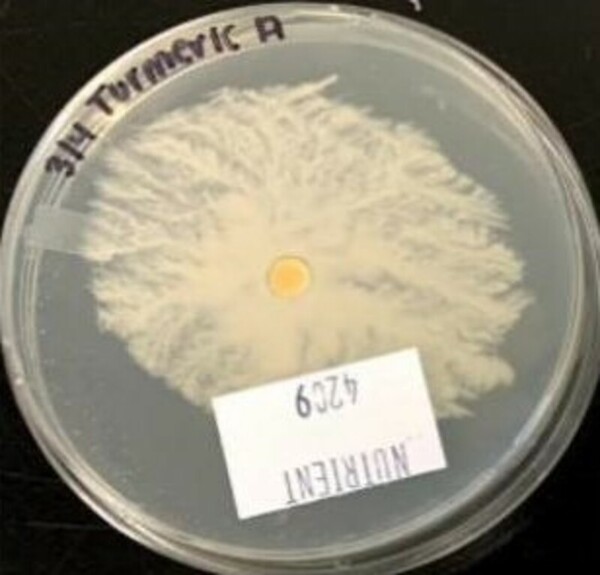
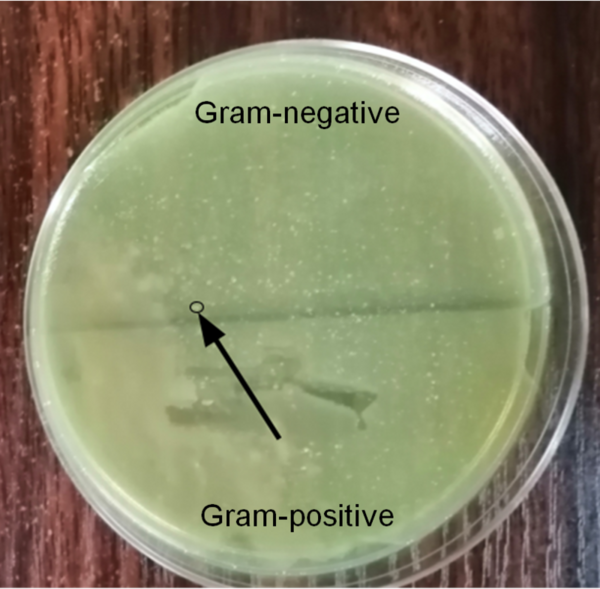
Infections caused by antibiotic resistance are a leading issue faced by the medical field. The authors studied the antibacterial effectiveness of turmeric against gram-positive Staphylococcus epidermidis using antibiotic sensitivity disks. They infused blank antibiotic sensitivity disks with a 5% concentrated solution of turmeric and placed them on agar plates inoculated with bacteria. Overall, there was no measurable ZOI surrounding the turmeric disk so the measurements for all trials were 0 cm, suggesting that turmeric at a 5% concentration is not an effective antibacterial against S. epidermidis.

Read More...

Reinforcement learning in 2-D space with varying gravitational fields

Rousseau et al. | Jun 07, 2025

Reinforcement learning in 2-D space with varying gravitational fields
Image credit: NASA

In this study the authors looked at the ability to navigate planes in space between randomly placed planets. They used machine and reinforcement learning to run simulations and found that they were able to identify optimal paths for travel. In the future these techniques may allow for safer travel in unknown spaces.

Read More...

Access to public parks, drinking fountains, and clean public drinking water in the Bay Area is not driven by income

Zaroff et al. | Jul 15, 2021

Access to public parks, drinking fountains, and clean public drinking water in the Bay Area is not driven by income

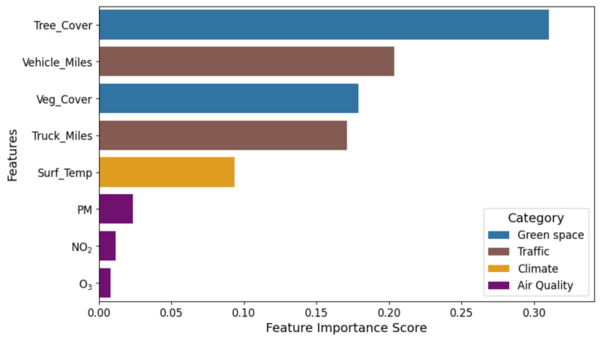
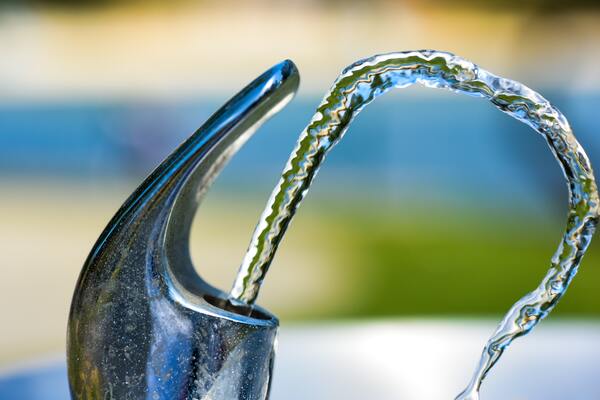
Access to green space—an area of grass, trees, or other vegetation set apart for recreational or aesthetic purposes in an urban environment—and clean drinking water can be unequally distributed in urban spaces, which are often associated with income inequality. Little is known about public drinking water and green space inequities in the Bay Area. For our study, we sought to understand how public park access, drinking fountain access, and the quality of public drinking water differ across income brackets in the Bay Area. Though we observed smaller-scale instances of inequalities, in the park distribution in the Bay Area as a whole, and in the Southern Bay’s water quality and park distribution, our results indicate that other factors could be influencing water quality, and park and fountain access in the Bay Area.

Read More...

Cutibacterium acnes sequence space topology implicates recA and guaA as potential virulence factors

Bohdan et al. | May 01, 2025

<i>Cutibacterium acnes</i> sequence space topology implicates <i>recA</i> and <i>guaA</i> as potential virulence factors
Image credit: Bohdan and Platje 2025

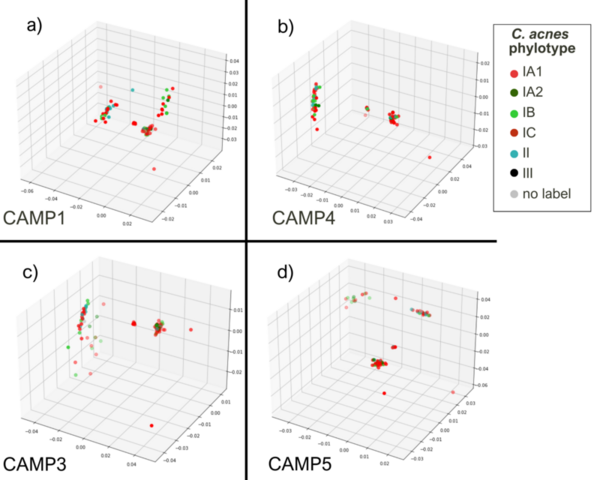
Cutibacterium acnes is a bacterium believed to play an important role in the pathogenesis of common skin diseases such as acne vulgaris. Currently, acne is known to be associated with strains from the type IA1 and IC clades of C. acnes, while those from the type IA2, IB, II, and III phylogroups are associated with skin health. This is the first study to explore the sequence space of individual gene products of different C. acnes phylogroups. Our analysis compared the sequence space topology of virulence factors to proteins with unknown functions and housekeeping proteins. We hypothesized that sequence space features of virulence factors are different from housekeeping protein features, which potentially provides an avenue to deduce unknown proteins’ functions. This proposition should be confirmed based on further experimental outcomes. A notable similarity in the sequence spaces’ topological features of previously known as housekeeping proteins encoded by recA and guaA genes to ‘putative virulence’ genes camp2 and tly was observed. Our research suggests further investigation of recA and guaA’s potential virulence properties to better understand acne pathogenesis and develop more targeted acne treatments.

Read More...

The Effectiveness of Different Palate Relievers Against a Hot Chili Pepper Sauce

Avendaño-Rodríguez et al. | Jun 11, 2016

The Effectiveness of Different Palate Relievers Against a Hot Chili Pepper Sauce

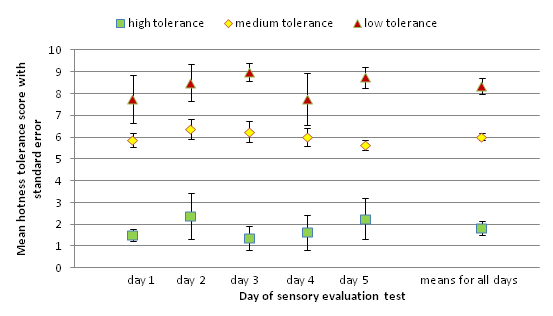
Cuisine with hot chili peppers can be tasty, but sometimes painful to consume because of the burning sensations caused by the capsaicin molecule. The authors wanted to find the palate reliever that decreases the burning sensation of capsaicin the most by testing water, soft drink, olive oil, milk, and ice-cream as possible candidates. The authors hypothesized that olive oil would be the best palate reliever as it is non-polar like the capsaicin molecule. The authors surveyed 12 panelists with low, medium, and high spice tolerances and found that across all levels of spice tolerance, milk and ice-cream were the best palate relievers and soft drink the worst.

Read More...

Flight paths over greenspace in major United States airports

Lee et al. | Sep 26, 2023

Flight paths over greenspace in major United States airports
Image credit: Mostafijur Rahman Nasim

Greenspaces (urban and wetland areas that contain vegetation) are beneficial to reducing pollution, while airplanes are a highly-polluting method of transportation. The authors examine the intersection of these two environmental factors by processing satellite images to reveal what percentage of flight paths go over greenspaces at major US airports.

Read More...

The Effects of Antioxidants on the Climbing Abilities of Drosophila melanogaster Exposed to Dental Resin

Prashanth et al. | Jan 17, 2019

The Effects of Antioxidants on the Climbing Abilities of <em>Drosophila melanogaster</em> Exposed to Dental Resin

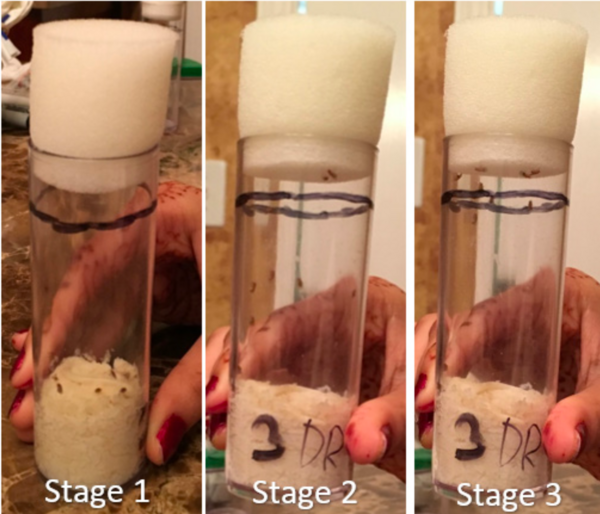
Dental resins can be a source of reactive oxygen species (ROS) which in unruly amounts can be toxic to cellular and overall health. In this report, the authors test whether the consumption of antioxidant rich foods like avocado and asparagus can protect against the effect of dental resin-derived ROS. However, rather than testing humans, they use fruit flies and their climbing abilities as an experimental readout.

Read More...

Fractal dimensions of crumpled paper

Zhou et al. | Aug 10, 2023

Fractal dimensions of crumpled paper
Image credit: Richard Dykes

Here, beginning from an interest in fractals, infinitely complex shapes. The authors investigated the fractal object that results from crumpling a sheet of paper. They determined its fractal dimension using continuous Chi-squared analysis, thereby testing and validating their model against the more conventional least squares analysis.

Read More...