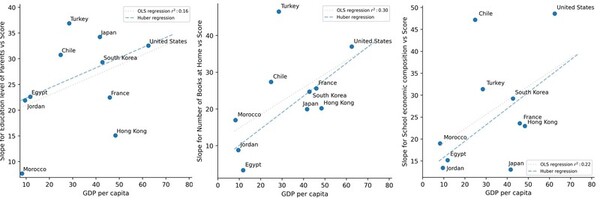
This study examines how socioeconomic status (SES) influences student mathematics achievement across countries by conducting multiple regression analyses to the Trends in International Mathematics and Science Study (TIMSS) 2019 dataset.
Read More...Comparative data analysis on the effect of socioeconomic factors on math proficiency
This study examines how socioeconomic status (SES) influences student mathematics achievement across countries by conducting multiple regression analyses to the Trends in International Mathematics and Science Study (TIMSS) 2019 dataset.
Read More...Differences in online reviews between different communities: An empirical study on Amazon and Goodreads
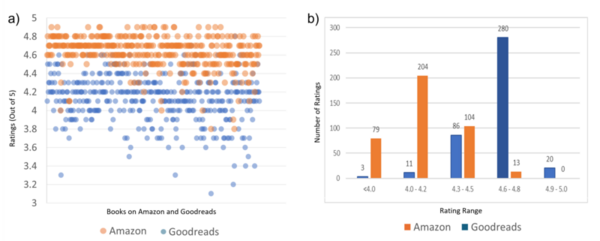
Online review platforms often provide different reviews on the same product, potentially confusing consumers. In this study, we found that the number of raters on Amazon is lower for the same book, while ratings on Amazon were higher than those on Goodreads. Furthermore, these differences in ratings and rater counts were larger for fiction books than for non‑fiction books.
Read More...Too hot to work? Heat waves, household income, and labor adaptation in India
Paper found that heat waves in India are linked to lower household income, agricultural income, and consumption, with agriculture being affected the most. It also suggests farm workers may adapt to extreme heat over time by increasing labor inputs despite rising temperatures.
Read More...Sector Dynamics: Equity and fixed-income performance across market cycles
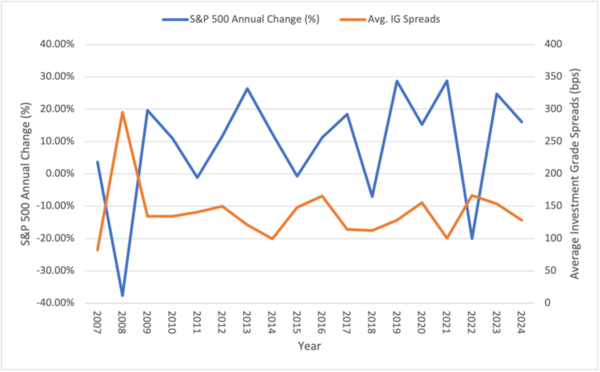
The authors examined the relationships between S&P 500 Technology and Financials equity sectors and their corresponding investment-grade fixed-income markets from 1995 to 2025.
Read More...The influence of menstrual cost on women’s work hours and the pursuit of wage gap equity
Examining the impact of consecutive losses on gambling: When do we decide to quit?
This article explored the question of when do people decide to stop gambling and further tries to extrapolate why people stop gambling at that point. Their study showed that people tend to quit gambling after 4 consecutive losses, significantly more than 1-3 consecutive losses or a win previous to quitting. They also found that participants commonly quit at a point value approximately 5 points greater than or less than their starting balance. The authors concluded that these results may be important in understanding how to cut down on excessive gambling or in creating policies that make it easier for people to disengage from gambling.
Read More...A study of Syrian students' migration motivations, destinations, and return intentions in a time of crisis
This study investigates the migration intentions of Syrian high school and university students amid ongoing conflict and economic instability. Drawing on survey data, the research examines how academic stage influences migration motivations, preferred destinations, and return intentions. The findings reveal a widespread desire to emigrate, driven by educational, economic, and security concerns, highlighting significant implications for Syria’s future workforce and post-conflict recovery.
Read More...Revisiting the Belmont Report: an analysis of the bioethical values of Generation Z
The authors studied the bioethical values of Generation Z.
Read More...Which life is worth saving? Preferences between animal-based and humanitarian charities
The authors looked at preferences of donors to donate between different animal-centered or humanitarian charities.
Read More...Gender differences in social media, sleep, and cognition in U.S. teens
The authors survey teenagers within the United States regarding the effect of social media use on sleep quality and attention span.
Read More...