Browse Articles

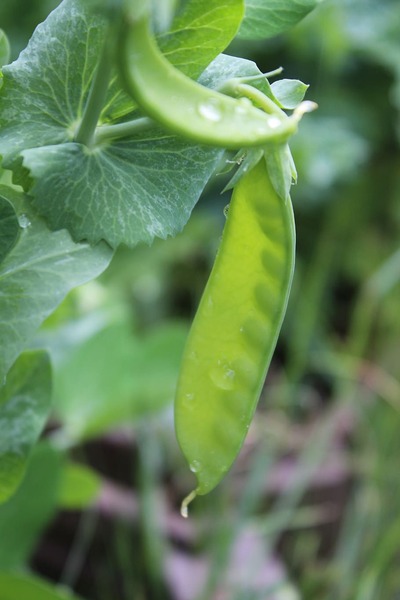
The external presence of running water influences the root growth of pea plants (Phaselous vulgaris)

Shu et al. | Nov 10, 2020

The external presence of running water influences the root growth of pea plants (Phaselous vulgaris)

Each year, invasive tree roots cause large amounts of damage to underground pipes. While this is usually due to leaks and cracks, tree roots can also invade pipes that are structurally sound. We are interested in investigating whether plant roots have an affinity towards flowing water, measured through mass, even when the running water is not in direct contact with soil. We tested this by creating a choice chamber with water running under one end and no stimulus on the other end. Overall, the masses of the roots growing towards flowing water were greater than the masses of the roots growing towards the end with no stimulus, showing that plant roots did have an affinity towards flowing water.

Read More...
Linearity of piezoelectric response of electrospun polymer-based (PVDF) fibers with barium titanate nanoparticles

Nichitiu et al. | Feb 13, 2023

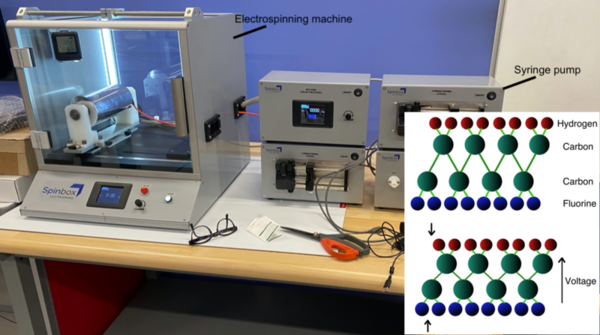
Linearity of piezoelectric response of electrospun polymer-based (PVDF) fibers with barium titanate nanoparticles

Here, seeking to develop an understanding of the properties that determine the viability of piezoelectric flexible materials for applications in electro-mechanical sensors, the authors investigated the effects of the inclusion BaTiO3 nanoparticles in electrospun Polyvinyledene Fluoride. They found the voltage generated had a piecewise linear dependence on the applied force at a few temperatures.

Read More...

Impact of Kindles4Covid Virtual Reading Buddies Program on reading frequency and social connections

Pandey et al. | Jun 25, 2022

Impact of Kindles4Covid Virtual Reading Buddies Program on reading frequency and social connections

With the COVID-19 pandemic necessitating the transition to remote learning, disruption to daily school routine has impacted educational experiences on a global scale. As a result, it has potentially worsened reading achievement gaps typically exacerbated by long summer months. To address literacy skill retention and pandemic-induced social isolation, the non-profit organization ByKids4Kids has created a reading program, “Kindles4Covid Virtual Reading Buddies Program,” to instill a structure for youth to read together and connect with the convenience of Amazon Kindle devices. In this article, the authors determine the efficacy of their invaluable program by assessing changes in reading frequency and self-reported connectedness among program participants.

Read More...

Wound healing properties of mesenchymal conditioned media: Analysis of PDGF, VEGF and IL-8 concentrations

Prasad et al. | Dec 15, 2021

Wound healing properties of mesenchymal conditioned media: Analysis of PDGF, VEGF and IL-8 concentrations

Regenerative medicine has become a mainstay in recent times, and employing stem cells to treat several degenerative, inflammatory conditions has resulted in very promising outcomes. These forms of cell-based therapies are novel approaches to existing treatment modalities. In this study, the authors compared the concentrations of the cytokines PDGF, IL-8, and VEGF between conditioned and spent media of mesenchymal stem cells (MSCs) to evaluate their potential therapeutic properties for wound healing in inflammatory conditions. They hypothesized that conditioned media contains higher concentrations of wound healing cytokines compared to spent media. The authors found that while IL-8 and VEGF were present in highest concentrations in conditioned media, PDGF was present in maximal amounts in spent media.

Read More...

Development and Implementation of Enzymatic and Volatile Compound-based Approaches for Instantaneous Detection of Pathogenic Staphylococcus aureus

Nori et al. | Feb 20, 2021

Development and Implementation of Enzymatic and Volatile Compound-based Approaches for Instantaneous Detection of Pathogenic <i>Staphylococcus aureus</i>

Staphylococcus aureus (S. aureus) has a mortality rate of up to 30% in developing countries. The purpose of this experiment was to determine if enzymatic and volatile compound-based approaches would perform more quickly in comparison to existing S. aureus diagnostic methods and to evaluate these novel methods on accuracy. Ultimately, this device provided results in less than 30 seconds, which is much quicker than existing methods that take anywhere from 10 minutes to 48 hours based on approach. Statistical analysis of accuracy provides preliminary confirmation that the device based on enzymatic and volatile compound-based approaches can be an accurate and time-efficient tool to detect pathogenic S. aureus.

Read More...