Browse Articles

Survival analysis in cardiovascular epidemiology: nexus between heart disease and mortality

Lachwani et al. | Oct 23, 2024

Survival analysis in cardiovascular epidemiology: nexus between heart disease and mortality

In 2021, over 20 million people died from cardiovascular diseases, highlighting the need for a deeper understanding of factors influencing heart failure outcomes. This study examined multiple variables affecting mortality after heart failure, using random forest models to identify time, serum creatinine, and ejection fraction as key predictors. These findings could contribute to personalized medicine, improving survival rates by tailoring treatment strategies for heart failure patients.

Read More...

Can the nucleotide content of a DNA sequence predict the sequence accessibility?

Balachandran et al. | Mar 10, 2023

Can the nucleotide content of a DNA sequence predict the sequence accessibility?
Image credit: Warren Umoh

Sequence accessibility is an important factor affecting gene expression. Sequence accessibility or openness impacts the likelihood that a gene is transcribed and translated into a protein and performs functions and manifests traits. There are many potential factors that affect the accessibility of a gene. In this study, our hypothesis was that the content of nucleotides in a genetic sequence predicts its accessibility. Using a machine learning linear regression model, we studied the relationship between nucleotide content and accessibility.

Read More...

In vitro Comparison of Anticancer and Immunomodulatory Activities of Resveratrol and its Oligomers

Zhang et al. | Sep 02, 2020

<em>In vitro</em> Comparison of Anticancer and Immunomodulatory Activities of Resveratrol and its Oligomers

Resveratrol is a type of stillbenoid, a phenolic compound produced in plants, that is known for its anti-inflammatory and anticancer effects. Many oligomers of resveratrol have recently been isolated their bioactivities remain unknown. Here, authors compared the bioactivities of resveratrol with natural dimers (ε-viniferin and gnetin H) and trimers (suffruticosol B and C). Results provide preliminary evidence that resveratrol oligomers could be potential preventive or therapeutic agents for cancers and other immune-related diseases

Read More...

Pancreatic Adenocarcinoma: An Analysis of Drug Therapy Options through Interaction Maps and Graph Theory

Gupta et al. | Feb 04, 2014

Pancreatic Adenocarcinoma: An Analysis of Drug Therapy Options through Interaction Maps and Graph Theory

Cancer is often caused by improper function of a few proteins, and sometimes it takes only a few proteins to malfunction to cause drastic changes in cells. Here the authors look at the genes that were mutated in patients with a type of pancreatic cancer to identify proteins that are important in causing cancer. They also determined which proteins currently lack effective treatment, and suggest that certain proteins (named KRAS, CDKN2A, and RBBP8) are the most important candidates for developing drugs to treat pancreatic cancer.

Read More...

Effect of Gram-positive bacteria on antibiotic resistance in Gram-negative bacteria

Willem et al. | Mar 12, 2024

Effect of Gram-positive bacteria on antibiotic resistance in Gram-negative bacteria

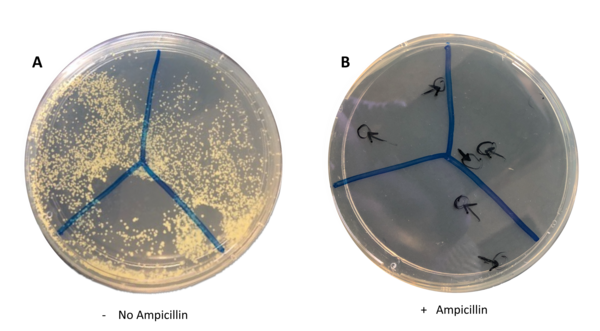
Antibiotics are one of the most common treatments for bacterial infections, but the emergence of antibiotic resistance is a major threat to the control of infectious diseases. Many factors contribute to the development of antibiotic resistance. One is bacterial conjugation from Gram-positive to Gram-negative bacteria where there is a transfer of resistance genes from Gram-positive to Gram-negative bacteria that could increase antibiotic resistance in the latter. In light of these observations, we decided to test whether Gram-negative bacteria that came into contact with Gram-positive bacteria had a higher resistance to the antimicrobial properties of spices than Gram-negative bacteria that did not come into contact with Gram-positive bacteria.

Read More...