Browse Articles

Utilizing meteorological data and machine learning to predict and reduce the spread of California wildfires

Bilwar et al. | Jan 15, 2024

Utilizing meteorological data and machine learning to predict and reduce the spread of California wildfires
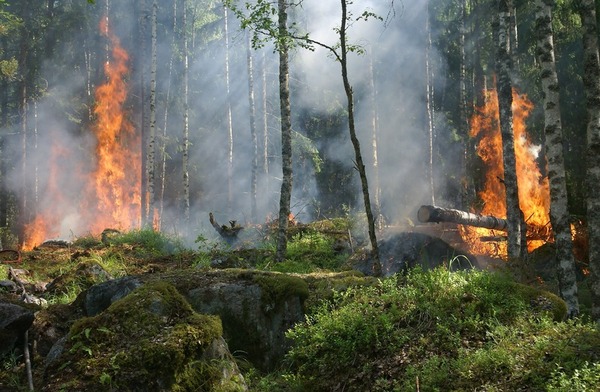
Image credit: Pixabay

This study hypothesized that a machine learning model could accurately predict the severity of California wildfires and determine the most influential meteorological factors. It utilized a custom dataset with information from the World Weather Online API and a Kaggle dataset of wildfires in California from 2013-2020. The developed algorithms classified fires into seven categories with promising accuracy (around 55 percent). They found that higher temperatures, lower humidity, lower dew point, higher wind gusts, and higher wind speeds are the most significant contributors to the spread of a wildfire. This tool could vastly improve the efficiency and preparedness of firefighters as they deal with wildfires.

Read More...

Breast cancer mammographic screening by different guidelines among women of different races/ethnicities

Wang et al. | Aug 27, 2023

Breast cancer mammographic screening by different guidelines among women of different races/ethnicities

Mammographic screening is a common diagnostic tool for breast cancer among average-risk women. The authors hypothesized that adherence rates for mammographic screening may be lower among minorities (non-Hispanic black (NHB) and Hispanic/Latino) than among non-Hispanic whites (NHW) regardless of the guideline applied. The findings support other studies’ results that different racial/ethnic and socio-demographic factors can affect screening adherence. Therefore, healthcare providers should promote breast cancer screening especially among NHW/Hispanic women and women lacking insurance coverage.

Read More...

Developing novel plant waste-based hydrogels for skin regeneration and infection detection in diabetic wounds

Mathew et al. | Aug 10, 2023

Developing novel plant waste-based hydrogels for skin regeneration and infection detection in diabetic wounds

The purpose of this investigation is to develop a hydrogel to aid skin regeneration by creating an extracellular matrix for fibroblast growth with antibacterial and infection-detection properties. Authors developed two natural hydrogels based on pectin and potato peels and characterized the gels for fibroblast compatibility through rheology, scanning electron microscopy, swelling, degradation, and cell cytotoxicity assays. Overall, this experiment fabricated various hydrogels capable of acting as skin substitutes and counteracting infections to facilitate wound healing. Following further testing and validation, these hydrogels could help alleviate the 13-billion-dollar financial burden of foot ulcer treatment.

Read More...

A novel encoding technique to improve non-weather-based models for solar photovoltaic forecasting

Ahmed et al. | Jun 09, 2023

A novel encoding technique to improve non-weather-based models for solar photovoltaic forecasting

Several studies have applied different machine learning (ML) techniques to the area of forecasting solar photovoltaic power production. Most of these studies use weather data as inputs to predict power production; however, there are numerous practical issues with the procurement of this data. This study proposes models that do not use weather data as inputs, but rather use past power production data as a more practical substitute to weather-based models. Our proposed models demonstrate a better, cheaper, and more reliable alternatives to current weather models.

Read More...

Time-Efficient and Low-Cost Neural Network to detect plant disease on leaves and reduce food loss and waste

Singh et al. | Apr 24, 2023

Time-Efficient and Low-Cost Neural Network to detect plant disease on leaves and reduce food loss and waste

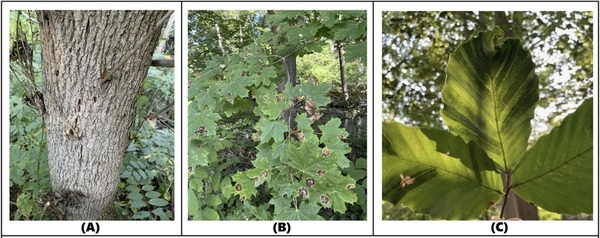
About 25% of the food grown never reaches consumers due to spoilage, and 11.5 billion pounds of produce from gardens are wasted every year. Current solutions involve farmers manually looking for and treating diseased crops. These methods of tending crops are neither time-efficient nor feasible. I used a convolutional neural network to identify signs of plant disease on leaves for garden owners and farmers.

Read More...

Cell cytotoxicity and pro-apoptosis on MCF-7 cells using polyherbal formulation, MAT20

Tarigopula et al. | Feb 17, 2023

Cell cytotoxicity and pro-apoptosis on MCF-7  cells using polyherbal formulation, MAT20

The purpose of this study was to test the anti-cancer properties and pro-apoptotic effects of the polyherbal formulation MAT20 as a complementary treatment. Moringa oleifera (Moringa), Phyllanthus emblica (Amla) and Ocimum sanctum (Tulsi), these 3 herbs were used to formulate MAT20, which contain phytochemicals that are known to display anti-cancer properties. In this study, we hypothesized that MCF-7 breast cancer cells treated with MAT20 would show increased cytotoxicity compared to its individual plant extracts.

Read More...