Browse Articles

What Can You See in the Dark? The Effects of Contrast, Light, and Age on Contrast Sensitivity in Low Light

Virostek et al. | Apr 25, 2014

What Can You See in the Dark? The Effects of Contrast, Light, and Age on Contrast Sensitivity in Low Light

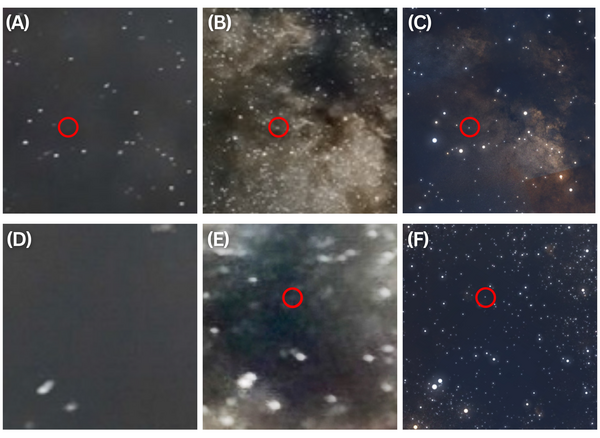
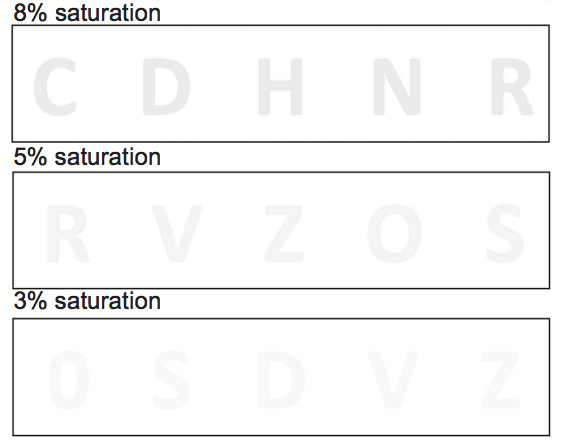
Many of us take our vision for granted, but rarely do we measure how well we can see. In this study, the authors investigate the ability of people of different ages to read progressively fainter letters in dark light. They find that the ability to see in dim light drops drastically after age 30. The ability to read fainter letters worsens after age 30 as well. These findings should help inform lighting decisions everywhere from restaurants to road signs.

Read More...
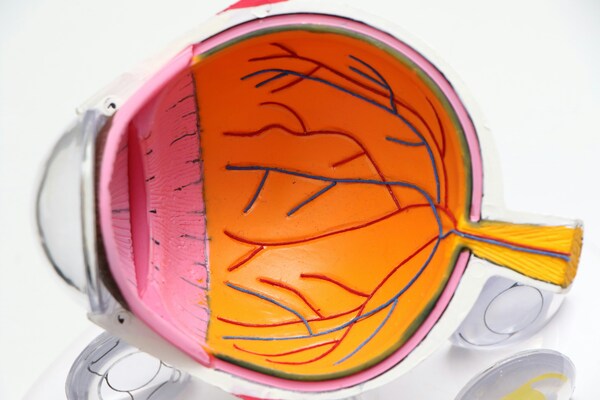
Eye color, visual acuity and photophobia: How eye color affects light sensitivity

Spencer et al. | May 20, 2026

Eye color, visual acuity and photophobia: How eye color affects light sensitivity

This study examined whether eye color affects photophobia and vision in elementary school students and staff, finding no significant relationship between eye color, light sensitivity, or visual acuity. However, photophobia was common across age groups, highlighting the need for greater awareness of light sensitivity in learning environments.

Read More...

The optical possibilities of gelatin

Parikh et al. | Mar 28, 2024

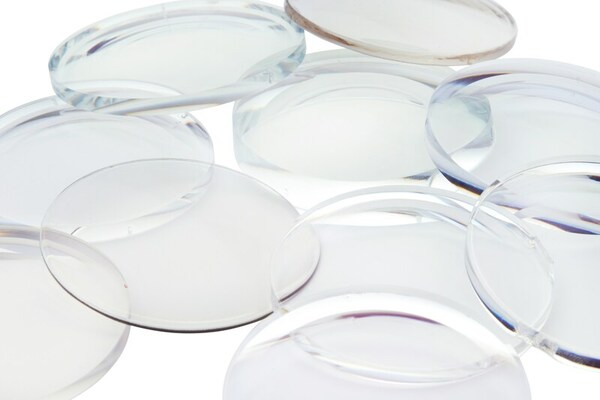
The optical possibilities of gelatin
Image credit: Lensabl

Here the authors investigated the optical possibilities of gelatin and acrylic in regards to potential implementations at soft contact lenses. They fabricated lenses of different shapes and evaluated the refraction of laser light finding that gelatin needed to be thickened or increased in curvature to account for its lower refractive index compared to plastics, or used in a mixture to strengthen the lens.

Read More...

Blue light blocking glasses: do they do what they promise?

Lee et al. | Dec 13, 2023

Blue light blocking glasses: do they do what they promise?
Image credit: nacer eddine

With increased screen time and exposure to blue light, an increasing number of people have sleep deprivation. Blue light suppresses the release of melatonin and hinders sleep at night. We hypothesized that people could get a greater amount of sleep by controlling the blue light exposure from screen time before bedtime. BBG’s effect on reducing time to fall asleep was significant within the teenage group, but not significant in the adult group. This indicated that BBG could improve the time taken to sleep for young teenagers post screen time in the evening.

Read More...

Color photometry and light curve modeling of apparent transient 2023jri

Favretto et al. | Aug 13, 2024

Color photometry and light curve modeling of apparent transient 2023jri

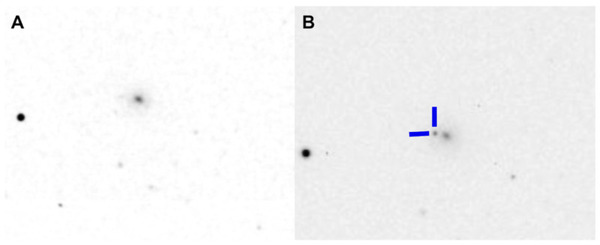
Observing transients like supernovae, which have short-lived brightness variations, helps astronomers understand cosmic phenomena. This study analyzed transient 2023jri, hypothesizing it was a Type IIb supernova. By collecting and analyzing data over four weeks, including light and color curves, they confirmed its classification and provided additional insights into this less-studied supernova type.

Read More...

Interaction of light with water under clear and algal bloom conditions

Ramesh et al. | Feb 01, 2024

Interaction of light with water under clear and algal bloom conditions
Image credit: Liz Harrell

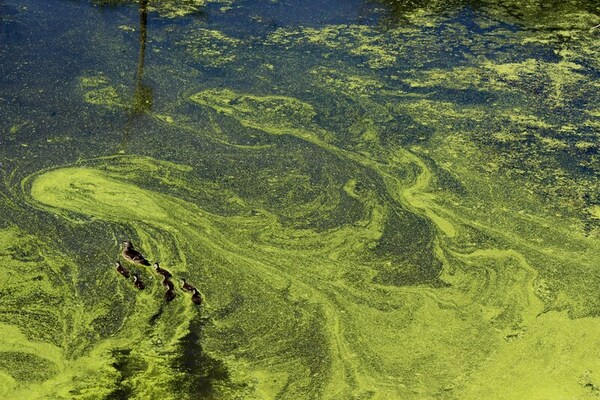
Here, recognizing the potential harmful effects of algal blooms, the authors used satellite images to detect algal blooms in water bodies in Wyoming based on their reflectance of near infrared light. They found that remote monitoring in this way may provide a useful tool in providing early warning and advisories to people who may live in close proximity.

Read More...