Browse Articles

Efficacy of natural coagulants in reducing water turbidity under future climate change scenarios

Cho et al. | Nov 13, 2024

Efficacy of natural coagulants in reducing water turbidity under future climate change scenarios
Image credit: pine watt

Here the authors investigated the effects of natural coagulants on reducing the turbidity of water samples from the Tennessee River Watershed. They found that turbidity reduction was higher at lower temperatures for eggshells. They then projected and mapped turbidity reactions under two climate change scenarios and three future time spans for eggshells. They found site-specific and time-vary turbidity reactions using natural coagulants could be useful for optimal water treatment plans.

Read More...
Impact of hog farming on water quality of aquatic environments in North Carolina

Kancharla et al. | Aug 08, 2023

Impact of hog farming on water quality of aquatic environments in North Carolina

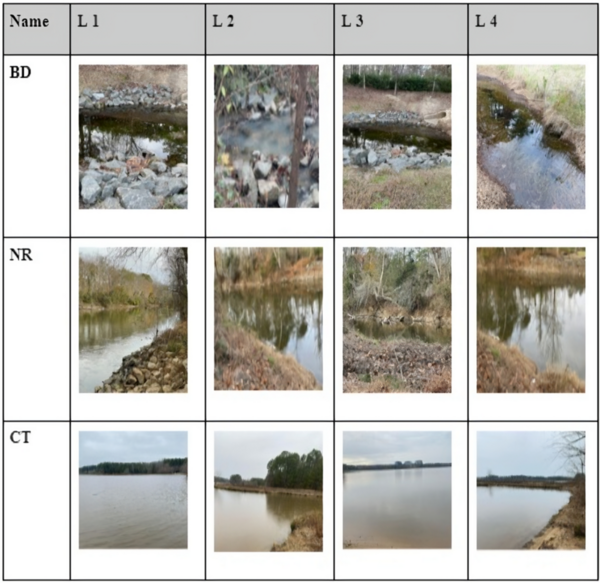
This study collected samples from water bodies near hog farms and an aquatic environment not near a hog farm. It was hypothesized that water bodies near the hog farms would have lower water quality with higher turbidity, total dissolved solids (TDS), and pH than the water body not in proximity to a hog farm because of water contamination with hog waste. Results showed that the turbidity was 4–6 times higher, TDS was 1.5–2 times higher, and pH was 3 units higher in the 2 experimental locations compared to the control location. This study and its findings are important for understanding the impact of hog farming on the proximal water bodies.

Read More...

Cleaning up the world’s oceans with underwater laser imaging

Gurbuz et al. | Jul 07, 2023

Cleaning up the world’s oceans with underwater laser imaging
Image credit: Naja Bertolt Jensen

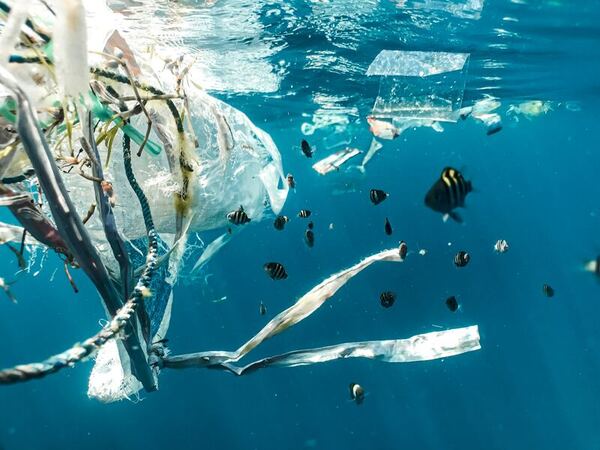
Here recognizing the growing amount of plastic waste in the oceans, the authors sought to develop and test laser imaging for the identification of waste in water. They found that while possible, limitations such as increasing depth and water turbidity result in increasing blurriness in laser images. While their image processing methods were somewhat insufficient they identified recent methods to use deep learning-based techniques as a potential avenue to viability for this method.

Read More...

The ecological mysteries of Opheodesoma spectabilis : Seasonal trends, habitat preferences, and climate responses

Watson et al. | Jul 26, 2026

The ecological mysteries of <i>Opheodesoma spectabilis</i>	: Seasonal trends, habitat preferences, and climate responses

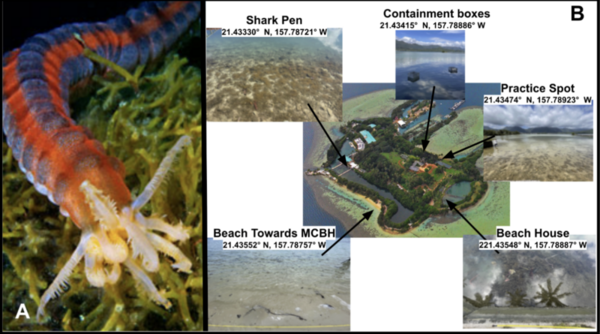
This study examines how environmental conditions influence the abundance and ecological role of the sea cucumber Opheodesoma spectabilis in Kāneʻohe Bay. Field observations and laboratory experiments showed that the species is more common in algae-dominated sandy habitats, where it improves water clarity and increases dissolved oxygen through bioturbation. However, exposure to very high temperatures caused rapid mortality, suggesting that marine heat waves could threaten this species and the ecological functions it provides.

Read More...

The effect of floating plant on water purification: Comparison of the water purification capability of Water Hyacinth, Duckweed, and Azolla

Park et al. | Nov 21, 2020

The effect of floating plant on water purification: Comparison of the water purification capability of Water Hyacinth, Duckweed, and Azolla

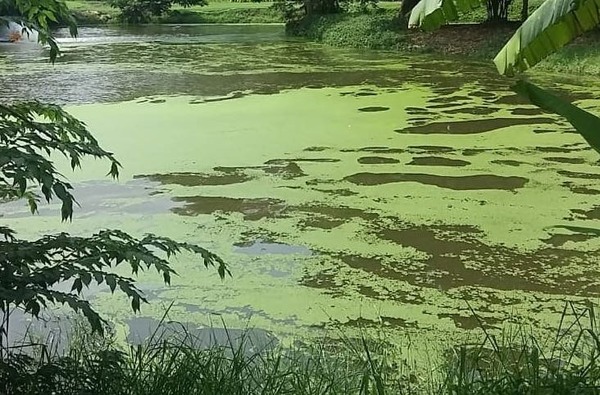
Clean water is a necessity for every household, yet water pollution is a serious problem in many parts of the world and plays a major role in compromising water security in the 21st century. In this paper, the authors address the utility of several plants as natural water purifiers. They estimate the effectiveness of duckweed, hyacinth, and azolla in improving the quality of water from the Mithi river in India by measuring several metrics. They conclude that all three plants are effective in improving water quality, suggesting that these plants as eco-friendly options for water treatment.

Read More...