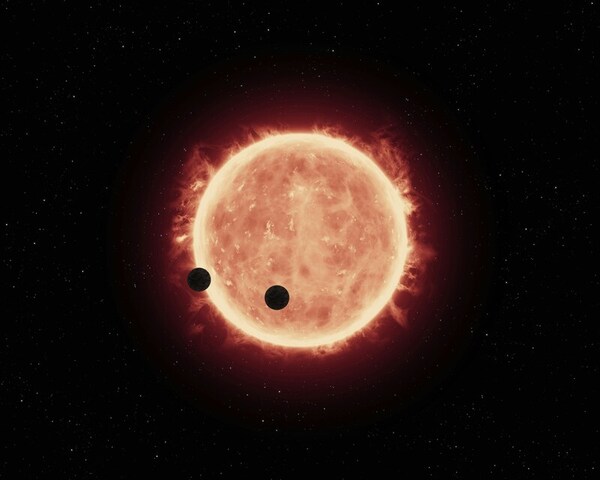
The authors looked at what conditions with host stars favor development of exoplanets.
Read More...Differentiating characteristics in exoplanet host stars
The authors looked at what conditions with host stars favor development of exoplanets.
Read More...An Analysis on Exoplanets and How They are Affected by Different Factors in Their Star Systems
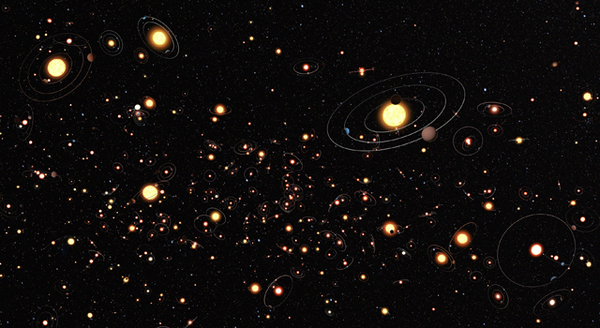
In this article, the authors systematically study whether the type of a star is correlated with the number of planets it can support. Their study shows that medium-sized stars are likely to support more than one planet, just like the case in our solar system. They predict that, of the hundreds of planets beyond our solar system, 6% might be habitable. As humans work to travel further and further into space, some of those might truly be suited for human life.
Read More...Analysis of quantitative classification and properties of X-ray binary systems
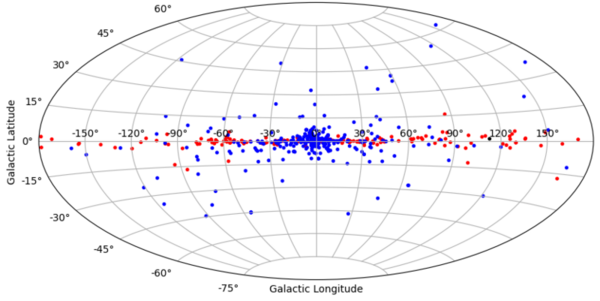
The authors looked at variables and their patterns and how those contribute to the properties of X-ray binaries.
Read More...Effect of fuel density and temperature on helium-3 fusion reaction rates in stellar cores
.png)
This paper discusses how the conditions at the center of stars affects the nuclear reactions that happen inside these stars. We focused on the effect of temperature and density and found that these two properties interacted to create a greater effect when combined than when separate.
Read More...Photometry of the Type II supernova 2025ngs
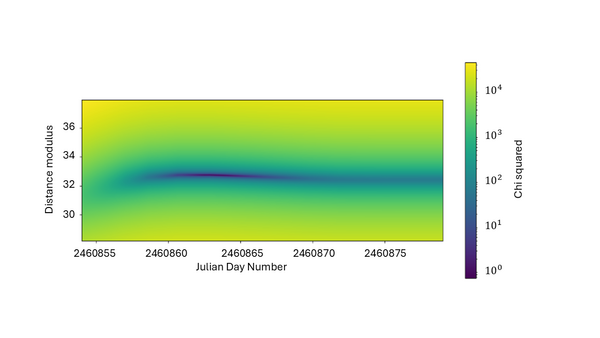
We observed supernova 2025ngs and created its light curve through aperture photometry. We were then able to determine that 2025ngs was a Type II-P supernova.
Read More...Sloan green and red photometry of the Type Ia supernova 2024neh
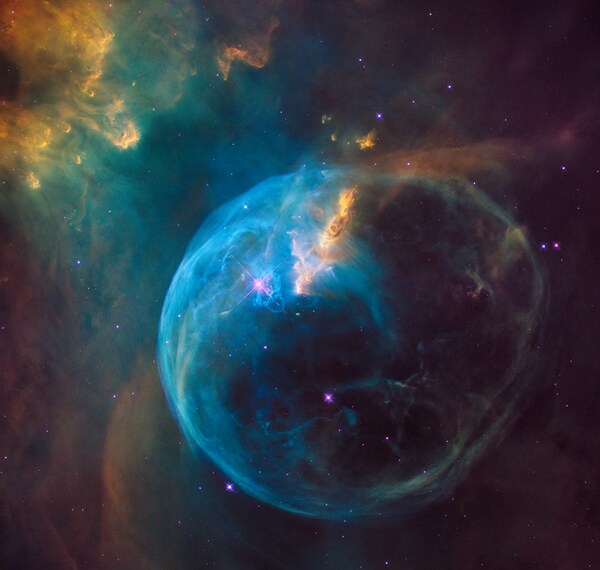
Analysis of the Sloan green and red photometry of the Type Ia supernova 2024neh
Read More...Photometric analysis of Type Ia Supernova 2023jvj
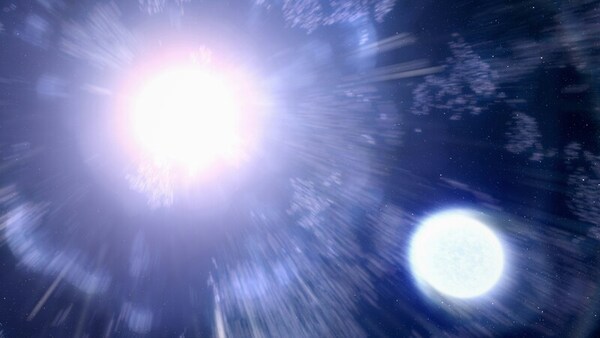
Here the authors conducted a photometric analysis of Supernova (SN) 20234jvj. Through generating a light curve, they determined SN 2023jvj to be a Type Ia supernova located approximately 1.246e8 parasecs away from Earth.
Read More...Locating sources of a high energy cosmic ray extensive air shower using HiSPARC data
Using the data provided by the University of Twente High School Project on Astrophysics Research with Cosmics (HiSPARC), an analysis of locations for possible high-energy cosmic ray air showers was conducted. An example includes an analysis conducted of the high-energy rain shower recorded in January 2014 and the use of Stellarium™ to discern its location.
Read More...Using Gravitational Waves to Determine if Primordial Black Holes are Sources of Dark Matter
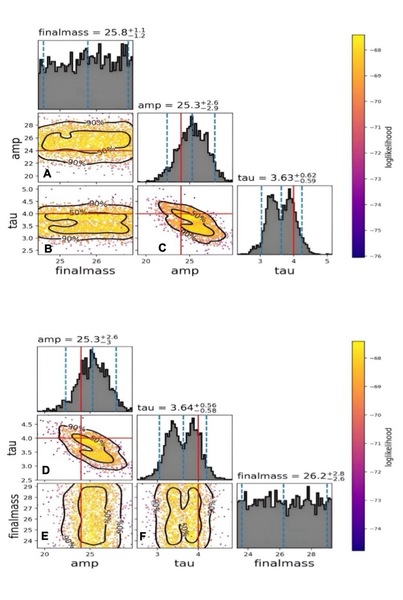
In the quest to understand dark matter, scientists face a profound mystery. Two compelling candidates, Massive Compact Halo Objects (MACHOs) and Weakly Interacting Massive Particles (WIMPs), have emerged as potential sources. By analyzing gravitational waves from binary mergers involving these black holes, authors sought to determine if MACHOs could be the elusive dark matter.
Read More...Studying habitability of the exoplanents Kepler-504 b, Kepler-315 b, and Kepler-315 c
The authors explore how similar exoplanets are to Earth and whether they could be inhabited by humans and other living organisms.
Read More...