Browse Articles

Examining the impact of consecutive losses on gambling: When do we decide to quit?

Kim et al. | Apr 28, 2026

Examining the impact of consecutive losses on gambling: When do we decide to quit?
Image credit: Kim, Cragun, and Kim

This article explored the question of when do people decide to stop gambling and further tries to extrapolate why people stop gambling at that point. Their study showed that people tend to quit gambling after 4 consecutive losses, significantly more than 1-3 consecutive losses or a win previous to quitting. They also found that participants commonly quit at a point value approximately 5 points greater than or less than their starting balance. The authors concluded that these results may be important in understanding how to cut down on excessive gambling or in creating policies that make it easier for people to disengage from gambling.

Read More...

The Effect of Bead Shape and Texture on the Energy Loss Characteristics in a Rotating Capsule

Misra et al. | Jan 25, 2019

The Effect of Bead Shape and Texture on the Energy Loss Characteristics in a Rotating Capsule

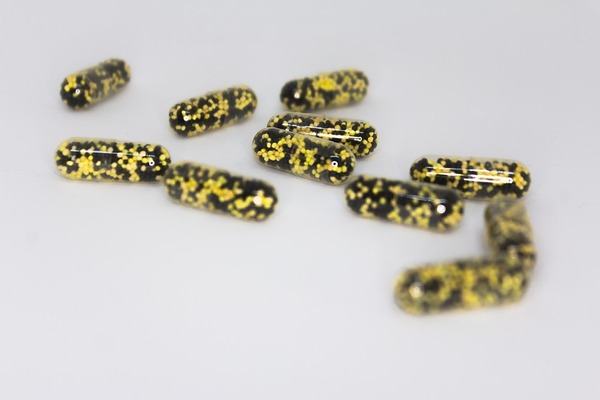
Industrial process are designed to optimize speed, energy use and quality. Some steps involve the translation of product-filled barrels, how far and fast this happens depends on the properties of the product within. This article investigates such properties on a mini-scale, where the roll of bead size, texture and material on the distance travelled by a cylindrical capsule is investigated.

Read More...

Analyzing the effects of multiple adhesives on elastic collisions and energy loss in a Newton’s Cradle

Isham et al. | Feb 02, 2024

Analyzing the effects of multiple adhesives on elastic collisions and energy loss in a Newton’s Cradle

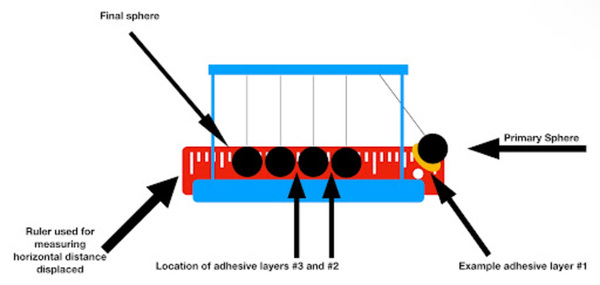
The energy conservation in a system of objects in collision depends on the elasticity of the objects and environmental factors such as air resistance. One system that relies heavily on elasticity is the Newton’s Cradle. We aimed to determine the extent to which these adhesives serve to mitigate or worsen the chaotic movements and elastic collisions.

Read More...

Time-Efficient and Low-Cost Neural Network to detect plant disease on leaves and reduce food loss and waste

Singh et al. | Apr 24, 2023

Time-Efficient and Low-Cost Neural Network to detect plant disease on leaves and reduce food loss and waste

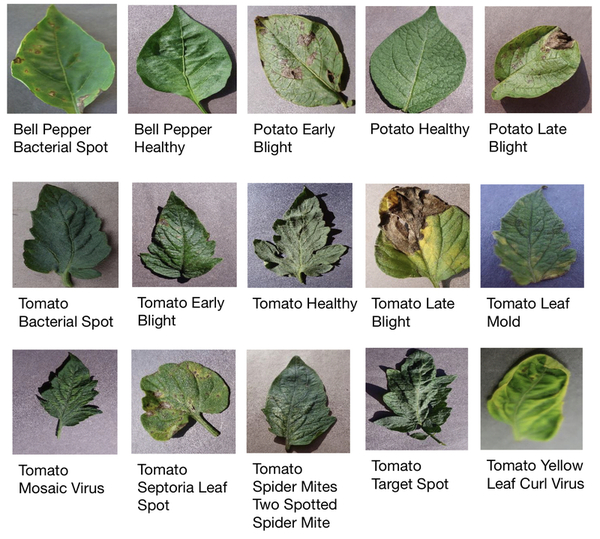
About 25% of the food grown never reaches consumers due to spoilage, and 11.5 billion pounds of produce from gardens are wasted every year. Current solutions involve farmers manually looking for and treating diseased crops. These methods of tending crops are neither time-efficient nor feasible. I used a convolutional neural network to identify signs of plant disease on leaves for garden owners and farmers.

Read More...

Detection and Control of Spoilage Fungi in Refrigerated Vegetables and Fruits

Chari et al. | May 16, 2021

Detection and Control of Spoilage Fungi in Refrigerated Vegetables and Fruits

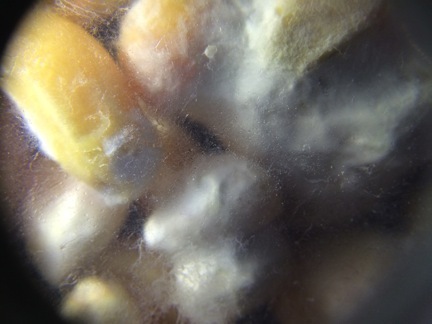
Food spoilage leads to a significant loss in agricultural produce each year. Here, the authors investigate whether certain essential oils can protect against fungus-mediated spoilage of fruits and vegetables. Their results suggest that the compounds they tested might indeed inhibit fungal growth, at various temperatures, a promising result that could reduce food wasting.

Read More...