Browse Articles

Determining the Hubble constant through the analysis of Abell clusters

Lee et al. | Sep 28, 2026

Determining the Hubble constant through the analysis of  Abell clusters
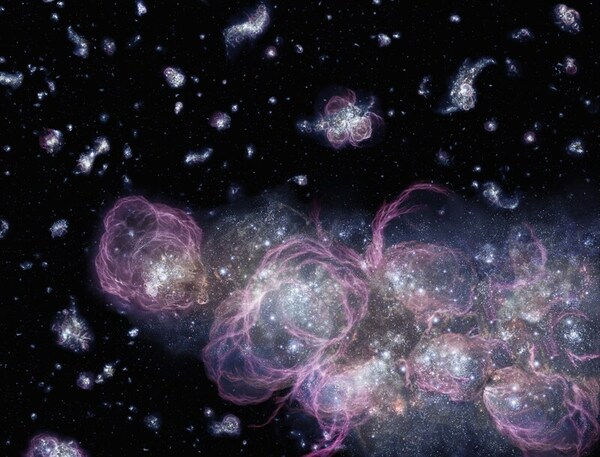
Image credit: NASA Hubble Space Telescope

Galaxy clusters offer several advantages for measuring H0 compared to traditional methods, such as Cepheid variables or Type Ia supernovae. Unlike individual stars or supernovae, clusters are less affected by local variations in stellar population or interstellar medium properties, providing a more stable and consistent measure over large cosmological distances. This work proposes using galaxy clusters as an alternative method for determining the H0. It provides an independent perspective on the H0 debate and contribute to ongoing efforts to reconcile the differing values obtained from the other two measurements.

Read More...
Automated classification of nebulae using deep learning & machine learning for enhanced discovery

Nair et al. | Feb 01, 2024

Automated classification of nebulae using deep learning & machine learning for enhanced discovery

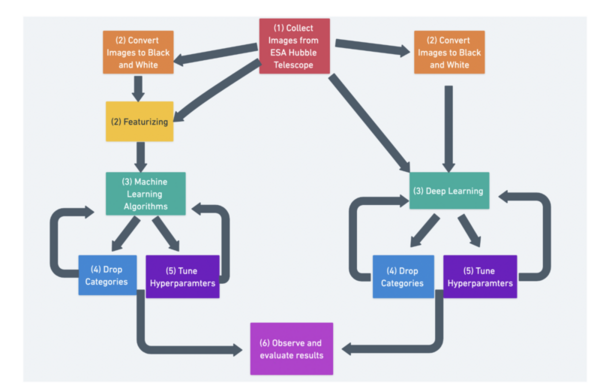
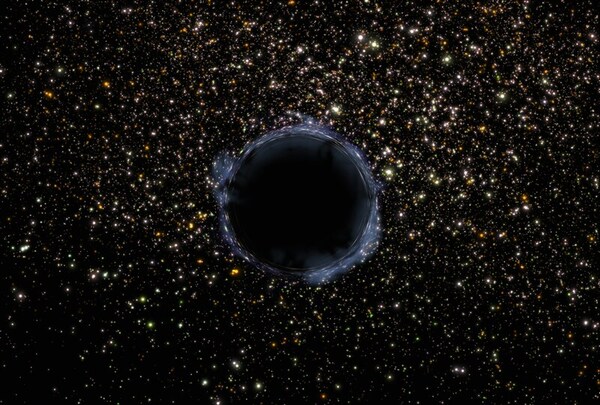
There are believed to be ~20,000 nebulae in the Milky Way Galaxy. However, humans have only cataloged ~1,800 of them even though we have gathered 1.3 million nebula images. Classification of nebulae is important as it helps scientists understand the chemical composition of a nebula which in turn helps them understand the material of the original star. Our research on nebulae classification aims to make the process of classifying new nebulae faster and more accurate using a hybrid of deep learning and machine learning techniques.

Read More...