Browse Articles

The Effect of Radiant Energy on Radish Seed Germination

Simon et al. | Jul 06, 2018

The Effect of Radiant Energy on Radish Seed Germination

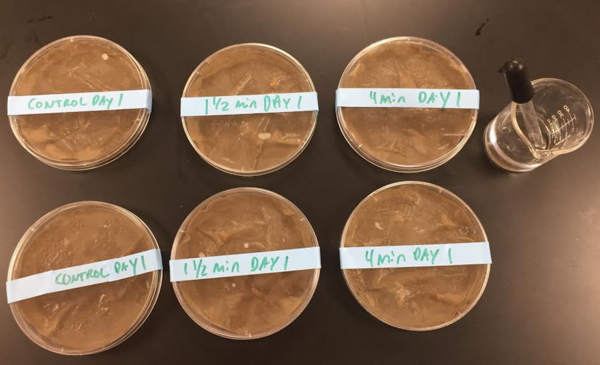
Simon and colleagues test how exposure to microwaves affect radish seed germination, either microwaving seeds for ninety seconds or four minutes prior to planting. Surprisingly, the authors found that seeds microwaved for four minutes exhibited 150% increased germination as compared to controls. The authors hypothesize that breakdown of the radish seed coat when exposed to heat may allow seedlings to sprout more efficiently.

Read More...

Development and Implementation of Enzymatic and Volatile Compound-based Approaches for Instantaneous Detection of Pathogenic Staphylococcus aureus

Nori et al. | Feb 20, 2021

Development and Implementation of Enzymatic and Volatile Compound-based Approaches for Instantaneous Detection of Pathogenic <i>Staphylococcus aureus</i>

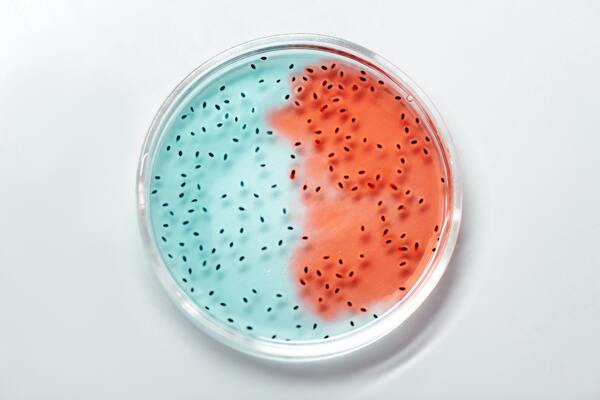
Staphylococcus aureus (S. aureus) has a mortality rate of up to 30% in developing countries. The purpose of this experiment was to determine if enzymatic and volatile compound-based approaches would perform more quickly in comparison to existing S. aureus diagnostic methods and to evaluate these novel methods on accuracy. Ultimately, this device provided results in less than 30 seconds, which is much quicker than existing methods that take anywhere from 10 minutes to 48 hours based on approach. Statistical analysis of accuracy provides preliminary confirmation that the device based on enzymatic and volatile compound-based approaches can be an accurate and time-efficient tool to detect pathogenic S. aureus.

Read More...

Color photometry and light curve modeling of apparent transient 2023jri

Favretto et al. | Aug 13, 2024

Color photometry and light curve modeling of apparent transient 2023jri

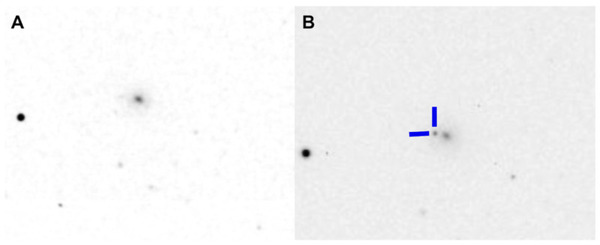
Observing transients like supernovae, which have short-lived brightness variations, helps astronomers understand cosmic phenomena. This study analyzed transient 2023jri, hypothesizing it was a Type IIb supernova. By collecting and analyzing data over four weeks, including light and color curves, they confirmed its classification and provided additional insights into this less-studied supernova type.

Read More...

Racemic serine is less soluble than pure enantiomers due to stronger intermolecular hydrogen bonds

Ranka et al. | Nov 18, 2021

Racemic serine is less soluble than pure enantiomers due to stronger intermolecular hydrogen bonds

Seeking to develop a better understanding of the chemical and physical properties of amino acids that compose proteins, here the authors investigated the unusual relative insolubility of racemic mixtures of D- and L-serine compared to the solubility of pure D- or L-serine. The authors used a combination of microscopy and temperature measurements alongside previous X-ray diffraction studies to conclude that racemic DL-serine crystals consist of comparatively stronger hydrogen bond interactions compared to crystals of pure enantiomers. These stronger interactions were found to result in the unique release of heat during the crystallization of racemic mixtures.

Read More...

Efficacy of Mass Spectrometry Versus 1H Nuclear Magnetic Resonance With Respect to Denaturant Dependent Hydrogen-Deuterium Exchange in Protein Studies

Chenna et al. | Jan 22, 2020

Efficacy of Mass Spectrometry Versus 1H Nuclear Magnetic Resonance With Respect to Denaturant Dependent Hydrogen-Deuterium Exchange in Protein Studies

The misfolding of proteins leads to numerous diseases including Akzheimer’s, Parkinson’s and Type II Diabetes. Understanding of exactly how proteins fold is crucial for many medical advancements. Chenna and Englander addressed this problem by measuring the rate of hydrogen-deuterium exchange within proteins exposed to deuterium oxide in order to further elucidate the process of protein folding. Here, mass spectrometry was used to measure exchange in Cytochrome c and was compared to archived 1H NMR data.

Read More...

Efficient synthesis of superabsorbent beads using photopolymerization with a low-cost method

Wang et al. | Jun 09, 2023

Efficient synthesis of superabsorbent beads using photopolymerization with a low-cost method

Superabsorbent beads are remarkable, used throughout our daily lives for various practical applications. These beads, as suggested by their name, possess a unique ability to absorb and retain large quantities of liquids. This characteristic of absorbency makes them essential throughout the medical field, agriculture, and other critical industries as well as in everyday products. To create these beads, the process of photopolymerization is fast growing in favor with distinct advantages of cost efficiency, speed, energy efficiency, and mindfulness towards the environment. In this article, researchers explore the pairing of cheap monomers with accessible equipment for creation of superabsorbent beads via the photopolymerization process. This research substantially demonstrates the successful application of photopolymerization in producing highly absorbent beads in a low-cost context, thereby expanding the accessibility of this process for creating superabsorbent beads in both research and practical applications.

Read More...

Time-Efficient and Low-Cost Neural Network to detect plant disease on leaves and reduce food loss and waste

Singh et al. | Apr 24, 2023

Time-Efficient and Low-Cost Neural Network to detect plant disease on leaves and reduce food loss and waste

About 25% of the food grown never reaches consumers due to spoilage, and 11.5 billion pounds of produce from gardens are wasted every year. Current solutions involve farmers manually looking for and treating diseased crops. These methods of tending crops are neither time-efficient nor feasible. I used a convolutional neural network to identify signs of plant disease on leaves for garden owners and farmers.

Read More...