Although the 5-year survival rate for colorectal cancer is below 10%, it increases to greater than 90% if it is diagnosed early. We hypothesized from our research that analyzing non-synonymous single nucleotide variants (SNVs) in a patient's exome sequence would be an indicator for high genetic risk of developing colorectal cancer.
The authors looked at the effect of microconvection on displacing bubbles during electrolysis. They found that microconvection does have a role in bubble displacement in water electrolysis which can be applied in the production of hydrogen.
Modern day fossil fuels are prone to polluting our environment, which can provide major habitat loss to many animals in our ecosystems. Algae-based biofuels have become an increasingly popular alternative to fossil fuels because of their sustainability, effectiveness, and environmentally-friendly nature. To encourage algae growth and solidify its role as an emerging biofuel, we tested basic (in terms of pH) solutions on pond water to determine which solution is most efficient in inducing the growth of algae.
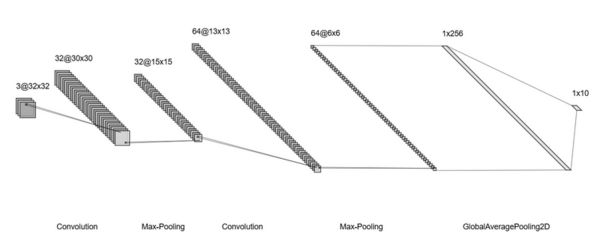
Based on the success of deep learning, recent works have attempted to develop a waste classification model using deep neural networks. This work presents federated learning (FL) for a solution, as it allows participants to aid in training the model using their own data. Results showed that with less clients, having a higher participation ratio resulted in less accuracy degradation by the data heterogeneity.
The authors found that treatment with AS20 suppressed phorbol 12-myristate 13-acetate (PMA) and 5-flurouracil (5-FU) induction of COX2 expression. We also observed AS20 treated cells showed DNA fragmentation in HeLa cells.
The authors investigate the ability of machine learning models to developing new drug-like molecules by learning desired chemical properties versus simply generating molecules that similar to those in the training set.
This study aimed to determine whether artificial sweeteners are harmful to the human microbiome by investigating two different bacteria found to be advantageous to the human gut, Escherichia coli and Bacillus coagulans. Results showed dramatic reduction in bacterial growth for agar plates containing two artificial sweeteners in comparison to two natural sweeteners. This led to the conclusion that both artificial sweeteners inhibit the growth of the two bacteria and warrants further study to determine if zero-sugar sweeteners may be worse for the human gut than natural sugar itself.
Rhizopus stolonifer is a mold commonly found growing on bread that can cause many negative health effects when consumed. Preservatives are the well-known answer to this problem; however, many preservatives are not naturally found in food, and some have negative health effects of their own. We focused on honey as a possible solution because of its natural origin and self-preservation ability. We hypothesized that honey would decrease the growth rate of R. stolonifer . We evaluated the honey with a zone of inhibition (ZOI) test on agar plates. Sabouraud dextrose agar was mixed with differing volumes of honey to generate concentrations between 10.0% and 30.0%. These plates were then inoculated with a solution of spores collected from the mold. The ZOI was measured to determine antifungal effectiveness. A statistically significant difference was found between the means of all concentrations except for 20.0% and 22.5%. Our findings support the hypothesis as we showed a positive correlation between the honey concentration and growth rate of mold. By using this data, progress could be made on an all-natural, honey-based preservative.
Quantum computers can perform computational tasks beyond the capability of classical computers, such as simulating quantum systems in materials science and chemistry. Quantum teleportation is the transfer of quantum information across distances, relying on entangled states generated by quantum computing. We sought to mitigate the error of quantum teleportation which was simulated on IBM cloud quantum computers.
While resources on the safety of household cleaning products are plentiful, measures of efficacy of these cleaning chemicals against bacteria and viruses remain without standardization in the consumer market. The COVID pandemic has exasperated this knowledge gap, stoking the growth of misinformation and misuse surrounding household cleaning chemicals. Arriving at a time dire for sanitization standardization, the authors of this paper have created a quantifying framework for consumers by comparing a wide range of household cleaning products in their efficacy against bacteria generated by a safe and easily replicable yogurt model.