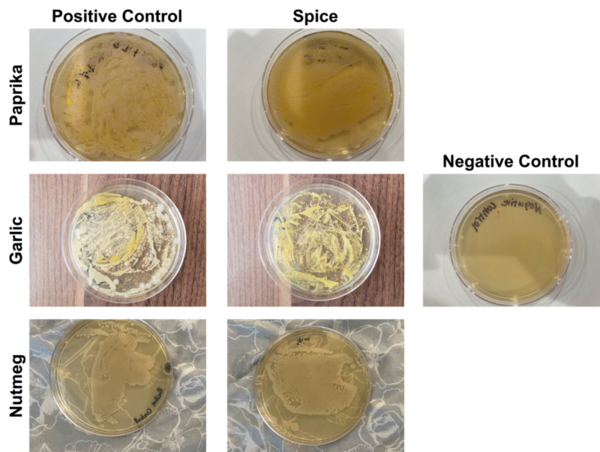
In this article the authors look at the ability of spices to reduce microbial load on a cutting surface by comparing growth of bacteria cultured before and after cleaning with various spice mixtures.
Read More...Testing antimicrobial properties of common household spices in a real-world scenario
In this article the authors look at the ability of spices to reduce microbial load on a cutting surface by comparing growth of bacteria cultured before and after cleaning with various spice mixtures.
Read More...Reddit v. Wall Street: Why Redditors beat Wall Street at its own game

Here the authors investigated the motivation of a short squeeze of GameStop stock where users of the internet forum Reddit drove a sudden increase in GameStop stock price during the start of 2021. They relied on both qualitative and quantitative analyses where they tracked activity on the r/WallStreetBets subreddit in relation to mentions of GameStop. With these methods they found that while initially the short squeeze was driven by financial motivations, later on emotional motivations became more important. They suggest that social phenomena can be dynamic and evolve necessitating mixed method approaches to study them.
Read More...Prediction of molecular energy using Coulomb matrix and Graph Neural Network

With molecular energy being an integral element to the study of molecules and molecular interactions, computational methods to determine molecular energy are used for the preservation of time and resources. However, these computational methods have high demand for computer resources, limiting their widespread feasibility. The authors of this study employed machine learning to address this disadvantage, utilizing neural networks trained on different representations of molecules to predict molecular properties without the requirement of computationally-intensive processing. In their findings, the authors determined the Feedforward Neural Network, trained by two separate models, as capable of predicting molecular energy with limited prediction error.
Read More...Reducing levels of C-Reactive Protein: An eight-week, open-label clinical trial of three oral supplements

In this study, the effects of vitamin C, ginger, or curcumin supplements on C-reactive protein levels in healthy participants are determined in an eight-week open-label trial.
Read More...The relationship between macroinvertebrates, water quality, and the health of Stevens Creek
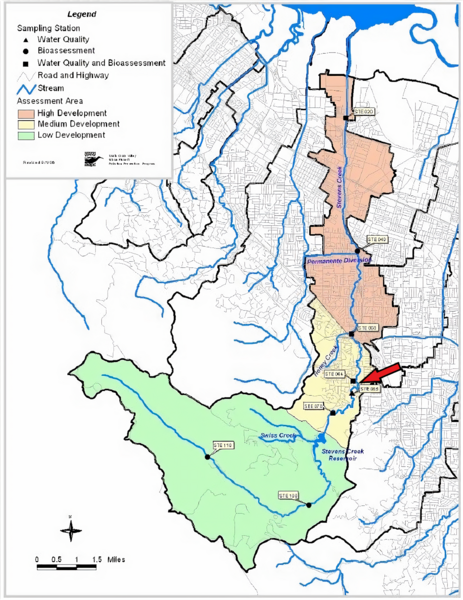
Stevens Creek, which flows through Santa Clara County in California, provides a crucial habitat for federally designated threatened steelhead trout, with a portion of the trout’s diet being dependent on the presence and abundance of macroinvertebrates that inhabit the creek. In this article, the authors investigate how the water chemistry within the creek was associated with the abundance and diversity of macroinvertebrates, and subsequently the creek’s health. They conduct qualitative analysis of macroinvertebrates and water quality to obtain a general understanding of the health of Stevens Creek.
Read More...Caffeine: Does Drinking Coffee Alter Performance and RPE Levels of a Teenage Athlete in both Aerobic and Anaerobic Exercises?

Caffeine is widely consumed across the globe and is most appreciated for its effects as a stimulant. Here the authors investigate whether caffeine consumption affects performance during endurance or strength training. Their results suggest that caffeine consumption enhances endurance training, but not strength training.
Read More...Comparing the Effects of Different Natural Products on Reducing Tumor Growth in a Drosophila Model
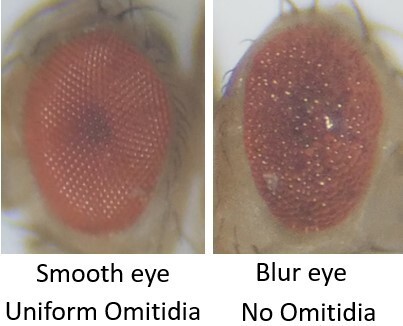
In this work, the authors compared the effects of common natural products, including sesame, cinnamon, garlic, moringa and turmeric on tumor growth in Drosophila eyes. The data showed that these natural products cannot be used to reduce tumor growth once it has completely formed. However, the data suggested that some natural products can reduce cancer cell growth when tumors are treated early.
Read More...Investigating the Role of Biotic Factors in Host Responses to Rhizobia in the System Medicago truncatula
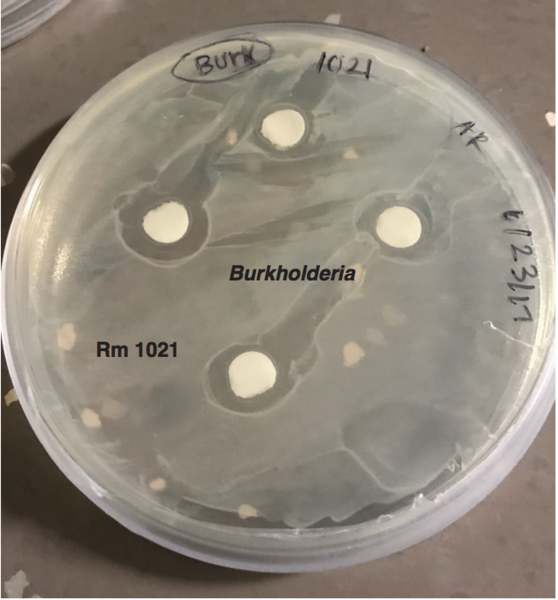
Nitrogen-fixing bacteria, such as the legume mutualist rhizobia, convert atmospheric nitrogen into a form that is usable by living organisms. Leguminous plants, like the model species Medicago truncatula, directly benefit from this process by forming a symbiotic relationship with rhizobia. Here, Rathod and Rowe investigate how M. truncatula responds to non-rhizobial bacterial partners.
Read More...