Browse Articles

The Effect of Poverty on Mosquito-borne Illness Across the United States

Kar et al. | Feb 25, 2021

The Effect of Poverty on Mosquito-borne Illness Across the United States

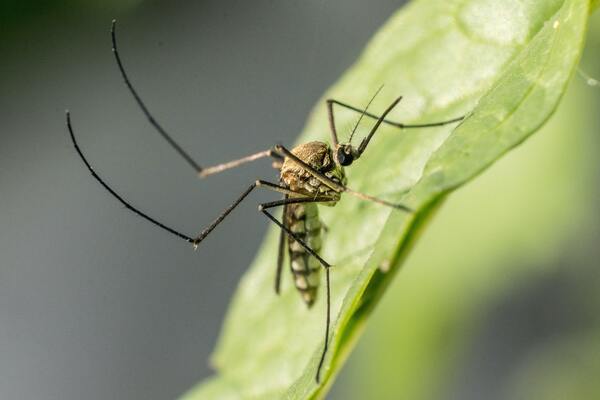
Mosquito-borne diseases are a major issue across the world, and the objective for this project was to determine the characteristics that make some communities more susceptible to these diseases than others. The authors identified and studied characteristics that make communities susceptible to mosquito-borne diseases, including water in square miles, average temperature, population, population density, and poverty rates per county. They found that the population of a county is the best indicator of the prevalence of mosquito-borne diseases.

Read More...

The Effect of Different Fructose Diets on the Lifespan of C. elegans

Chen et al. | May 10, 2020

The Effect of Different Fructose Diets on the Lifespan of <em>C. elegans</em>

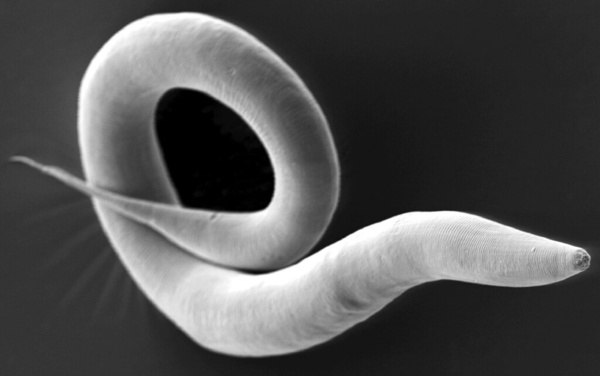
High-fructose diets consumed widely in modern societies predisposes to metabolic diseases such as diabetes. Using the worm C. elegans, the authors of this study investigated the effect of fructose on the worm's survival rates. They found that worms fed 15% fructose had a lower life expectancy than those on a fructose-free diet. These results suggest that, like in humans, fructose has a negative effect on worm survival, which makes them an easy, attractive model to study the effects of fructose on health.

Read More...

The Effect of Caffeine on the Regeneration of Brown Planaria (Dugesia tigrina)

Lazorik et al. | May 10, 2019

The Effect of Caffeine on the Regeneration of Brown Planaria (<em>Dugesia tigrina</em>)

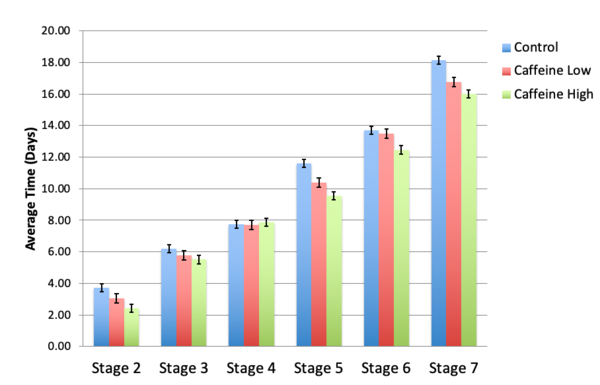
The degeneration of nerve cells in the brain can lead to pathologies such as Parkinson’s disease. It has been suggested that neurons in humans may regenerate. In this study, the effect of different doses of caffeine on regeneration was explored in the planeria model. Caffeine has been shown to enhance dopamine production, and dopamine is found in high concentrations in regenerating planeria tissues. Higher doses of caffeine accelerated planeria regeneration following decapitation, indicating a potential role for caffeine as a treatment to stimulate regeneration.

Read More...

Enhancing the quantum efficiency of a silicon solar cell using one dimensional thin film interferometry

Ahuja et al. | May 03, 2024

Enhancing the quantum efficiency of a silicon solar cell using one dimensional thin film interferometry
Image credit: American Public Power Association

Here, recognizing the need to improve the efficiency of the conversion of solar energy to electrical energy, the authors used MATLAB to mathematically simulate a multi-layered thin film with an without an antireflective coating. They found that the use of alternating ZnO-SiO2 multilayers enhanced the transmission of light into the solar cell, increasing its efficiency and reducing the reflectivity of the Si-Air interface.

Read More...

Analyzing the effects of multiple adhesives on elastic collisions and energy loss in a Newton’s Cradle

Isham et al. | Feb 02, 2024

Analyzing the effects of multiple adhesives on elastic collisions and energy loss in a Newton’s Cradle

The energy conservation in a system of objects in collision depends on the elasticity of the objects and environmental factors such as air resistance. One system that relies heavily on elasticity is the Newton’s Cradle. We aimed to determine the extent to which these adhesives serve to mitigate or worsen the chaotic movements and elastic collisions.

Read More...

Machine learning-based enzyme engineering of PETase for improved efficiency in plastic degradation

Gupta et al. | Jan 31, 2023

 Machine learning-based enzyme engineering of PETase for improved efficiency in plastic degradation
Image credit: Markus Spiske

Here, recognizing the recognizing the growing threat of non-biodegradable plastic waste, the authors investigated the ability to use a modified enzyme identified in bacteria to decompose polyethylene terephthalate (PET). They used simulations to screen and identify an optimized enzyme based on machine learning models. Ultimately, they identified a potential mutant PETases capable of decomposing PET with improved thermal stability.

Read More...

Spectroscopic Kinetic Monitoring and Molecular Dynamics Simulations of Biocatalytic Ester Hydrolysis in Non-Aqueous Solvent

Chen et al. | Dec 20, 2020

Spectroscopic Kinetic Monitoring and Molecular Dynamics Simulations of Biocatalytic Ester Hydrolysis in Non-Aqueous Solvent

Lipases are a common class of enzymes that catalyze the breakdown of lipids. Here the authors characterize the the activity of pancreatic lipase in different organic solvents using a choloremetric assay, as well as using molecular dynamic simulations. They report that the activity of pancreatic lipase in 5% methanol is more than 25% higher than in water, despite enzyme stability being comparable in both solvents. This suggests that, for industrial applications, using pancreatic lipase in 5% methanol solution might increase yield, compared to just water.

Read More...