Nonalcoholic Fatty Liver Disease (NAFLD) is a condition where a surplus of triglycerides or fat are present in the liver. In this study, ezetimibe, a cholesterol lowering drug, was used to treat flies modeling NAFLD. Compared to the coconut oil fed flies that were transferred to the control medium, the flies transferred to the control medium treated with ezetimibe showed a decrease in their triglyceride and alanine transaminase level.
One disadvantage of antibiotic therapy is the potential for unpleasant gastrointestinal side effects. Here, the authors test whether some common antibiotics directly interfere with the digestion of protein, fat, or sugars. This study provides motivation to more carefully investigate the interactions between antibiotics and gut enzymes in order to inform treatment decisions and improve patient outcomes.
The Default Mode Network (DMN) is a network of connected brain regions that are active when the brain is not focused on external tasks. Minor brain injuries, such as concussions, can affect this network and manifest symptoms. In this study, the authors examined correlations between DMN age and post-concussion symptoms in previously concussed individuals and healthy controls.
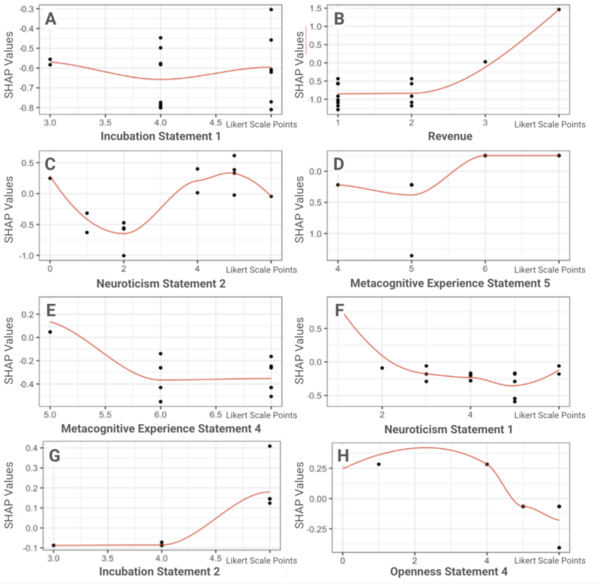
This study used machine learning models to examine which factors most influenced U.S. household energy consumption in 2020 using data from 18,496 households.
The authors looked at the impacts of short-chain fatty acids on muscle fiber formation as well as insulin sensitivity using a model of mouse myoblasts.
The causal set theory (CST) is a theory of the small-scale structure of spacetime, which provides a discrete approach to describing quantum gravity. Studying the properties of causal sets requires methods for constructing appropriate causal sets. The most commonly used approach is to perform a random sprinkling. However, there are different methods for sprinkling, and it is not clear how each commonly used method affects the results. We hypothesized that the methods would be statistically equivalent, but that some noticeable differences might occur, such as a more uniform distribution for the sub-interval sprinkling method compared to the direct sprinkling and edge bias compensation methods. We aimed to assess this hypothesis by analyzing the results of three different methods of sprinkling. For our analysis, we calculated distributions of the longest path length, interval size, and paths of various lengths for each sprinkling method. We found that the methods were statistically similar. However, one of the methods, sub-interval sprinkling, showed some slight advantages over the other two. These findings can serve as a point of reference for active researchers in the field of causal set theory, and is applicable to other research fields working with similar graphs.
Recent research confirms that climate change, driven by CO2 emissions from burning fossil fuels, poses a significant threat to humanity. In response, authors explore methods to remove CO2 from the atmosphere, including breaking its molecular bonds through high-speed collisions.