
In this study, the authors conduct a survey to evaluate the impact of household socioeconomic status on effectiveness of distance learning for students.
Read More...Influence of socioeconomic status on academic performance in virtual classroom settings
In this study, the authors conduct a survey to evaluate the impact of household socioeconomic status on effectiveness of distance learning for students.
Read More...Antimicrobial properties of common household spices on microbes cultured from two kitchen locations
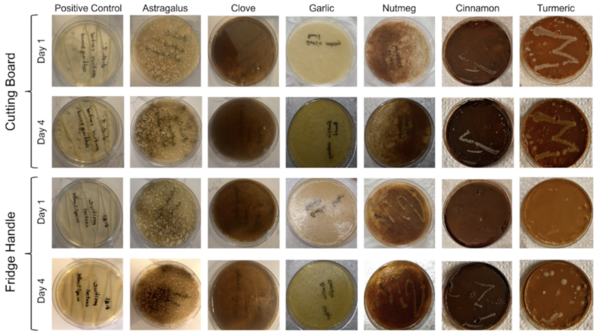
The number of bacterial infections in humans is rising, and a major contributor is foodborne illnesses, which affect a large portion of the population and result in many hospitalizations and deaths. Common household cleaners are an effective strategy to combat foodborne illness, but they are often costly and contain harmful chemicals. Thus, the authors sought to test the antimicrobial effectiveness of spices (clove, nutmeg, astragalus, cinnamon, turmeric, and garlic) on microbes cultured from refrigerator handles and cutting boards. Results from this study demonstrate long-lasting, antimicrobial effects of multiple spices that support their use as alternatives to common household cleaners.
Read More...Indoor near-field target detection characteristics under radio and radar joint operation at 2.4 GHz ISM band
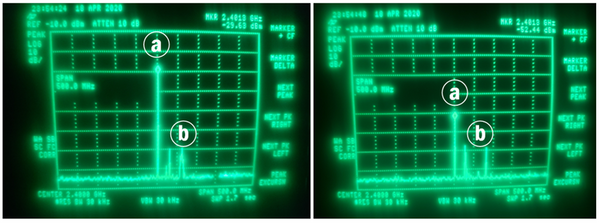
In our modern age, the burgeoning use of radios and radars has resulted in competition for electromagnetic spectrum resources. With recent research highlighting solutions to radio and radar mutual interference, there is a desperate need for a cost-effective configuration that permits a radar-radio joint system. In this study, the authors have set out to determine the feasibility of using single-tone continuous-wave radars in a radar-joint system. With this system, they aim to facilitate cost-effective near-field target detection by way of the popularized 2.4-GHz industrial, scientific, and medical (ISM) band.
Read More...Anticancer, anti-inflammatory, and apoptotic activities of MAT20, a poly-herbal formulation.
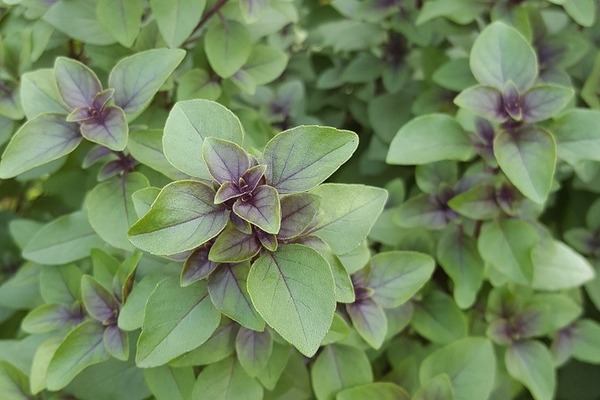
Kashyap Jha et al. look at the formulation of MAT20, a crude extract of the moringa, amla, and tulsi leaves, as a potential complementary and alternative medicine. Using HeLa cells, they find MAT20 up-regulates expression of inflammation and cell cytotoxicity markers. Their data is important for understanding the anti-cancer and anti-inflammatory properties of MAT20.
Read More...Impact of light intensity and electrolyte volume on performance of photo-electrochemical (PEC) solar cell
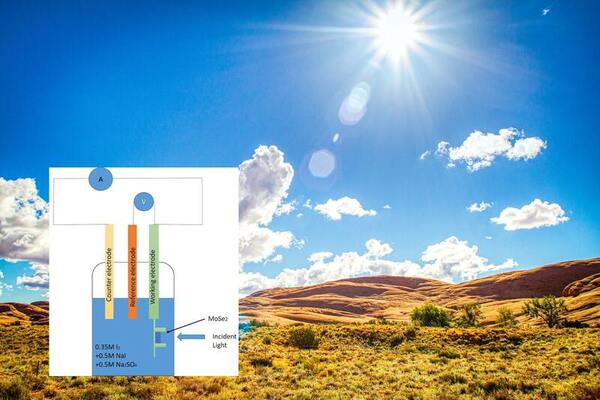
Here, seeking to develop more efficient solar cells, the authors investigated photo-electrochemical (PEC) solar cells, specifically molybdenum diselenide (MoSe2) based on its high resistance to corrosion. They found that the percentage efficiency of these PEC solar cells was proportional to light intensity–0.9 and that performance was positively influenced by increasing the electrolyte volume. They suggest that studies such as these can lead to new insight into reaction-based solar cells.
Read More...Determining the best convolutional neural network for identifying tuberculosis and pneumonia in chest x-rays
.png)
To best identify tuberculosis and pneumonia diagnoses in chest x-rays, the authors compare different deep learning convolution neural networks.
Read More...Application of arbuscular mycorrhizal fungi to inhibit nitrogen uptake of weeds within crop fields
.jpg)
In this study, the ability of arbuscular mycorrhizal fungi to limit the growth of an agricultural weed Cirsium arvense is tested. This has important implications for developing natural herbicides.
Read More...Validation of impact-absorbing football helmet facemask for head injury prevention with simulation
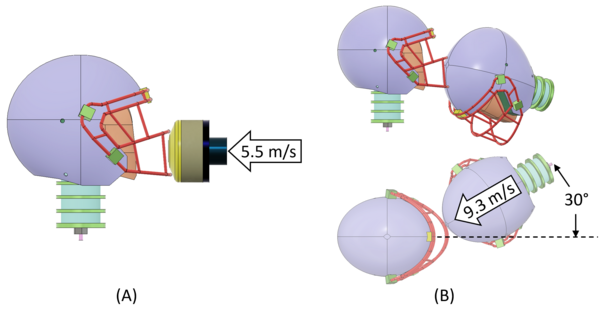
Head injuries are common in American football and the facemasks found on football helmets receive a lot of impact during contacts. This study investigates how effective they are at reducing concussion risk.
Read More...Ribosome distribution affects stalling in amino-acid starved cancer cells
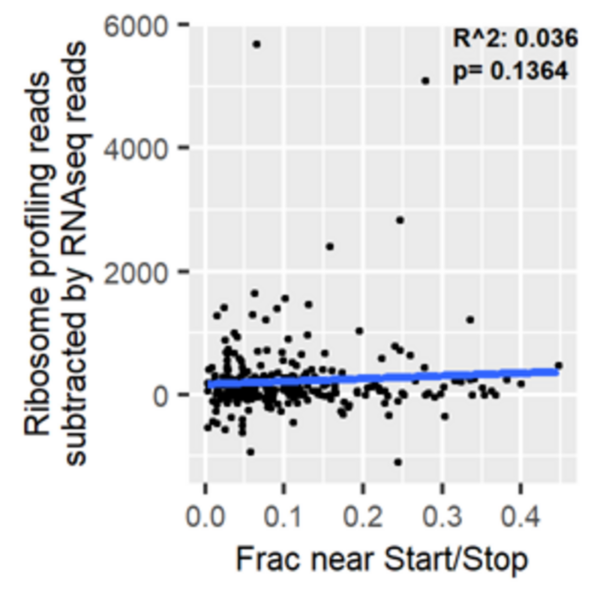
In this article, the authors analyzed ribosome profiling data from amino acid-starved pancreatic cancer cells to explore whether the pattern of ribosome distribution along transcripts under normal conditions can predict the degree of ribosome stalling under stress. The authors found that ribosomes in amino acid-deprived cells stalled more along elongation-limited transcripts. By contrast, they observed no relationship between read density near start and stop and disparities between mRNA sequencing reads and ribosome profiling reads. This research identifies an important relationship between read distribution and propensity for ribosomes to stall, although more work is needed to fully understand the patterns of ribosome distribution along transcripts in ribosome profiling data.
Read More...Protein concentrations in cows’ milk during the four stages of lactation

In this article, the authors quantify fluctuations of primary proteins found within bovine milk across four stages of lactation. Critically, these findings bear great relevance to the nutritional support of calves as well as the varying severity of symptoms of lactose intolerance.
Read More...